

Every Chef Is A Cook, But Not Vice Versa (And Here's Why)
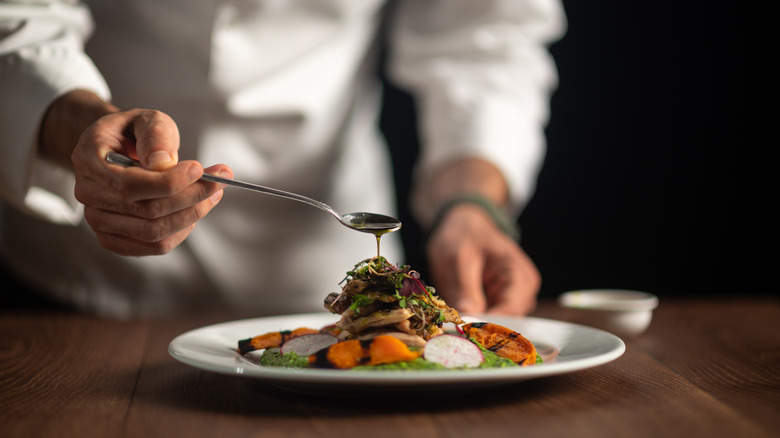
Given the often overlapping roles of professionals working together in the kitchen, it can be difficult to articulate the exact difference between chefs and cooks. However, even though the catchall "chef" and "cook" are titles that do not expressly appear in the kitchen brigade system, the difference between them largely comes down to allocation of roles. In a professional kitchen, chefs are more involved with creative control, responsibility, and direction, while cooks handle the hands-on execution of the chef's dishes with mastery. Typically, chefs begin as cooks and work their way up the kitchen hierarchy over multiple years of industry work.
Beyond instructing the team of cooks, chefs are expected to have an encyclopedic knowledge of cooking techniques and flavor dynamics, representing the highest tier of the hierarchy that comes from years of experience in both cooking and team leadership. Administrative tasks such as scheduling and payroll also often fall to the kitchen's chef in the absence of a restaurant manager. Behind the scenes (i.e., after hours), chefs must also continue updating and reimagining new menus. Also notably, chefs typically (but not always) possess a culinary degree, while cooks often work their way up from lower-level to higher-level roles in the kitchen without any formal outside education.
Chefs conceptualize and supervise, while cooks execute
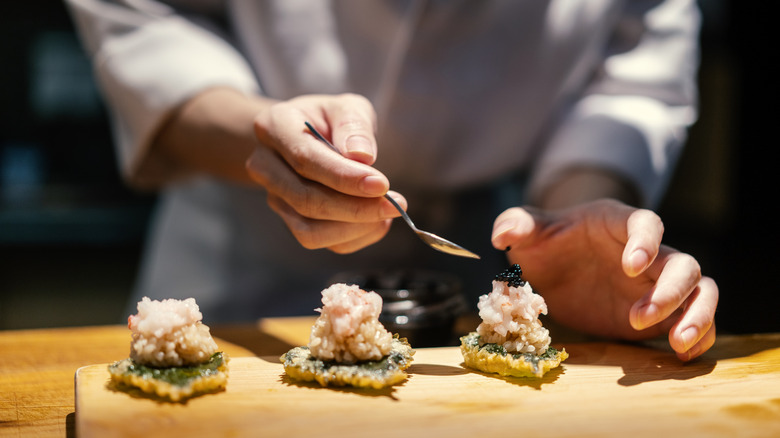
This is not to say that cooks aren't also intensively skilled and trained with years of experience. It is the cook's job to execute the chef's vision with expertise and precision. In order to accomplish this, cooks must be equipped with a wide repertoire of honed techniques, often with an area of specialization like knife skills or sauce-making depending on their line station.
Ultimately, both chefs and cooks are culinary specialists, which often leads to a more nuanced understanding or interpretation of the respective titles. Alton Brown, for one, prefers the term "foodist" to chef, and "Top Chef" star and James Beard Award nominee Brother Luck believes the chef-versus-cook distinction is centered around mentorship (formal education and menu building notwithstanding).
"If you've been appointed the role of training a new cook," explains Luck, "then in my opinion you're trusted enough to be called chef within our industry. It still does not make you an executive chef, chef de cuisine, or sous chef. Those titles need to be earned and appointed. Cooks make food but chefs make cooks" (via Instagram). Like the sous chef and chef de cuisine titles, titles under the "cook" umbrella include line cooks, commis (who work a specific station, learning under a line cook), porters (prep work), and stagiaires (cooks in training). Cooks in these areas must work their way up to becoming a specialized chef de partie.
Everyone deserves the credit for a successful dish
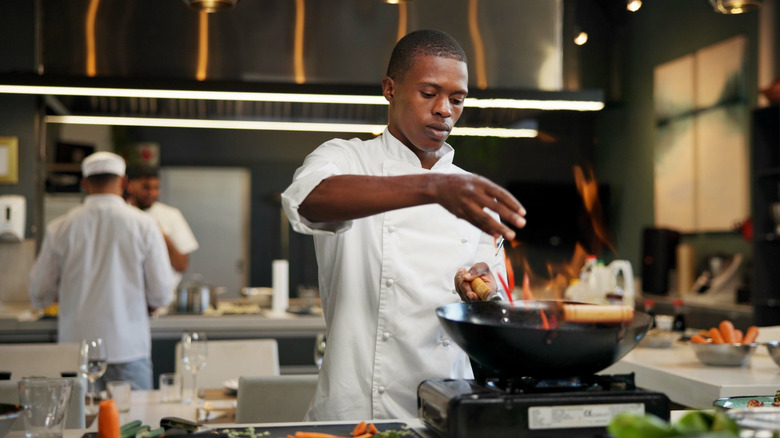
In short, chefs handle supervising and managing, but less actual cooking. To illustrate this divide, in one episode of "No Reservations," Anthony Bourdain returns to Les Halles — the restaurant at which he was formerly executive chef — to see if he can still make it through one shift in the kitchen eight years after leaving. Eric Ripert, the triple-Michelin-starred chef behind Le Bernardin, hops behind the line with him. "Eric cooks like most big boys of his caliber these days," says Bourdain, "meaning not much. He tastes, he conceptualizes, he creates [...] then, largely floating above the fray, makes sure his vision is executed to his standards. That means that, like me, he hasn't actually worked the line for years" (via YouTube). Spoiler alert: The laurelled Bourdain and Ripert barely made it through the shift.
Another community forum on the eGullet Society for Culinary Arts & Letters expounds upon this status-versus-skill debate. One poster writes that they have "noticed ... a lot of the line cooks were more skilled in execution and technique than the formally trained 'chefs.' Even though a lowly line cook would perfectly saute a veal scallopini, the chef ... always said, 'I am the creative one, I invent the dishes.'" The comments section is filled with enthusiastic agreement from apparent fellow line cooks.