

How To Select The Perfect Firewood For Your BBQ Using This Method From Aaron Franklin

We may receive a commission on purchases made from links.
Aaron Franklin, owner of Austin's famed Franklin Barbecue, knows a thing or two about smoked meats. He's a James Beard Award winner who earned the title by crafting some of the best slow and low brisket in the country. In Aaron Franklin's exclusive interview with Tasting Table, he shared insider tips ranging from his favorite underrated cut to keeping prized meats moist. But barbecue's flavors start with a good wood fire, the foundation of any cookout.
"The biggest part of learning how to work a fire ... what that comes down to is your wood selection," Franklin emphasizes on his YouTube channel, BBQ with Franklin. He nudges pitmasters to carefully assess the size and density of each piece of wood, selecting larger logs for giant smokers and smaller ones for compact grills. His approach is intuitive, requiring that you feel the weight of each log in your hand to make sure it isn't too heavy or too light.
He calls this the art of the "fire cadence," or the ever-moving relationship between the griller and the smoke pit that keeps the fire burning for predictable results. Sounds complicated? Franklin simplifies things by comparing wood stacking to a game of Tetris. Just like with those colored 8-bit cubes, you place each piece down in a methodical order so each new log interlocks with the last. You'll be tending that fire for about 12 to 18 hours, so tapping into the nostalgia of your Atari and Nintendo days can turn the task into an entertaining throwback.
Selecting the right firewood supports temperature consistency
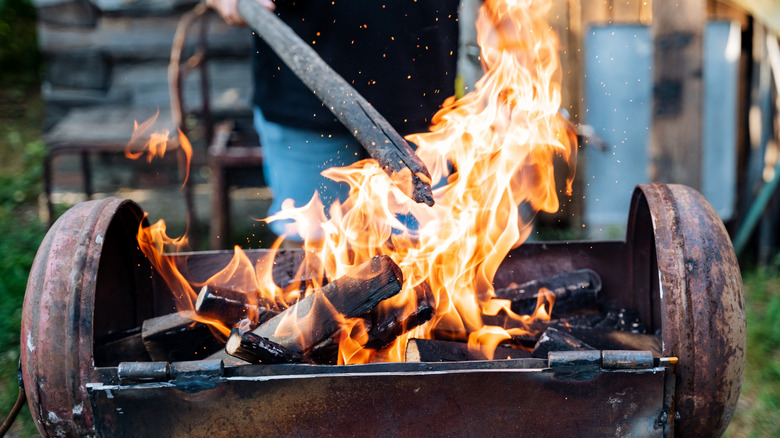
Why such a strong emphasis on the size of firewood? It's all about achieving the ideal temperature, which Franklin often suggests should sit at about 250 degrees Fahrenheit. For consistent heat, it's important to build a solid coal bed from the burning embers of your charred wood. Too much wood upfront creates too much fire above the bed, so temperatures soar. With too few logs, your heat will constantly dip. The temperature of the outside air also has an effect, and you should opt for smaller logs on warmer days.
Not only does the burn rate affect the flavor of your smoked goods but also the type of wood itself. Pitmasters are known to favor certain kinds of wood, and Franklin's choice is post oak, a staple in Texas barbecue. This hardwood burns slowly without producing excessive soot, making it a perfect selection for novices and experts alike. You can also try apple, hickory, maple, pecan, alder, cherry, and mesquite varieties. To learn how to work with each cut of wood, refer to the Franklin Barbecue Collection, which contains two definitive BBQ guides that break down everything you need to know about tending the perfect fire.
No matter what wood you choose, proper preparation of a delicious brisket is everything, according to Aaron Franklin. He likes to make a detailed timeline, maintain a tight temperature range of no more than 5 degrees Fahrenheit, and always keep an eye on the climate, wood performance, and the characteristics of the meat. All this effort is worth it when the result is mouthwatering barbecue.