

The Scary Results Of Overfilling Your Slow Cooker Are Easily Avoidable
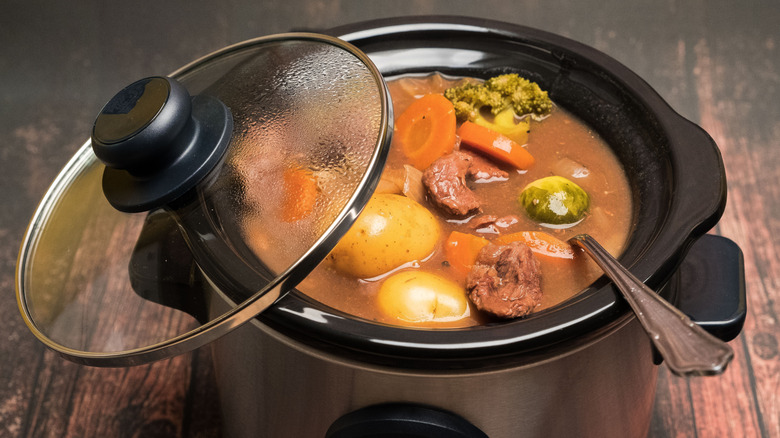
As tempting as it may be to fill your slow cooker to the brim to deliver a big, hearty meal for the family at the end of a busy day — don't do it. As the cliché goes: too much of a good thing is bad for you. Well, in this case, it's bad for your kitchen and your food.
Those little fill lines that you often intentionally ignore — whether it's your slow cooker, kettle, dishwasher, coffee maker, etc. — are actually there for a reason. Exceeding those limits can disrupt how your food cooks, or worse, the safety of your kitchen. In fact, one of the quickest and messiest results of overfilling your slow cooker is it bubbling over. As the food heats and liquids begin to simmer, there's little room for expansion, causing liquids such as sauces, broths, or oil to spill over the edges of the pot, under the lid, drip down the exterior, and onto your counter or stovetop.
This bubbling over isn't just messy; it can also be very dangerous. Many slow cookers have heating elements at the base and sides, or cords that lie across the standing surface. Liquid seeping into those parts can lead to smoking, sparking, permanent damage, or even short out nearby outlets. Beyond safety concerns, spilled liquid also makes it harder for the slow cooker to maintain an accurate temperature, meaning that your meal may not cook evenly or safely — especially when it contains raw proteins, like a crock pot chicken cacciatore or al pastor pork recipe.
Wonky seals, burnt bottoms, and extended cooking times
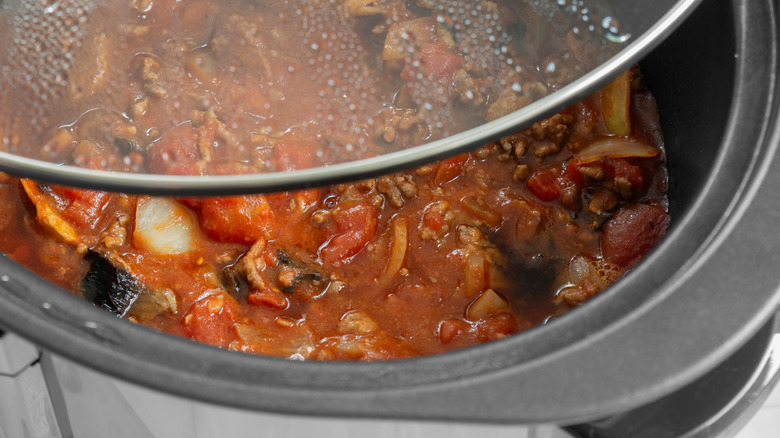
One of the biggest issues with overfilling your slow cooker is that it can stop the lid from sealing properly. As a result, a loose-fitting lid allows steam to escape more easily, throwing off moisture levels and resulting in drier dishes. Instead of tender meat or rich, hearty stews, you may end up with stringy chicken or a watery, undercooked casserole. That's also why layering your ingredients in your slow cooker and leaving some headspace is so important, as it helps trap the heat and steam needed for that signature low-and-slow finish.
Scorching is another result of overfilling — especially at the bottom of the pot. When there's too much food packed in, it can block heat circulation. This can cause denser items like potatoes or thick-cut carrots to sink and settle at the base, absorbing direct heat and potentially burning before the rest of the dish catches up. Once burned, that food can stick to the ceramic liner, making cleanup tedious and possibly damaging the surface over time.
Even if burning doesn't occur, overfilling throws off the balance of heat and moisture that makes slow cookers so reliable. Foods on the bottom may cook faster than those on top, creating layers of overdone and undercooked ingredients in the same pot. This is especially problematic with recipes that rely on even cooking, such as lasagna, meatloaf, or layered casseroles. Instead of blending flavors and textures, you're likely to get a dish that's dry in some spots and soggy in others. Ultimately, the best thing you can do is to keep the contents between the halfway and three-quarter mark, and always give your ingredients the space they need.