

The Boiling Water Hack That Guarantees A Crispy Pork Roast
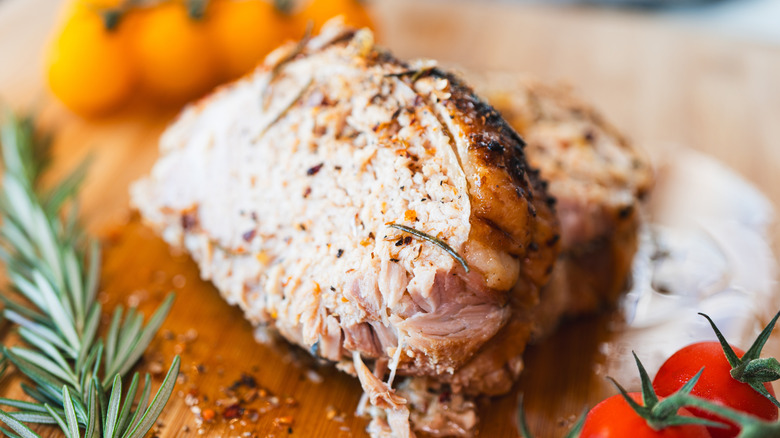
If you've ever attempted a pork roast at home and ended up with chewy, leathery skin instead of the golden, blistered crackle you were envisioning, you're not alone. Naturally, a slow cooker pork roast recipe is going to give you a less crispy finish, and nailing crispy pork skin can feel like a culinary gamble — one where the odds aren't always in your favor. But there's a tried-and-true method that takes the guesswork out of the equation: scoring the skin and pouring boiling water over it before roasting.
This simple step, recommended by Marissa Stevens of Pinch and Swirl and shared in a recent interview with our sister site The Takeout, does more than just pre-cook the surface. It begins tightening the skin, draws out surface moisture, and primes the pork for the kind of high-heat blast that leads to the crunch you crave.
What makes this trick especially useful for home cooks is that it mimics the results of restaurant techniques without needing special tools. Chefs often achieve crispy skin with blast chillers or overnight air-drying setups. This method helps you get there with a kettle and a refrigerator. Combined with a few smart finishing touches, this method becomes nearly foolproof.
What makes this method so effective
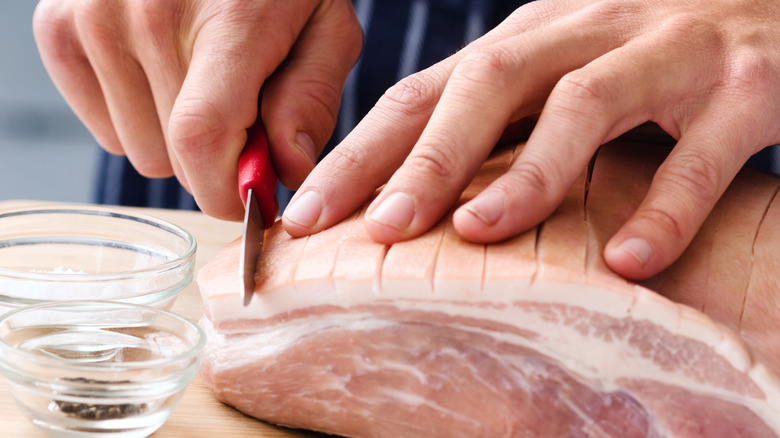
The beauty of the boiling water trick is that it works with the science of how pork skin crisps, not against it. Pouring boiling water over scored pork skin causes the collagen in the surface to begin contracting immediately. That reaction starts the rendering process early, making it easier for fat to escape and for the skin to dry out completely. After this step, the pork should rest uncovered in the fridge overnight. As Stevens explained to The Takeout, that final drying phase is essential — it allows the skin to firm up and shed any remaining moisture.
After the overnight rest, some chefs recommend brushing the skin lightly with white vinegar before roasting. This vinegar cooking hack helps the surface blister more evenly while adding a subtle tang that balances the richness of the fat. You'll also want to consider your roasting strategy. Start with a hot oven at 450°F to give the skin an initial blast of heat, then lower it to 325°F for the remainder of the cook to prevent the meat from drying out. If you're still shy of full crackle, a final 5 minutes under the broiler can help finish the job. And while many people reach for a pork shoulder or roast, this method works especially well on smaller cuts like pork belly (find out how to get crispy skin on pork belly here), where there's a high fat-to-meat ratio and more surface area to crisp.
Static Media owns and operates both Tasting Table and The Takeout.