

9 Etiquette Rules To Follow When Using Chopsticks
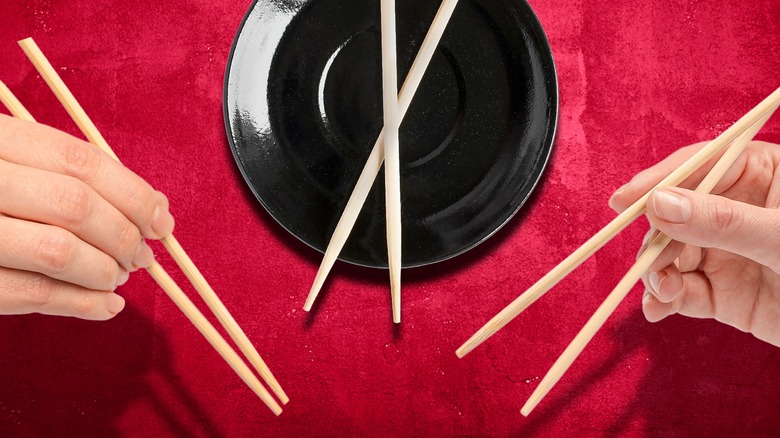
From sushi bars to hot pot restaurants, chopsticks are an essential part of eating East Asian cuisine worldwide. Whether you're a first-timer trying to master your grip or a pro chopstick wielder, you might not realize that these slender utensils carry centuries of history, tradition, and etiquette.
Chopsticks date back millennia, with the earliest examples in China appearing as early as 1200 B.C. Originally used as cooking tools for stirring pots and retrieving food from hot oil, they gradually made their way to the dining table. By around 400 A.D., chopsticks were more common as eating utensils, and within another century, they had spread widely throughout East Asia, from Vietnam to Japan. There are philosophical reasons why chopsticks are a preferred utensil in these cultures. The famous philosopher Confucius discouraged the presence of knives at the table, believing that their sharp edges evoked violence and warfare and disrupted the peaceful atmosphere around a shared meal. These ideals of peace and harmony have shaped the etiquette that surrounds chopstick usage to this day.
There are many important dos and don'ts when using chopsticks that are deeply ingrained in Asian culinary traditions. Certain actions that Westerners might see as perfectly normal may be considered rude or downright sacrilegious to people in Eastern Asia. This guide will walk you through the essential tips to know, helping you to eat respectfully, no matter the dining setting.
Don't stick chopsticks upright in food
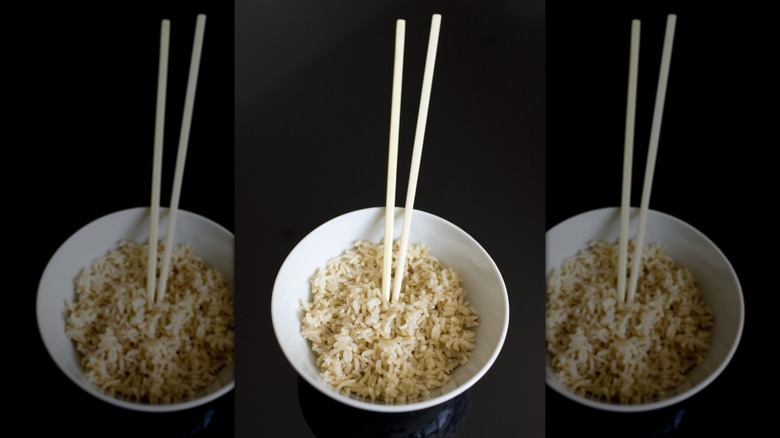
One of the most important rules of chopstick etiquette is to never stick them upright in your food. While this might seem like a convenient way to rest your chopsticks during a meal, in several cultures it carries a deeply negative meaning.
In Asian countries that follow Shinto and Buddhist practices, such as China, Japan, Korea, and Vietnam, placing chopsticks vertically into a bowl of rice is strongly associated with funeral rites. During memorials in Korea and China, incense sticks are placed upright in vessels filled with sand to honor the deceased. Similarly, in Japan, chopsticks are placed upright in bowls of rice as a way to send food to the dead. Because of the visual similarity, sticking chopsticks in rice is the spitting image of a mourning ritual in many countries.
In China, upright chopsticks are sometimes referred to as "dàng zhòng shàng xiāng," or "burning incense in public." In Japan, this act is called "tatebashi," meaning "standing chopsticks." Although funeral customs vary across countries and religions, they often share this same imagery, making it a major dining taboo. To show respect at the table, always place your chopsticks on a chopstick rest or lay them beside your bowl or plate when you're not using them.
Don't point with your chopsticks
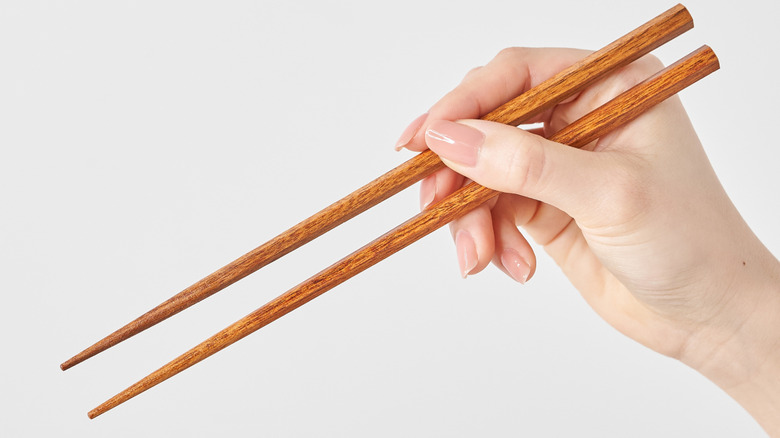
Although you might engage in some lively conversation around the dinner table, you want to avoid pointing or gesturing when using chopsticks. Waving them around or using them to point to someone is considered rude in many Asian cultures, and it carries an edge of disrespect or even aggressiveness at the dinner table.
The idea goes back to Confucian philosophy. Chopsticks are meant to be peaceful, non-lethal tools, replacing knives and other "weapons" at the table. Using them to point or jab disrupts the sense of harmony. In fact, pointing chopsticks at someone can be seen as confrontational, like using "fighting words." In Western cultures, pointing at someone with a fork or a knife would also probably be seen as bad manners, but in Asia, it's more akin to cursing at someone.
In China, this particular faux pas is sometimes referred to as "xiān rén zhǐ lù," which translates to "a deity pointing out directions." While the phrase sounds poetic, it's really meant to remind us mortals that we should never use our chopsticks for pointing.
Avoid spearing your food
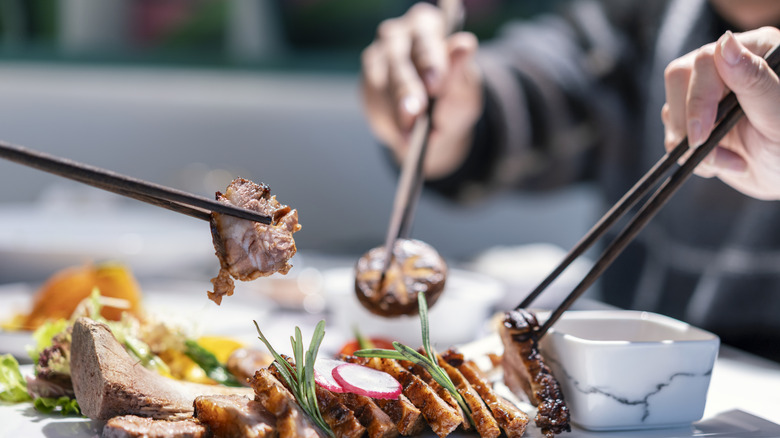
One understandably common mistake that beginners make is using chopsticks to stab a piece of food to eat it. It might seem like an easy solution if you're struggling with dexterity, but this is considered poor manners across most Asian cultures. In Japan, there's a word for it: "sashibashi," or "spearing chopsticks". It's something that a child might do before learning the proper way to handle the utensils, but it's less forgivable as an adult. Chopsticks are designed for picking up food delicately, not for piercing it.
Instead, think of chopsticks as an extension of your fingers. The correct technique involves holding the lower chopstick steady, while the upper chopstick moves up and down to grasp the food. You can try using a napkin hack to get a firmer grasp on the mechanics of chopsticks first. It's generally easier to pick up larger items, such as vegetables or dumplings, before moving on to trickier foods, like rice or noodles.
Alternatively, there's no shame in asking for a fork if it's impeding your enjoyment of the meal. Etiquette is meant to enhance the dining experience, not make it stressful!
Don't pass food from chopstick to chopstick
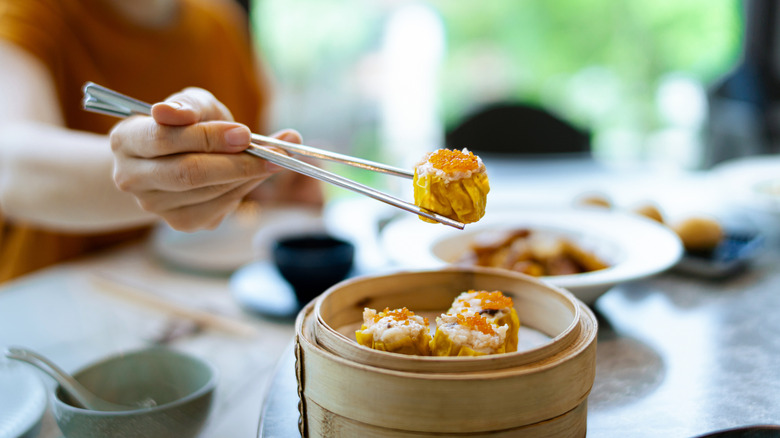
Even though it might seem efficient, passing food directly from one person's chopsticks to another's is a major etiquette faux pas, especially in Japan, where it's called "utsuhibashi," or "transferring with chopsticks". This movement is strongly tied to a Japanese funeral ritual known as "kotsuage," in which family members use chopsticks to pass bone fragments into an urn after cremation. Because of this association, replicating the gesture at the dinner table is considered extremely disrespectful.
While the taboo is most pronounced in Japan, it's also frowned upon in other Asian cultures. Beyond the symbolic meaning, it's discouraged for hygienic reasons. When sharing food, it's best to use communal utensils or allow others to pick up the food themselves from their plate — never hand it over via your chopsticks.
Use different serving utensils to bring food from a communal plate to your own
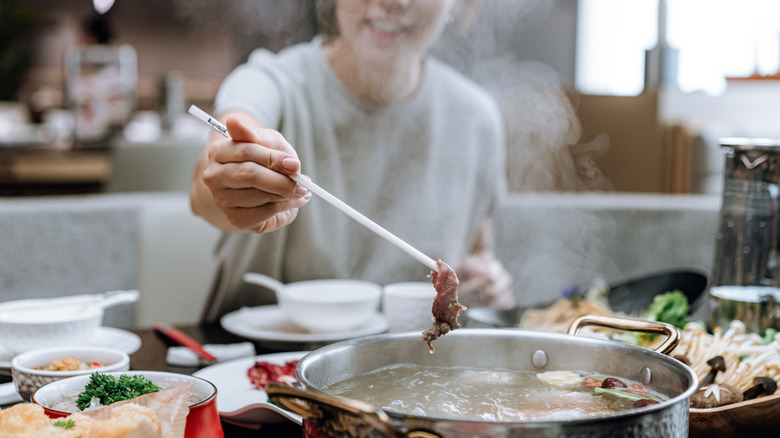
When eating from a communal plate, use separate serving utensils to transfer food to your personal plate. This is both polite and more hygienic. Since chopsticks go straight from your hand to your mouth, using the same pair to pick food from a shared dish risks contaminating it, which many diners would understandably find unappetizing.
Some people might informally use the butt-end of their chopsticks as a workaround. However, this practice is generally frowned upon in formal dining. In China, this even has a colorful name: "diān dǎo qián kūn," which literally means "reversing the universe." The phrase reflects the idea that using the wrong end of your chopsticks disrupts the natural order of the world.
To show respect and maintain hygiene, it's best to use dedicated serving utensils or a separate pair of chopsticks for communal dishes. If none are provided, you can ask for another pair rather than using the back-end.
Rest your chopsticks properly
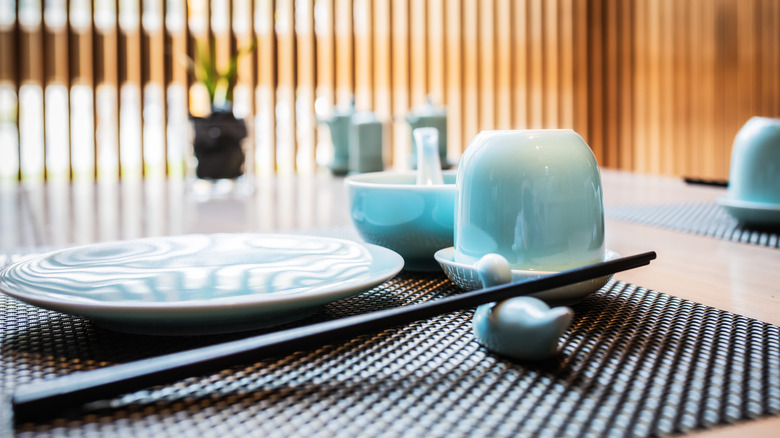
Properly resting your chopsticks when you're not using them is an important part of dining etiquette. When you take a break from eating, you can place your chopsticks on a chopstick rest, at the side of your plate on a napkin, or in the paper sleeve they came in. The goal is to keep the eating ends off the table, which is more hygienic for you and the diners around you.
A good rule to remember: If you're not actively eating from your bowl or plate, your chopsticks should be set aside, not placed on the bowl. In Japan, resting chopsticks on the edge of your bowl can signal that you're finished eating, but this is not considered a polite way to indicate it. Using a chopstick rest when available is always preferable.
Whatever you do, never, ever cross your chopsticks. In China, crossed chopsticks are also associated with death During ancient times, emperors would use a cross to sentence someone to execution. In Japan, crossed chopsticks might not have the exact same connotation, but the practice is still viewed as bad table manners. Aim to keep your chopsticks parallel whenever possible, whether they're in your hands or placed down.
Feel free to shovel food into your mouth from the bowl (except in Korea)
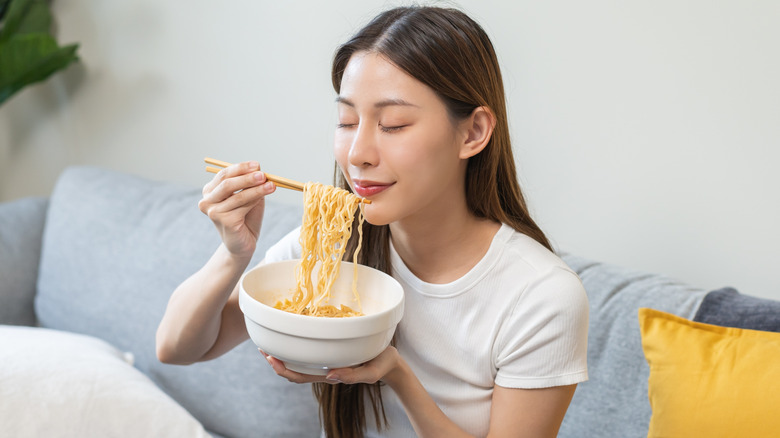
In Western dining, most would say it's bad manners to lift a bowl or plate to your mouth when eating. However, in many Asian cultures, it's perfectly acceptable to lift food from your bowl directly to your mouth and use your chopsticks as a sort of shovel to push those last bits of rice into your mouth. In Japan, it's even considered polite to slurp noodles, as it shows your enjoyment and appreciation of the meal!
However, there are always exceptions, and lifting your rice bowl in Korean dining is considered rude. In Korea, meals are typically eaten with a combination of both chopsticks and a spoon. Since you already have a spoon, it is considered impolite to lift your bowl to your mouth. For any bits of rice or broth in your bowl, it's best to scoop up every last bite rather than picking up the bowl.
Keep your chopsticks quiet
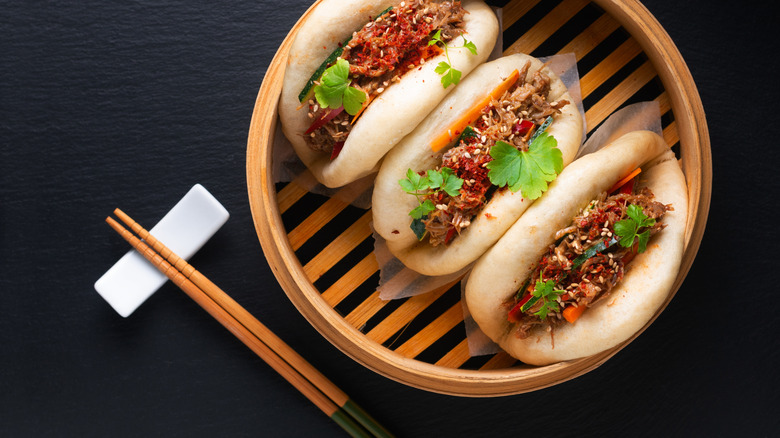
Chopsticks are meant to be used for eating, not as toys or percussion instruments. Drumming on the table, clacking them together, or generally fidgeting with them is distracting and considered disrespectful. Additionally, if you're eating with disposable wooden chopsticks, avoid rubbing them together excessively after opening a new package. This is considered rude in Japan, as it implies that the restaurant provides cheap or low-quality chopsticks.
In Japan, making noise with chopsticks is called "tatakibashi." Some superstitions claim that the noise invites evil spirits into your home. In China, banging chopsticks on bowls or plates is associated with beggars – definitely not something you want to do in formal dining settings.
In China, accidentally dropping chopsticks also calls for etiquette rules. This action is referred to as "luò dì jīng shén," which means "dropping to the floor and shocking the gods," as it is believed to disturb your ancestors' sleep. When this happens, you can say a quick apology to your ancestors for disturbing them when you pick them up. Interestingly, in some parts of southern China, dropping chopsticks can even be considered a sign of good luck, which goes to show that there are many variations in etiquette across regions.
Don't dig through a dish with chopsticks
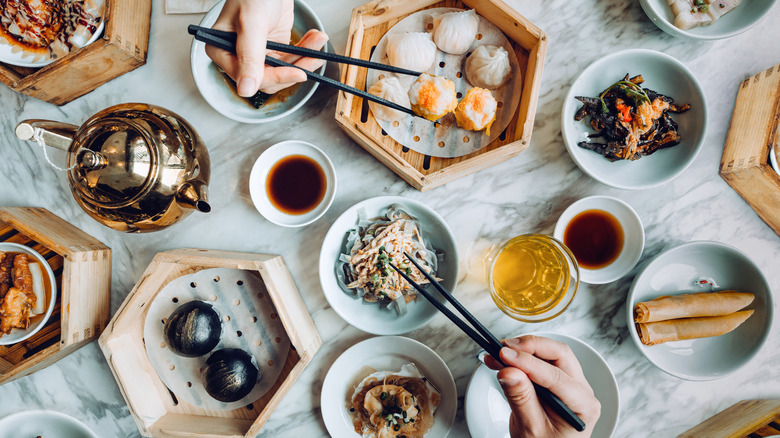
It might be tempting to hunt for the juiciest pieces in a stir-fry or pick out your favorite items first, but doing so is considered impolite in many Asian cultures. In China, this practice is called "mì zhǔ pāo fèn," which means you're "rummaging through coffins." Yet another morbid metaphor, this one doesn't necessarily symbolize death, but it does underscore how inappropriate it is to single out and take only your preferred items.
To be courteous, try to take a balanced selection from shared plates. Sample a little of everything, rather than poking around and isolating your favorite piece using the shared utensils. These small considerations demonstrate polite manners, good hygiene, and generally create a more enjoyable dining experience for everyone.