

Fines Herbes: Some Of The Most Important Herbs To Keep On Hand For French-Inspired Cooking
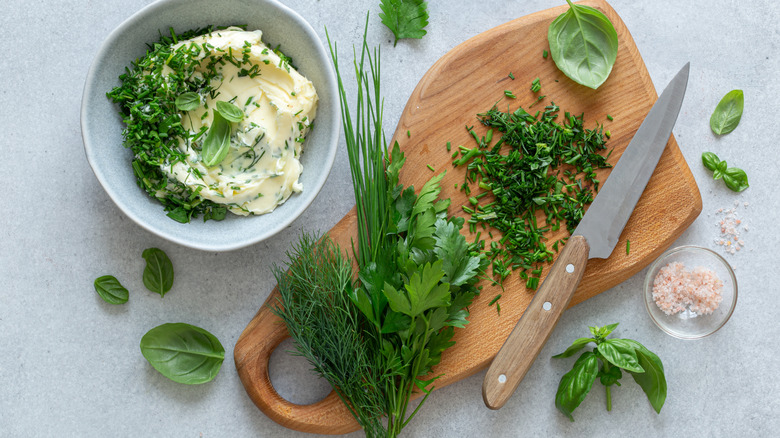
Many cuisines rely on popular herbs for their unique flavors, but few cultures love to shower their food with them like the French. There is, of course, the classic bouquet garni of mixed herbs used to flavor French stocks and sauces, but order a French omelet or creamy chicken dish and it's bound to come covered in a dazzling bounty of fresh herbs. In fact they use them so often that French gastronomy has developed multiple seasoning blends of herbs sorted by their specific flavors and uses in the kitchen. And one of the standard types are fines herbes, which are defined by their light flavors.
Like a bouquet garni or the popular herbes de Provence, fines herbes are traditionally a mixture of various herbs. The classic recipe was first named and defined by famous French chef Auguste Escoffier in the early 20th century and includes four herbs: parsley, chives, tarragon, and chervil. In the standard form of fines herbes, all the ingredients are fresh, not dried, and all four are mixed in equal measure. However, like other herb mixtures, there is room for variation, and other lightly-flavored herbs like watercress and marjoram may be added. Like so much of French cooking, fines herbes are chosen for balance, with the oniony bite of chives, the peppery brightness of parsley, and the more complex chervil and tarragon each bringing distinct flavors to the mixture. In contrast to the stronger herbes de Provence, however, all the fines herbes are quite delicate.
Fines herbes include light, fresh additions to French recipes like parsley and chives
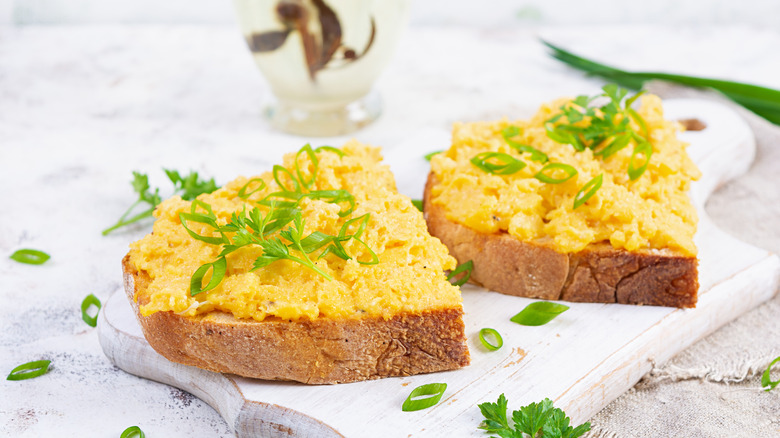
Because fines herbes are lighter in flavor and usually fresh, they are most commonly added at the end of cooking. But that subtle flavor doesn't mean the applications of fines herbes are limited, as they can both bring balance to heavier, meaty dishes, and enliven lighter chicken and vegetable recipes.
The best place to get a taste for how fines herbes work is with eggs, as they are a classic topping to a French omelet but also work just as well over some scrambled eggs or sprinkled over an airy cheese souffle. They also work great with another breakfast favorite: potatoes. Instead of just boring old parsley, try a fines herbes mixture with roasted potatoes, mixed into mashed potatoes, or even topping hash browns. Meat or seafood dishes that use a light pan sauce, like roast chicken or fish a la meunière, will be elevated by the brightness that a sprinkle of fines herbs adds.
Where fines herbes may surprise you the most are with other vegetables and salads. Tossing a crunchy garden salad, or mixing a homemade vinaigrette, with fines herbes will add an amazing complexity while complementing the fresh green flavor. Or just toss them with abandon over roasted asparagus or cauliflower to revive some of those fresh flavors that got lost to the heat of the oven. The French may be particular about their seasoning mixes, but they aren't afraid to use them.