

The Once-Trendy Vintage Seafood Appetizer Everyone Forgot About
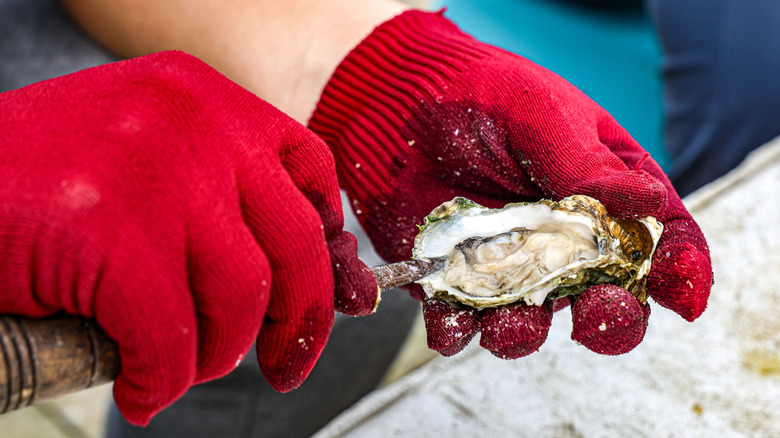
The words "trendy" and "seafood" went hand in hand back in the '60s and '70s, with the rise of novelty-shaped tuna mousse and cocktail shrimp, dishes that once appeared on nearly every American dinner table. Seafood also often found itself on the bougiest of platters at upscale events, always associated with sophistication. Shellfish, especially oysters, were once nothing more than a working-class meal, sold hot-dog style from street carts, but they re-emerged with a new aura of sophistication in the mid-20th century. Americans quickly reintroduced them to the table, starting with Angels on Horseback.
Raw oysters are typically enjoyed freshly shucked, chilled, and slurped straight from the shell, but this old-school appetizer goes for a sizzling hot presentation. Fresh oysters are shucked from the shell, wrapped in bacon, and then broiled until bubbling hot. When broiled, the fatty ends of the bacon curl up, resembling wings surrounding the plump oyster, which inspired the heavenly name: Angels on Horseback. After being wrapped in bacon and broiled, you'd think it would lose its elegance, but the tasty appetizer was a buffet favorite.
Oysters and bacon are a winning combination
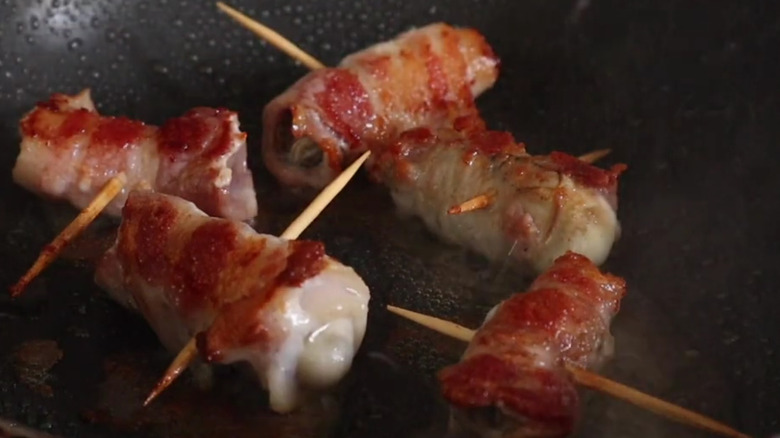
Angels on Horseback, not to be confused with its seafood-free alter ego, Devils on Horseback, are simply bacon-wrapped oysters, sizzled in the broiler. The devilish alternative is prunes wrapped in bacon, a cheaper option that mimics the elegant appetizer. They were all the rage in America's 1960s and 1970s dining scenes, but the recipe was taken from Victorian England, where it was enjoyed as an after-dinner bite. Victorian soirees started early and ran late. It was the height of entertaining, and no one ever wanted the party to end. To drag the goodbyes out as long as possible, hosts would serve cigars and cognac, but not before a special palate cleanser to close out the meal. Angels on Horseback happened to be a favored end to the night.
Oysters are still broiled on the half shell in modern cuisine, but it always seems to be a play on a nostalgic classic, like Oysters Rockefeller (broiled in a buttery, herbaceous sauce topped with breadcrumbs) or Oysters Mornay (decadently broiled in a cheesy béchamel). The bacon-wrapped oysters can also be grilled or fried, as long as the heat is high enough to lock in the flavor. Crispy bacon provides enough fatty goodness for the dish to stand on its own without any sauce or seasoning, other than a dash of pepper and paprika.