

The Exact Difference Between Cantaloupe And Muskmelon
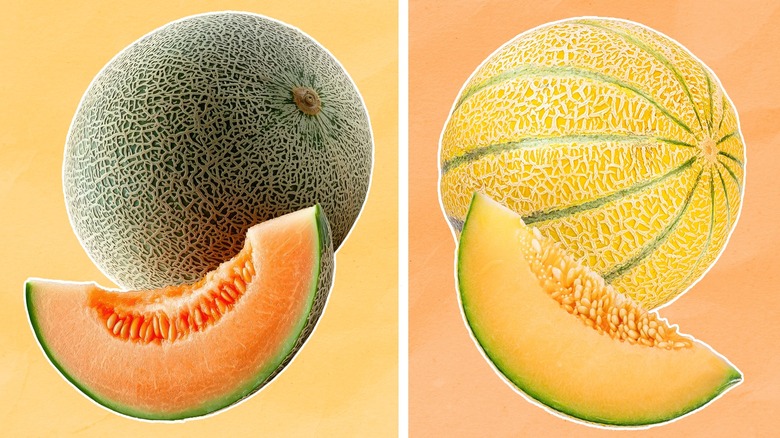
When it comes to seasonal fruits, few compare to melons. They're juicy, sweet, aromatic, accessible, and piled with health-enhancing goodies. But one particular melon remains a bit mysterious: the muskmelon. It very often gets compared to cantaloupes, understandably so given the similar appearance and characteristics — and many folks claim they're actually the same thing. That's only partially true. Muskmelon is a broad group of melons called Cucumis melo, which happens to include two types of cantaloupes: Cucumis melo cantalupensis and Cucumis melo reticulatus (the type with netted skin that's most common in North America.)
In other words, cantaloupes are a "type" of muskmelon, but they've got company in the muskmelon clan, including honeydew, canary, casaba, crenshaw, and galia melons. A common saying amongst melon aficionados is: All cantaloupes are muskmelons, but not all muskmelons are cantaloupes. That said, most types of muskmelons do have core similarities, including succulent, tender flesh with a balance of sweetness and very light acidity. Ripe muskmelons are universally aromatic, emitting sweet, often musky fragrances. Outer skins vary widely from smooth to netted or ribbed, and the flesh can be orange, green, pale yellow, or various shades between.
Narrowing it down to cantaloupes, the type commonly available in North America have a subtle sweetness with floral notes and fruity flavor tucked inside thick, orange flesh and netted outer skin. However, European versions, considered "true cantaloupes," are sweeter with light-green skins. Fortunately, muskmelons in general, including cantaloupes, all bring very good nutrition profiles to your table.
How much nutrition rests inside those melon rinds

It's no secret that muskmelons, including cantaloupes, harbor considerably high amounts of important vitamins and minerals. That includes the all-important vitamin C, which helps boost immunity, disease prevention, and more. But it's notable that cantaloupe in particular holds considerably higher amounts of vitamin C than honeydew muskmelons, almost double the percentage of the recommended daily amount in America.
The same is true when it comes to the micronutrient vitamin A in muskmelons, but on an even higher scale: Cantaloupes have 29% of the RDA, compared to honeydews with only 2% RDA. That matters when considering health benefits such as vision and skin health, as well as growth, development, and reproduction. Also on the list of muskmelon magic is a significant contribution of antioxidants and carotenoids such as beta-carotene, particularly in orange-fleshed muskmelons — again giving cantaloupes an edge over green or lighter-fleshed ones.
That's not to discredit other melons in the muskmelon species, all of which are members of the gourd family. As a sweet, tight-knit clan, each carries a wealth of similar health benefits. With considerable amounts of fiber, plus hydration from high water content, they all deserve a presence in meals, snacks, and after-dinner treats. For more melon madness across the board, check out our Tasting Table explanation of 16 types of melons. And keep things safe in your kitchen, including melons, with this guide to 14 safety tips for home cooks.