

Here's How To Stop Your Lettuce From Turning Pink
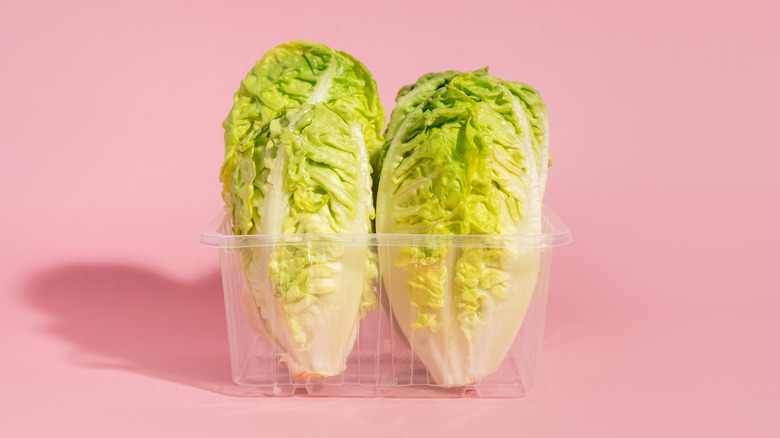
Whether you love cooking with leafy greens or prefer tossing them into a bowl with some dressing, it's a good idea to stock your produce drawer with these nutritious veggies. The only issue? You might notice them changing color before you're even halfway done. Take lettuce for example. The crisp green leaves can start to turn pink as they try to stave off spoilage. Though it's not unsafe, it may look unappetizing. You could even be tempted to get rid of the pink portions. Since the last thing you probably want to do is waste groceries (ahem, have you seen the prices lately?), there are a few steps you can take to extend the lifespan of your lettuce, along with its fresh green hue, so that it stays ready for salads, sandwiches, and other meals.
First, let's discuss exactly why your lettuce ends up turning a reddish-pink after spending some time in your fridge. The main cause is oxidation, that is, a chemical reaction that occurs when the polyphenols inside the plant experience prolonged exposure to air. Some may also call this "rusting," an apt term considering that a similar process causes metal to rust. You might not be able to control air exposure (unless you put a lock on your fridge). However, as you may know, moisture also accelerates rusting on metal, and the same goes for your lettuce. One way to prevent your head from changing color, therefore, is to keep it as dry as possible for as long as you can.
Keep your lettuce dry, and separate from other veggies

In order to protect your lettuce from excess moisture (and premature discoloration), you should avoid washing the leaves in big batches. Rather than prepping them in bulk and placing damp leaves back in the refrigerator, only break off what you need for each meal, and prepare the portions separately. This also goes for bagged lettuce because once opened, moisture can accrue inside. If the lettuce inside a salad kit gets too moist, you can dry it off with paper towels or by putting it in a salad spinner. Then, you should move it from the damp bag to a dry, air-tight container.
You might also want to keep your lettuce away from any other produce during storage, particularly fruits and vegetables that emit high levels of ethylene gas — yet another cause of lettuce discoloration. Ripe tomatoes, avocados, green onions, apples, and bananas are known ethylene producers, while leafy greens like lettuce, kale, spinach, and cabbage are considered to be particularly sensitive to the gas. If your fridge has two produce drawers, your best bet is to keep your leafy heads of lettuce separate from those pesky, pinkifying ethylene producers.
However, if there are no other signs of spoilage, such as soggy or slimy leaves, lettuce leaves that have experienced a bit of rusting are still safe to eat. If your lettuce is still crisp, a touch of pink won't ruin your salad.