

Here's Why Your Refrigerator's Ice Tastes So Bad
We may receive a commission on purchases made from links.
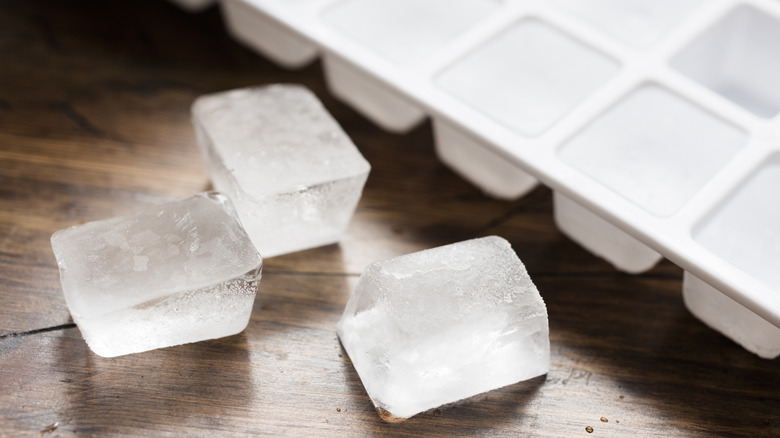
When we slip a few ice cubes in a tall glass of water or a home-curated cocktail, there are two things we're expecting — a colder beverage, and maybe even a bit of dilution (think big, slow-melting cubes in your stiff old-fashioned). No one's adding plain ice for additional flavors, and yet they tend to tag along, often imparting a mismatched taste that offsets the drink. This isn't necessarily due to the quality of your water, although that could be a factor. It happens because ice is essentially a porous sponge that soaks up the aromas and flavors of its neighbors.
And worst of all, your refrigerator itself can contribute to the problem, especially if you have a newer model and are making your first batches of ice. This is because the machine's water lines haven't been used yet and may harbor impurities that are dispersed into your freezer. Older fridges can also taint cubes with unwanted flavors, especially if surfaces are overgrown with freezer burn, which can hold and release months of residual food aromas. An expired filter could be the overlooked maintenance task that's souring your ice too.
It's not just the freezer that contributes to bad-tasting ice. If your ice is months old, it's likely going to turn stale. Open, poorly wrapped, or spilled food items also spread their smell across the freezer and straight into your unsuspecting cubes. Your ice trays, especially if they're made of porous silicone or are years old, can also retain unpleasant odors.
Quick fixes for pure, delicious ice
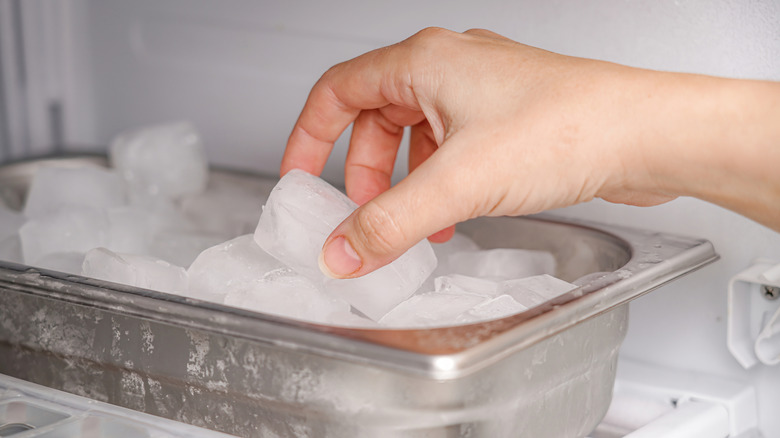
Luckily, there are plenty of solutions that ensure tasteless, fresh ice. If your trays are older, replace them with a new set, preferably one that comes with a lid to keep unwanted food particles at bay. And if you're making flavored cubes, do so in a separate set of trays. You can also transfer your ice to a heavy-duty freezer bag, which helps reduce staleness and blocks exterior odors.
A good rule of thumb is to use ice that's no more than a week old, which may require making smaller batches to achieve a faster turnover. Use the best quality water possible in your trays, as filtered, purified, and demineralized water has a more neutral flavor. If you have a built-in filter, be sure to monitor the sensors and change them regularly to prevent any suspicious undertones.
Finally, be sure to keep your freezer in tip-top shape by regularly cleaning its walls, washing your ice trays, or the collection tub that catches automatically made ice. To help keep taste-altering odors at a low level, place an open box of baking soda in your freezer and replace it with a new one every month.