

Here's Why Kimchi Isn't Always Vegan
We may receive a commission on purchases made from links.
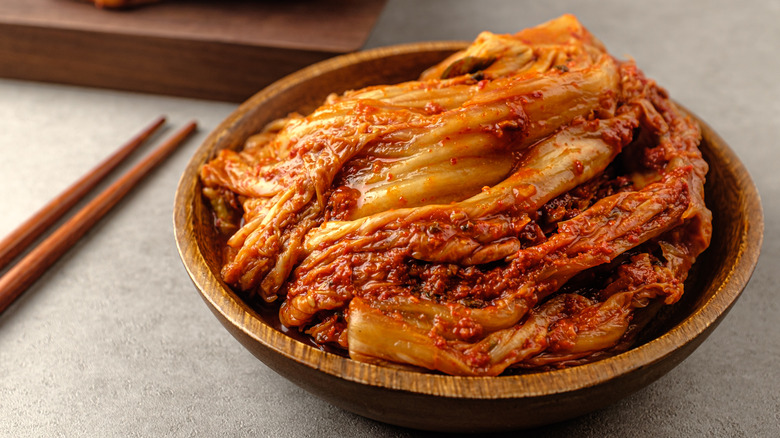
The savory, spicy, and tangy dish that we know as kimchi originated in Korea as a means to preserve vegetables during the winter months. Rather than a specific dish, kimchi can be better defined as a practice of preservation centering around fermenting various ingredients — typically some type of vegetable. There are more than 300 different types of kimchi: spicy kimchis made from Napa cabbage, white ones made from radish, crisp versions that feature cucumbers, and even green ones made from mustard leaves. Considering vegetables are typically the star ingredient of kimchi, you might presume that all kimchi is vegan. However, that's not always the case.
Kimchi is traditionally not vegan, as it contains fermented seafood (known as jeotgal in Korean), which gives kimchi that intense savory flavor of umami. This jeotgal can be made of anything from squid and anchovies to fish sauce or a paste of shrimps. So even if you spot a jar of a presumably vegan-looking baechu kimchi made from Napa cabbage or kkakdugi made from radish, that does not mean that it is, in fact, vegan. It could still contain jeotgal and seafood ingredients. That being said, fermented seafood ingredients can be swapped with vegan alternatives, such as mushroom pastes and powders, to give it that umami punch. As a result, you can still find vegan kimchi, though you need to know how to look for one.
Tips to pick a vegan kimchi
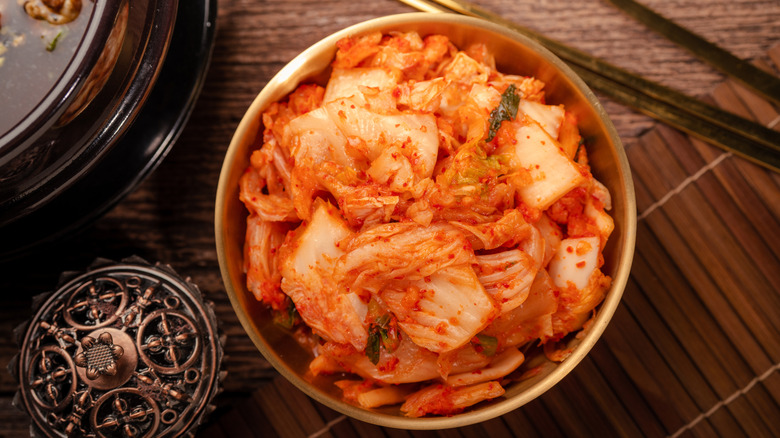
Buying vegan kimchi isn't so confusing if you keep an eye out for a few things. For starters, it is a good idea to inspect the packaging of store-bought kimchi. Look for a vegan stamp, and, in case you don't find one, scan the ingredient list. If you spot jeotgal or any other form of seafood elements, such as fish sauce or shrimp paste, the kimchi is not vegan. Another thing to note is that certain types of kimchi have a higher chance of being vegan-friendly compared to others. For instance, you are more likely to find a vegan sachal t'ongpaechu kimchi (whole cabbage kimchi), because it is popular in Buddhist temple cuisine which is inherently vegetarian.
If you are unsure about which kimchi to buy and do not want to take the trouble of reading through ingredient lists, fret not. We ranked some of the best kimchi brands out there, and there were stellar vegan options on the list. For instance, there's 1000 Year Kimchi's vegan kimchi variant, which came third, and the Cleveland Kitchen classic kimchi — which you can even buy online on Amazon — was placed second. If you're still in doubt, you can always make a classic kimchi at home by substituting the seafood ingredients with mushroom powder.