

What It Means If Your Garlic Cloves Are Orange
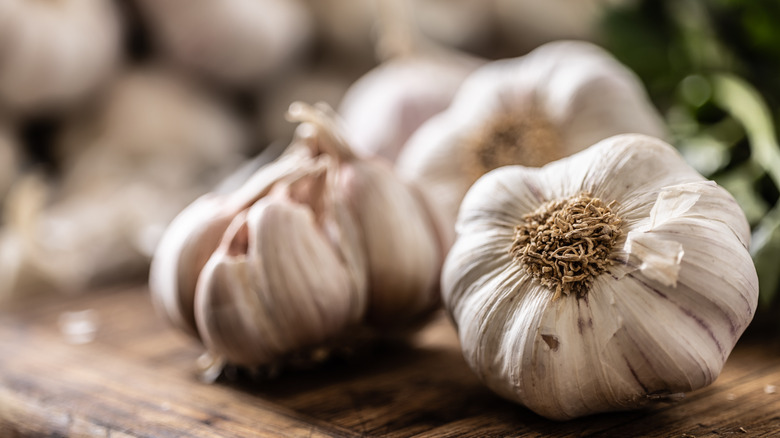
An unpeeled head of garlic can stay fresh for up to six months. After this point, the cloves may become dry or turn moldy and powdery, making them unsafe to eat. However, if you're certain that you are cooking with garlic that is fresh, and still find that some cloves have turned an unusually orange color, what's going on? This phenomenon is known as waxy breakdown and can occur weeks after harvest in response to unfavorable growing, curing, and transportation conditions.
A bulb of garlic that has undergone waxy breakdown inside can often appear normal on the outside, albeit a little shrivelled. It is only when the papery sheath is removed that the amber color of the affected cloves is revealed. The texture of the cloves can also be almost jelly-like or waxy, making them slightly more yielding on the surface. While the shrunken cloves won't be super-soft, they will have some give and can be translucent in appearance. You may also find that only a few cloves in the entire bulb are affected while the others are perfectly normal, which can be even more confusing.
Unlike garlic that has turned moldy and spoiled due to fungal growth, waxy breakdown is a physiological condition and is believed to occur for three reasons. Firstly, high temperatures close to the time of harvest can be a factor. Secondly, exposure to too much sunlight during the curing process may be a cause, and finally, poor ventilation during the storage and transportation could be an additional trigger.
Orange garlic cloves are safe to eat
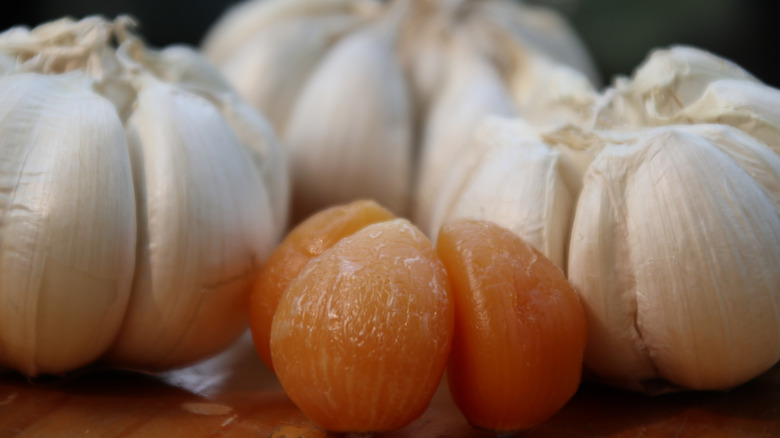
Garlic cloves that have undergone waxy breakdown can look like they've been pickled or fermented. Their flavor and aroma is also mellower, and they can have a sweeter taste. It's safe to eat orange-colored garlic cloves as they aren't diseased, but you might not enjoy their unusual texture. In this case, it's best to cook them down to make the most of their gentle flavor or whip them up into velvety dips to benefit from their squidgy and gummy consistency. As waxy breakdown is progressive, it can affect the other cloves in the bulb, so you should remove any affected orange cloves immediately to safeguard the rest.
If you're intrigued by orange garlic cloves, you might be curious to read more about other variations of garlic and when to use them. For instance, you could learn about the striking charcoal color of black garlic and what it tastes like. This type of allium turns black during fermentation and has a sweeter taste and stickier texture than regular garlic, making it an awesome secret ingredient for restaurant-worthy biryani. Another tip when cooking with garlic, whether it be regular or unusual varieties: Use whole cloves for a milder flavor and minced ones for greater intensity.