

Giada De Laurentiis' Favorite Olives Need A Spot In Your Pantry

If you're looking for a different variety of olives for your next charcuterie board, mixed green salad, or tapenade, Giada De Laurentiis' top pick could be your new secret weapon. In an interview with Bon Appétit, the Italian-American chef, cookbook author, and Emmy award-winning Food Network star revealed her favorite type of olive, and even if you don't like olives, this one might change your mind — Castelvetranos. As Laurentiis put it to Bon Appétit, they have a "buttery flavor that is more sweet than briny."
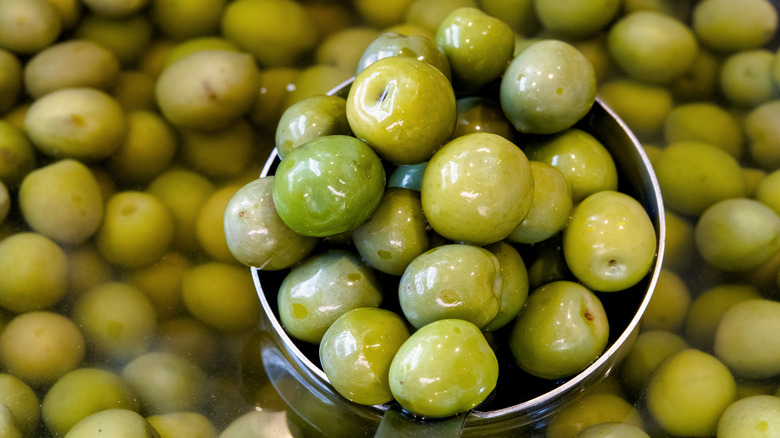
Primarily grown in the Valle del Belice in western Sicily, Italy, and named after the nearby town where they are processed, Castelvetranos (also known as Nocellara del Belice in Italy and some other parts of the world) are medium-sized, vibrantly green olives that are more than just a few notches above the rest in flavor and texture. Sophisticated Castelvetranos sidestep much of what people dislike about olives, eschewing the mushy, tinny, over-salted reputation other olives hold, in favor of a more firm-fleshed, tender-but-meaty texture and a smoothly mild flavor, with just a kiss of sweetness. Not only that, but they look gorgeous on a serving tray. These unblemished verdant green orbs (Castelvetranos have very little discoloration), glistening in the wetness of their brine, are perfectly paired with nuts and cheese, chewy artisan breads, or slathered in olive oil and herbs. Immensely flavorful with a glass of Chardonnay or Sauvignon Blanc, formidable Castelvetrano even hold their own in the presence of a spicy Pinot Noir.
How to use Castelvetrano olives
So, they're good with wine, but we should also point out that no martini ever suffered for having a Castelvetrano soaking in it. In fact, some say they're the absolute best type of olives for martinis, especially those who favor gin. With their herbaceous-luscious flavor and silky mouthfeel, even 007 himself would have to submit to the Castelvetrano olive's charms. Available pitted or unpitted, Castelvetrano are best unpitted (for maximum freshness whenever possible), especially if it's just for snacking or as the ideal olive for your next charcuterie board. The increased textural quality is worth the minor hassle of eating around the pit.
But this little toothsome beauty does more than just lounge in libations; she's a goddess in the kitchen as well, lending punctuating flavor to sensually savory dishes like Calamari With Lemon, Castelvetrano Olives, and Bread Crumbs. Because of their subtle but innate sweetness, Castelvetrano also work scrumptiously well in one of Ina Garten's favorite dishes: chicken Marabella. This time-honored dish from "The Silver Palate Cookbook," marries deeply-flavored sweet elements like prunes and brown sugar, with umami-rich ingredients like capers, chicken, and green olives, stewing together in bay leaves, garlic, red wine vinegar, and dry white wine, intertwining and caramelizing into one of the richest most decadently-flavored dishes you will ever taste. Replacing the green Spanish olives in this dish with brawny Castelvetrano will take this dish into the stratosphere. In the words of "This is Spinal Tap's," Nigel Tufnel, "These go to eleven."