

9 Myths About Pork That Need To Go Away
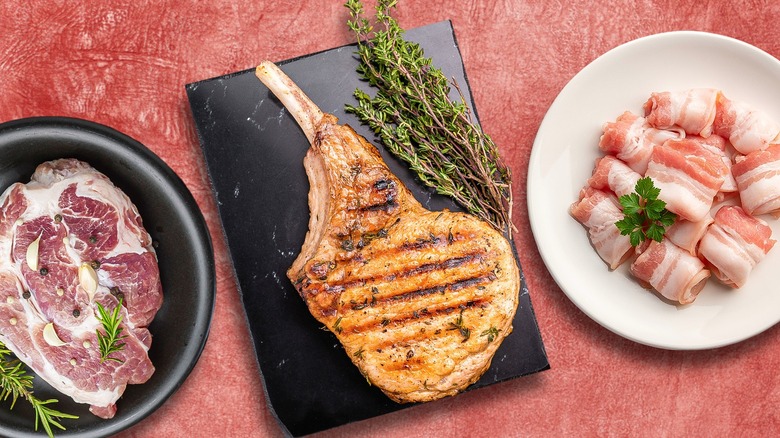
Pork doesn't really need to be talked up. It's already one of the most-loved and most-consumed foods, going toe-to-toe with chicken in worldwide popularity despite chickens being cheaper to raise (and the billions of people who don't eat pork for religious or personal reasons).
That being said, pork often takes a back seat to beef in North America thanks to beef's flavor, personal taste, and cultural heritage. The image of cowboys driving massive herds is a tough one to shake, after all. It also doesn't help that there are a lot of myths surrounding pork and pork-based dishes — which I'm eager to dispel.
I'm a trained chef and big pork fan who both appreciates and understands the protein's versatility. One of my favorite things since childhood — we raised and butchered pigs periodically when I grew up — my first professional gig involved running a kitchen at a family-owned business that opened a chain of regional markets to sell pork reared on its farms. Plus, as a former food safety trainer, I'm also familiar with that aspect of pork's reputation. Speaking as both a pork enthusiast and culinary professional, here are nine myths about pork that really do need to go away.
Pork is fatty
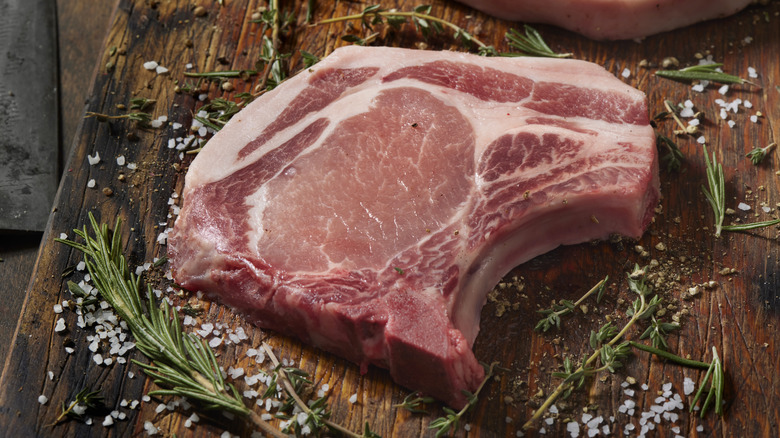
This is one I used to hear a lot in my cooking classes, and it's a bit unfair to pork; after all, very few types of meat are always lean. While venison and rabbits spring to mind (I actually raise rabbits for meat myself), relatively few people eat those. Fish and poultry are usually leaner, but red meats are almost always a mixed bag. Realistically, the fattiness of a given piece of meat comes down to the cut more so than the animal, and pork is no exception.
It's a question of perspective: The same person who makes a face over a supposedly fatty cut of pork may also enjoy a premium steak precisely because it's well-marbled. They're essentially saying the same thing, but the first sounds negative while the second sounds positive.
If you're looking for leaner meats, simply choose your cuts of pork appropriately. As with beef, rib cuts of pork are pretty lush with fat, as are cuts from the shoulder and the belly. On the other hand, pork loin itself is lean and tender (aside from its outer rind of fat, which can be easily removed). Pork tenderloin is also quite lean, and a simple roasted pork tenderloin can go toe to toe with lean chicken breast. In other words, you pick a cut of pork that's appropriate for your meal, and aim for recipes that are well-suited for lean cuts (if that's how you roll).
Pork needs to be cooked well done
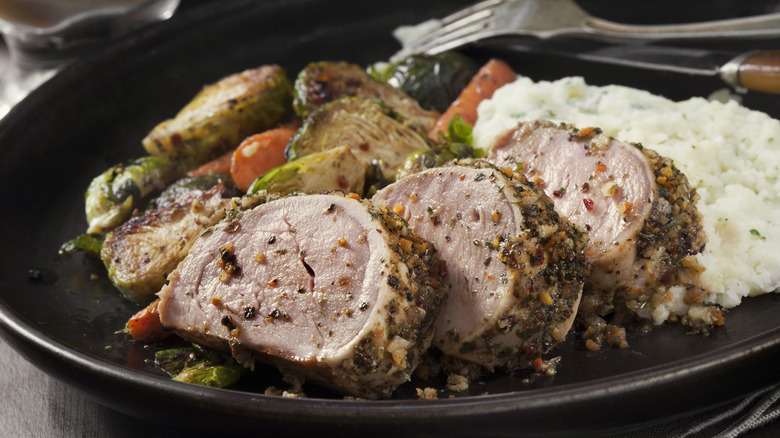
Once upon a time, most small farms, and even many urban dwellers, raised a hog or two to obtain their year's pork. They were cheap to keep (the hogs simply ate their humans' trash, after all), and could be happy in a relatively small pen. Of course, pork was more prone to parasites in those days as a result — most famously trichinella roundworms, which caused a rather unpleasant condition called trichinosis. As a result, many people still falsely believe pork needs to be overcooked to kill any potential microorganisms. Yet that's no longer the case.
Now, since the typical diet for pigs used to include a lot of food waste, as well as byproducts from other animals, cooking pork to well done was indeed necessary. Any parasites accumulated by those other animals could end up in the pigs, after all — and eventually in the humans who ate them. However, regulations governing hog farming changed over time, and those parasites became vanishingly rare in commercially-raised pork.
While trichinosis hasn't gone away completely (there are still a small number of cases every year in the 21st century), it's almost exclusively gotten from wild game. The USDA's cooking recommendations for pork eventually evolved to reflect this new reality, as well. Pork is now treated like any other meat, with whole cuts considered safe at 145 degrees Fahrenheit and ground pork at 160 degrees Fahrenheit.
It's not a healthy option
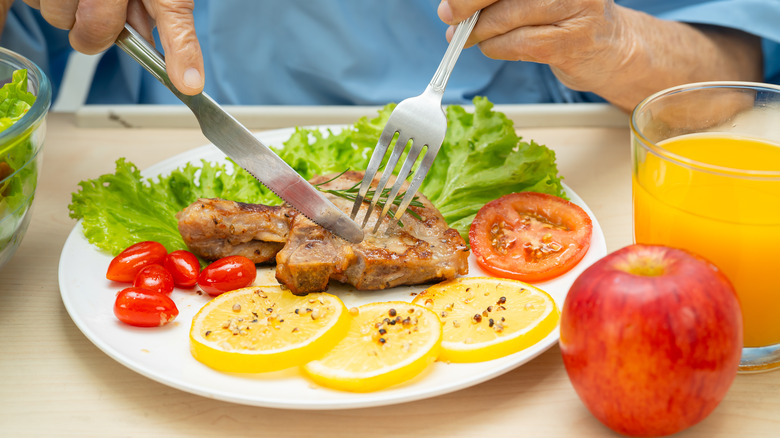
Pork's detractors have a few different ways of expressing this thought. Beyond the notion that all pork is fatty (which I've already addressed), many presume pork fat (or lard) is unhealthy because of its saturated fat content. However, beef fat (or tallow) is actually higher in saturated fat.
Additionally, some may argue that pork isn't as nutritious as other red meats, which isn't true broadly speaking. There are differences between cuts, of course; for example, a pork loin chop has a different nutritional profile from a tenderloin. If we compare a pork loin chop to a T-bone steak, though — which is its beef equivalent — you'll find pork provides slightly more protein and slightly fewer calories (with less fat). While beef is higher in iron, pork is generally lower in sodium, and higher in potassium, vitamins A, E, and D (among other benefits), so nutrition's not an issue.
Another knock against pork is that it's often sold in processed form, like bacon or ham, with research suggesting these cured meats can increase your risk of cancer. However, most of these studies can only suggest a potential association between consumption of cured meats (and red meats in general) and a bump in your cancer risk; in other words, it's not necessarily cause-and-effect. If your diet and lifestyle are otherwise healthy and you don't have specific risk factors, there's no reason you can't enjoy pork in moderation — cured or otherwise.
It's a white meat
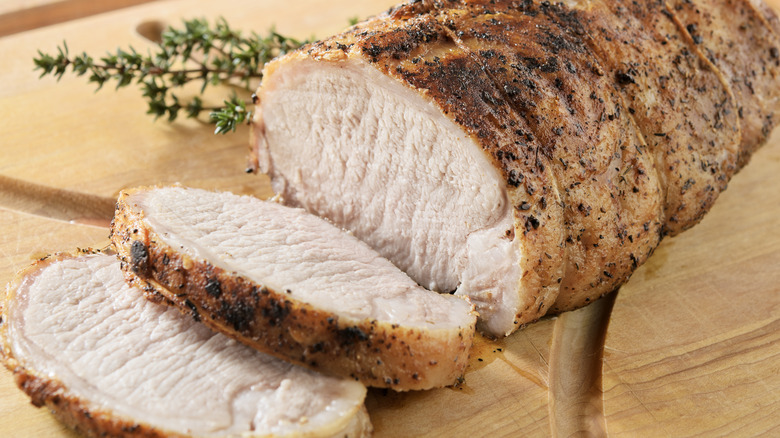
Is pork a white meat? Well, no, not really. In fact, that whole "the other white meat" slogan was just a marketing campaign, because the pork industry wanted to get away from pork's association with heavier meals. The ad campaign positioned it (successfully!) as a lean and healthy alternative to chicken, and the message stuck. Still, pork is considered a red meat by the USDA and other sources, because it contains more myoglobin (the iron-carrying molecule that gives meat its red or pink color) than poultry or fish.
Since the meat of any large livestock animal is automatically considered red meat, pork qualifies on that count, as well. That said, depending on where it comes from on the animal, some pork cuts are whiter in color while others are redder. As a rule of thumb, you'll find that pork's lean, tender cuts, like the loin and tenderloin, are paler than the chewier, more-used cuts such as the shoulder and leg. That's mostly because they're different types of muscle fibers.
Lighter-colored fibers make up fast-twitch muscles for quick bursts of activity, and darker fibers build the slow-twitch muscles needed for endurance. It's easy to remember which is which because pale cuts are best for quick cooking methods like grilling, while dark cuts are best for slow cooking.
Uncured or nitrite-free pork is healthier
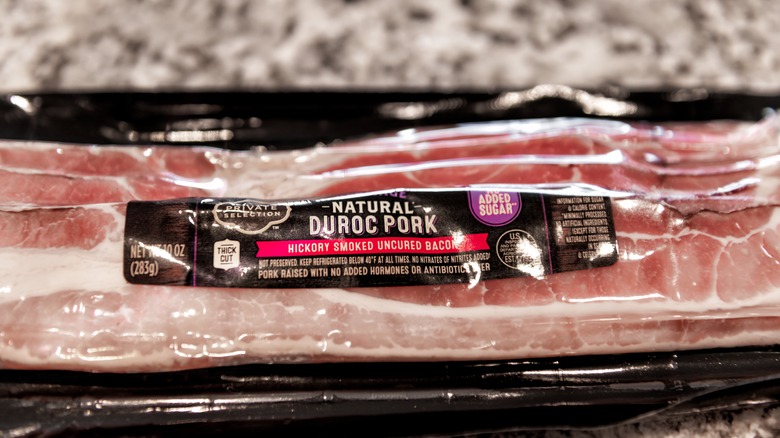
This myth relates back to the notion that pork is always healthy, though it's a specific enough question to be called out separately. One school of thought argues the reason cured meats may increase cancer risk is the presence of nitrites, or preservatives that help meat retain the beautiful pink or red hues and protect against botulism. Even though some presume uncured or nitrite-free pork products are automatically healthier, that's not necessarily the case.
Now, some pork producers have taken to omitting the use of refined nitrites from bacon and ham products to appease these concerns. However, while these items are often marketed as uncured or nitrite-free, neither of those labels is strictly accurate. After all, if it's bacon or ham, it's cured (unless it's a fresh ham or pork belly, which are simply pork). Plus, certain tactics for producing supposedly uncured or nitrite-free pork products are somewhat sketchy. For instance, some products are labeled as nitrite-free because they're made with nitrates instead — which neatly sidesteps the fact that your body will eventually turn nitrates into nitrites anyway.
Even meats cured with naturally-occurring items, like sea salt or vegetable extracts (usually celery juice), rather than refined nitrites is misleading ... because they're also naturally high in nitrites. That's actually the whole difference between cured and uncured bacon: The nitrites are naturally occurring rather than refined or manufactured. Either way, it's not strictly true that uncured or nitrite-free products are a better overall option.
Pork is always factory-farmed
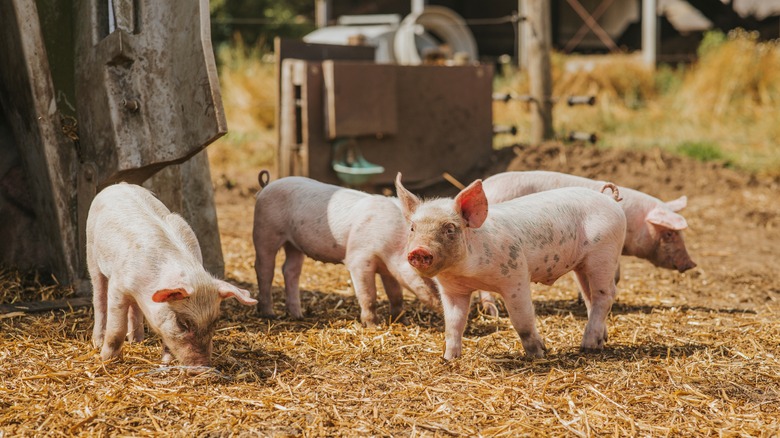
Over the past few years, there's been a wider recognition that the cheap meat in our supermarkets comes at a cost in animal welfare. Much of the meat and poultry we eat comes from industrial operations called Concentrated Animal Feeding Operations, or CAFOs, which is what most of us picture when we think of "factory farms." But not all pork on the market automatically comes from these sources.
To be fair, a CAFO is very much like a factory in its way. It's geared around maximum efficiency, meaning chickens or hogs raised in them are usually caged or penned in the smallest viable space, with little or no room to move around. While this results in cheap pork and chicken, the animals themselves lead short and miserable lives. Of course, some consumers don't care about this and will buy whatever's cheapest (we all have to make our grocery budgets stretch, after all). But if you're looking for non-factory-farmed pork, it does exist.
If you aren't ready to go vegan, you can find cruelty-free pork with a little effort. Some brands of pastured or ethically-raised pork are distributed through supermarkets, and there are online vendors to choose from, as well. It's best to find a local producer, though, and buy directly, or from a farmer's market. This rewards the farmers for raising their animals well, and keeps your grocery dollar at work in your own community.
Pork is bland, and pretty much all the same
Speaking as a chef and a pork lover, the meat isn't bland. It's rich, savory, and versatile, so if you find it's pretty much all the same, you probably just haven't eaten it when it's been well-prepared.
For one thing, a lot of people will only cook pork well-done (we've spoken about already). That's okay with darker cuts, like pork shoulder (as any barbecue enthusiast will tell you), but it leaves the lighter cuts dry and uninteresting. Even supermarket pork is better and tastier if you know how to season it properly. Instead, cook any leaner cuts to no more than the USDA's recommended 145 degrees Fahrenheit.
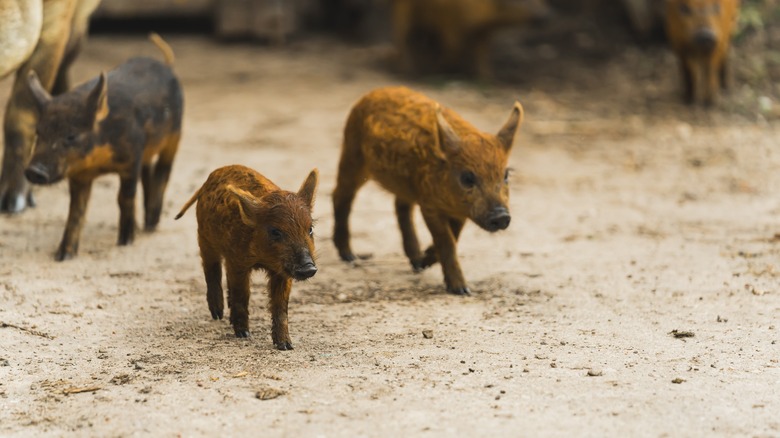
Then there's the difference between breeds. Most commercial hogs are yorkshires or durocs, which skew lean and muscular. However, berkshires, tamworths, Gloucestershires, and Hungary's distinctively curly-haired mangalitsas all have very distinctive flavors and characteristics. I've had pork from most of those, along with wild boar (that was pastured and domesticated). They're all different, but all flavorful and wonderful to cook with.
You can't eat uncooked pork
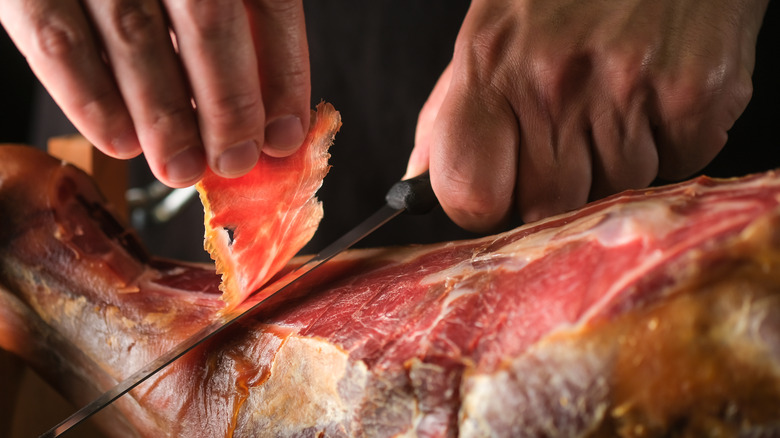
I'm (barely) old enough to remember when the prevailing take on sushi was that "Americans will never eat raw fish." Well, we all know how that turned out. Of course, pork is a whole different animal (as they say), and one that few of us would ever consciously think about eating raw. To be clear, I'm not talking about anything as bizarre as pork sashimi, though there are actually some chefs doing exactly that (a practice I certainly don't endorse myself). No, in this instance, I'm talking specifically about dry-cured pork products, like prosciutto.
These are considered safe, even by the USDA, because they're too dry for bacteria to flourish. Their salt content — and, in some cases, the presence of nitrites, add another level of safety. This class of products includes both whole-muscle hams like prosciutto, jamon, China's famous Jinhua hams, as well as America's own dry-cured country hams. It also includes dry-cured salami and other types of charcuterie and sausage, some of which are fermented as an extra precaution against bacteria.
In short, all of these uncooked pork products are safe to eat – as long as they're made correctly. So stick to offerings from certified, inspected producers rather than any in-house offerings at restaurants (with all due respect to my colleagues), or anything from your hobbyist neighbor.
Pork is unsustainable and bad for the environment
Without getting into the weeds on how much individual choices affect the global climate, compared to industrial activity and transportation? There are things private citizens can do to meaningfully reduce their own carbon footprint. Sadly for climate-conscious omnivores, eating less meat is one of the biggest, though pork isn't the biggest offender by any means.
If you hit your favorite search engine, it won't take you long to find a chart that quantifies the environmental impact of foods. Beef has by far the highest impact, while pork and poultry are well down the list in the 9th and 10th positions. That's not the whole story, as North American beef producers are quick to point out — U.S. and Canadian beef has a lower impact than the world average — but there's still a big discrepancy.
So while pork itself is not as sustainable and environment-friendly as plant-based sources of protein, swapping out a few beef meals each month in favor of pork would go a long way. If you combine that with the ethical (and quality) advantages of buying non-industrial pork from a local producer, you'll have a meal you can feel pretty good about.