

The Reason Beef Tenderloin Steaks Are Often Cheaper Than The Whole Thing
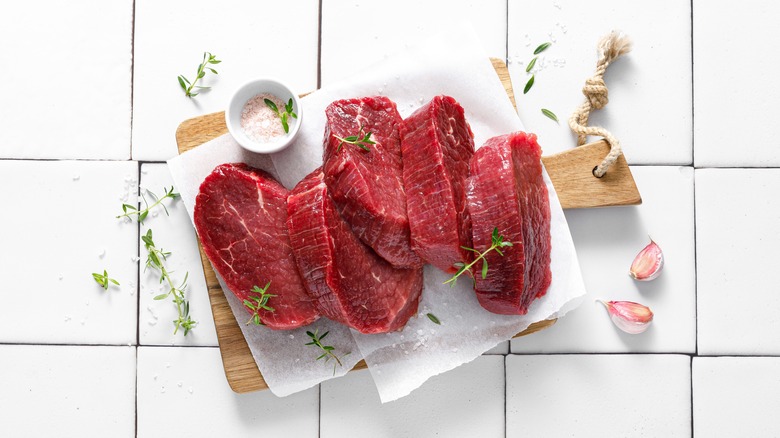
If you've ever walked through the meat section at the grocery store and sifted through the selection of USDA-graded beef looking for a good deal, you might come across something weird: pre-cut beef tenderloin steaks, somehow, cost a few dollars less per pound than whole tenderloins. Logically, since they come from the same cut, they should be about the same price, right? Well, it's not a pricing error — it mostly boils down to how much processing each type of beef goes through before it hits the display case.
There's a reason why whole tenderloins look so "clean" and succulent with little to no surface fat at all. Professional butchers have gone through each one and removed every bit of fat, silver skin (a type of chewy connective tissue), and the chain muscle. The result is basically pure, lean meat — the prized psoas major muscle of the cattle. Not only is this trimming process incredibly labor-intensive, but by removing all these bits, you're trimming away a lot of weight from the original cut. Beef packers have to account for this weight loss, too, so the whole thing ends up being more expensive.
Meanwhile, pre-cut steaks are mostly untrimmed. They're essentially sliced from the raw tenderloin as-is with minimal processing. Less labor costs plus less waste equals a more palatable price for your weekend steak dinner. The trade-off is, of course, the silver skin. Since it doesn't break down during cooking, it can turn your steak rubbery if you don't trim it off. Fortunately, removing it is quite easy with the right technique (and a sharp knife!)
The secret economics behind your tenderloin steak
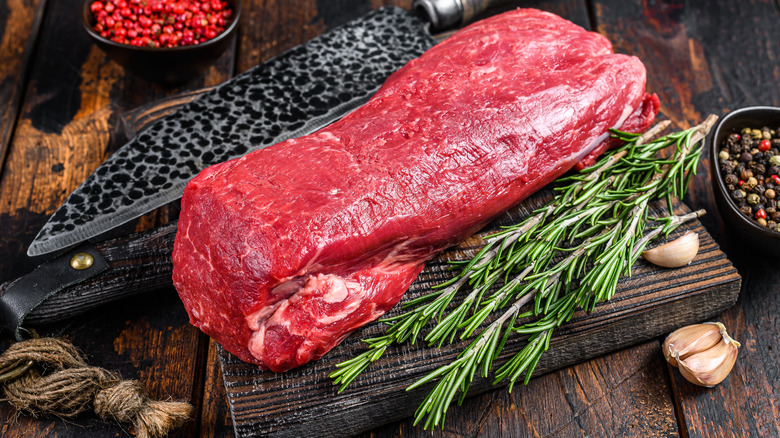
Professional butchering services, as it turns out, are expensive. To get a properly trimmed tenderloin, the butcher has to be quite skilled with his knives, surgically navigating around the anatomy of the muscle to preserve as much usable meat as possible while removing all unwanted materials. When you factor in that a whole tenderloin can lose 18 to 20% of its original weight during proper trimming, the labor and waste costs add up quickly. When you think of it that way, the extra $3 to $5 per pound we're paying is worth it for the convenience.
But if you're making beef Wellington on a budget and are very confident in your knifework? There's a third option other than just picking between tenderloin steaks or trimmed wholes. Many butcher shops and warehouse stores like Costco actually keep stock of untrimmed whole tenderloins that you can request. Offering more total meat than individual steaks, while being cheaper per pound than trimmed options, it's an excellent choice if you don't mind rolling up your sleeves and trimming the tenderloin yourself.
So, the lesson is this: convenience costs money. Depending on your budget, confidence in your beef-trimming skills, and how much time you have, take your pick accordingly. But for most people? If you're planning a whole beef tenderloin roast this weekend, just splurge on the trimmed version and save yourself the effort.