

The Science Behind Ripening Fruit In A Brown Paper Bag
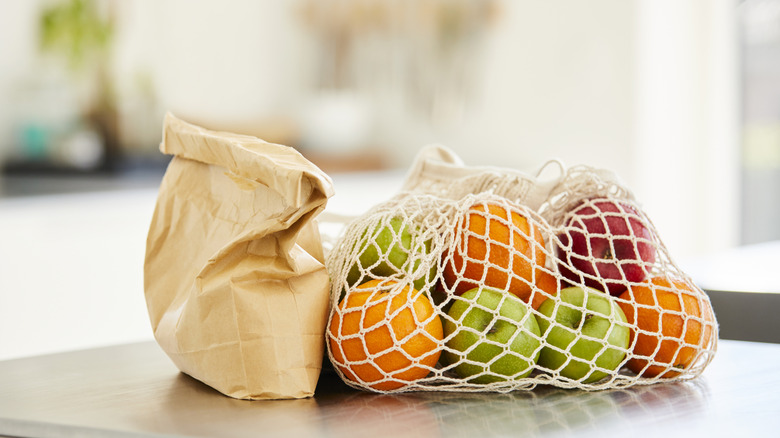
There's nothing worse than biting into a crunchy nectarine, and leaving them to sit on the kitchen counter to ripen can be agonizing. Fruits like nectarines, plums, pears, and bananas are climacteric, which means they continue to ripen after being picked. It also means you're likely to encounter them while they're under-ripe. Luckily, you can get these tough customers to ripen faster at home — in a paper bag.
Climacteric fruits are harvested while they're still a little immature. This makes them less likely to get damaged in transit or go bad before they can be eaten, but it also means they can end up in your kitchen while they're still barely edible. All climacteric fruits release ethylene, a gas that acts on roots, leaves, and fruits, a bit like how hormones work within the human body. Ethylene activates enzymes that turn the starches in the fruits into sugars. And sugars are part of what makes ripe fruit so delicious!
That's why putting a hard peach or avocado in a paper bag works. The bag keeps the ethylene close to the fruit, speeding up the processes the gas kicks off. Of course, this doesn't work on non-climacteric fruit like oranges and grapes. That's why these are usually sold ready to eat, and why they tend to stay tasting pretty much the same for a bit longer than their climacteric cousins.
Which fruits and vegetables can be ripened in a paper bag?
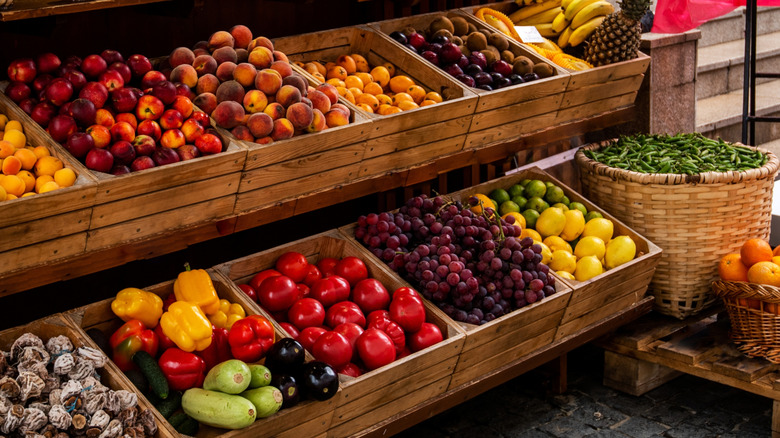
Before you start shoving all the fruit you buy into paper bags, it's important to understand which popular pieces of produce are climacteric and which aren't. Climacteric kitchen staples include apricots, avocados, kiwis, bananas, mangoes, plums, pears, peaches, chilis, and tomatoes. Non-climacteric classics include grapes, oranges, strawberries, pineapple, and watermelon. More broadly, fruits that can be harvested early and continue to ripen away from the plant to achieve full flavor are climacteric, while fruits that reach full ripeness and flavor only on the plant are non-climacteric.
You might have noticed that many climacteric fruits soften more quickly when they're left out of the refrigerator, particularly in warm weather. That's because temperature affects ethylene production. In the summer, you can often leave fruits out to ripen to your taste, then refrigerate them to keep them just how you like them. In the winter, or in colder parts of the world (or if you keep the air conditioning cranked up), you can mature them in a paper bag and then chill them.
The gas climacteric fruit releases can affect their neighbors. Some non-climacteric produce is, nonetheless, ethylene sensitive. So, you can ripen a cucumber or a carrot by putting it in a paper bag with a banana. You should also think carefully about how to store fruit in the fridge. Climacteric fruit releases ethylene more slowly in the cold, but the gas will still be present, causing all reactive produce in close proximity to ripen.
How to ripen fruit in a paper bag
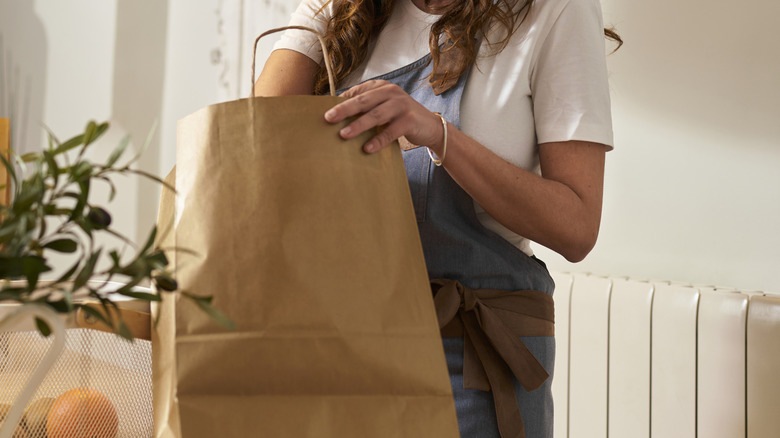
Once you're sure you're working with climacteric produce, you can start ripening some of your favorite fruit at home. It really is as simple as it sounds! Any paper bag will work, as long as it's big enough for your produce. Just place your climacteric fruit in the bag and fold it closed. At room temperature, fruit should ripen quickly. Remember not to use plastic bags as they don't allow airflow, so you might end up with rotten fruit. If you don't have any paper bags, you can use a clean cotton kitchen towel or even a pillowcase.
There will always be some trial and error involved in ripening fruit using this method. Temperature, moisture, and the maturity of the fruit when you bag it can have an effect on how long it takes to reach perfection. Once you're familiar with the rate at which various types of fruit can be force-ripened at home, you can buy slightly under-ripe fruit and use the paper bag trick to get it ready just before you use it or put it in the refrigerator for that upgraded fruit salad you're making on the weekend. Either way, ripening fruit in a paper bag is a great way to save money and avoid food waste, allowing you to bulk buy produce.