

How Much Butter Is In A Single Croissant?

When you think of a perfect croissant, two key factors probably come to mind: flaky layers and, of course, butter. Lamination, or layering sheets of butter between dough, is key to creating those infamous flaky layers. But you might ask, how much butter actually ends up in a single croissant? While it depends on several factors like the size of the croissant, the butter's fat content, and your particular recipe, a single croissant usually contains about 25 to 30% butter per weight, and sometimes more (looking at you, French pastry shops). This can equate to upwards of a tablespoon or two of butter per individual croissant.
For extra-large croissants, for instance, a recipe may call for 3 sticks of butter for an eight-croissant yield, which is approximately 3 tablespoons of butter per pastry. Then there are recipes that use a similar amount of butter, but prompt you to make smaller croissants for almost double the yield. Regardless of pastry size, this high volume of butter in a classic French croissant recipe may cause you to do a double-take. But if you ask the artisan pastry experts, it's likely they'll tell you the more butter, the better. Overall, a recipe with 28 to 30% butter — or a couple of tablespoons of butter per unit — is ideal for the richest flavor and flaky layers. Some recipes may call for less than 25% butter, but these will likely come out more bready, less flaky, and a bit bland.
Choose your butter wisely when making croissants
Since butter is the star of the show when making croissant dough, and you'll be using an ample quantity of the ingredient, it's very important to choose the right butter. To make perfect homemade croissants, select a butter with over 82% butterfat if possible. Butter at the grocery store in the U.S. typically contains more water than European varieties. So, if you can find high-quality European butter with 84 to 86% butterfat, your croissants will turn out more flavorful.
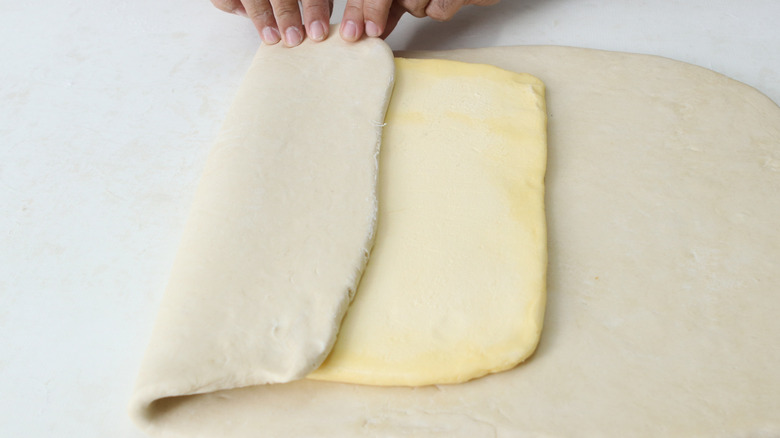
In addition to high-quality, high-fat butter, butter handling techniques also impact how much butter ends up in the final baked croissant. The basic method to make croissants starts with enveloping a layer of rolled-out butter in dough, folding, and rolling out the dough (laminating it) a few times, before shaping and baking the pastries. Keeping butter (and workspaces) at a cold but workable temperature is key to ensuring flaky layers, while reducing the risk of the butter melting or leaking out onto the pan during baking. Overall, you want your butter cold, but not so cold that it's hard to roll out or creates uneven butter chunks in the dough. All-in-all, when trying your hand at croissants and other French pastries like Kouign-Amann, remember that the process takes time, practice, patience, and, above all, lots of butter.