

Adding This Ingredient To Beef Stew Right Before Serving Brings Out The Flavor
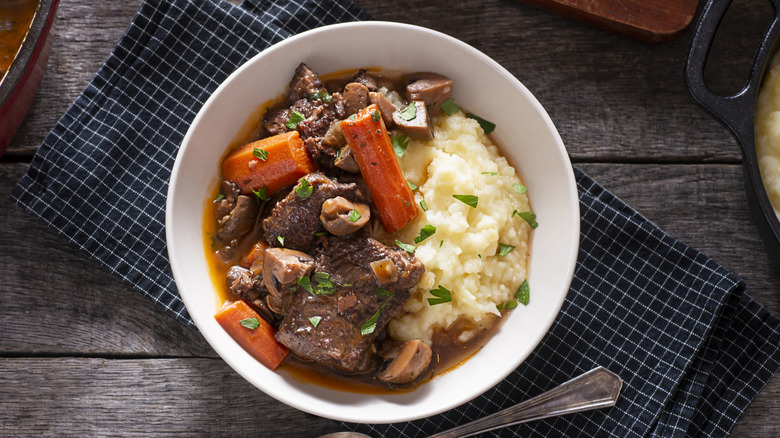
When a beef stew simmers slowly, all its ingredients blend into a luxurious, rich, deeply savory mix — which is usually totally delicious, but sometimes it can feel heavy or flat. There's a secret ingredient, though, that even professional chefs often use to finish off a dish, that brightens the flavors, and adds a sharpened edge that lifts rather than overpowers. And it's a staple in many households: lemon.
Adding a little squeeze of fresh lemon juice right before serving cuts through the stew's rich umami and fat and revives your palate, making each mouthful feel more vibrant. If you add your squeeze too early in cooking, the lemony taste loses its aromatic intensity. Citric compounds break down or get absorbed, diminishing its zestiness, in contrast to a fresh squeeze at service, which retains brightness and aromatics. As a result, the citrus notes feel fresh, more fragrant, and perceptible even in small amounts. Adding some just-grated lemon zest at the last minute produces similar results, releasing volatile oils and aroma compounds that won't survive prolonged simmering.
Community cooks and recipe developers also back the finishing technique. One Reddit food-lover mentions that "a squeeze of lemon or a bit of red wine vinegar are my go-tos" to lift a stew right before eating. Another commenter on a food‑hack thread explains that "a smaaaall splash of acid like vinegar or lemon juice ... can go a long way to brighten a dish." Thus, a last‑minute acidic jolt adds depth without heaviness.
Lemon improves beef stew's flavor and balance

Adding lemon juice just before serving your beef stew doesn't just brighten — it also enhances perceived flavor balance. Dishes rely on interplay among the five basic tastes — sweet, salty, sour, bitter, and umami — and a touch of sour from lemon zest or juice can restore that balance in fatty, savory stews. It acts as a sour counterpoint to rich beef, creating harmony among flavors, instead of one dominating the palate.
Many beef stew recipes deliberately build in acid toward the end. For example, a Greek lemon beef stew includes lemon juice and zest after the long simmer to infuse brightness without overwhelming the meat's richness. These recipes stress using fresh lemon juice — bottled versions lack brightness and depth and may taste flat or dull. Freshly squeezed juice keeps the flavor crisp, aromatic, and refreshingly bold. Even in slow‑cooker versions, the best recipes recommend stirring in lemon juice once the stew has thickened and the beef is fork‑tender — right before serving. This timing ensures the acid remains fresh and impactful. The result: Your stew's flavor profile transforms from heavy and staid to vibrant and layered, with acidity highlighting herbs and spices while rounding out fattiness.
Adding a squeeze of lemon juice at the very end of cooking is not a minor tweak — it's a game‑changer. It's supported by culinary science, chefs, home cooks, and well‑tested recipes. Try it once, plus a sprinkle of zest — and you'll wonder how you ever served stew without it.