

This Unexpected Spot In Your Home Is Perfect For Proofing Bread Dough

Looking for a perfect spot to let your dough rise during the cooler months? You are not alone. The proofing process, which requires a steady and humid temperature, is crucial for an airy and supple bread crumb. While the ideal environment is one that is controlled, such as in a bread proofer, these can be expensive and take up space. Behold, the secret spot that is hiding in plain sight: a warm and cozy laundry area.
Temperature is the key to proofing for perfect sourdough every time. Through the fermentation process, yeast releases gases that cause a beautiful "proof," resulting in the perfect cross-section of your favorite baked goods. Fortunately, after a dryer cycle, this appliance retains residual heat. So, placing your dough on top of the dryer, or even inside, creates a spot for an increased temperature, which will help ensure a plump rise. While a warm environment like the laundry room can speed things up and provide a proper proof, you can also keep things slow by letting the dough rise overnight in the fridge.
How long should you leave dough to proof?
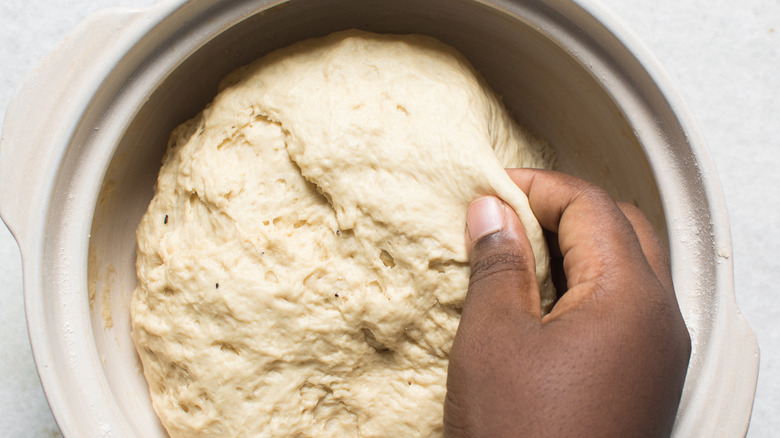
Proofing is often the final step before baking. But the time required for this process varies depending on the type of dough. For example, a loaf of sourdough bread, brioche, or yeasted treats like homemade cinnamon rolls all require different proofing times. And that's why it's important to make sure you plan ahead. Most recipes call for a proofing time between 1 and 3 hours at room temperature.
Keep in mind that many recipes call for two separate proofs, too. The first rise, or bulk proof, wakes up the yeast in the dough, while the second rise occurs after shaping and allows the dough to expand more significantly. You'll know your dough is ready, which is indicated by using the poke test, a method where you gently poke your dough. It should spring back slowly, signaling the air is sufficient inside.
Beyond creating a well-risen dough, proofing and its subsequent fermentation process have additional benefits, such as developing a more complex flavor, adding a slight tanginess, and helping to achieve a crusty outside and soft, light inside.