

For A Traditional French Apple Cake, You Need To Ditch The Spices

Apples and cinnamon are an iconic pairing in coffee and crumb cakes. However, this aromatic dream team doesn't always come as a matching set in baked desserts across the pond. For example, if you're making a traditional French apple cake, you'll need to ditch those spices and sub them for a dash of rum to showcase the taste of the sliced fruit.
A traditional French apple cake contains almost all the same ingredients you'd find in a spiced apple cake, such as butter, eggs, flour, and sugar. The sliced apples are folded into the batter at the very end, along with a dash of rum, and the cake is baked with a final sprinkle of granulated sugar to create a sweet, crackly crust. Unlike an American-style apple cake, which features fragrant spices, such as cinnamon, cardamom, or ginger, a French apple cake purposefully nixes them. This allows the quality of the apples, the richness of the premium butter, and the warmth of the rum to take center stage. However, it does often contain vanilla extract to complement the molasses-like flavor of the rum.
The alcohol acts as an integral flavoring agent in French apple cake, enhancing its sweetness and aroma (you can swap the rum for Cognac if preferred). While you could sub the booze for apple juice or milk if you're after a spirit-free option, the alcohol is the crucial ingredient that lends this European cake its distinctive character and complexity.
The best apples for making French apple cake
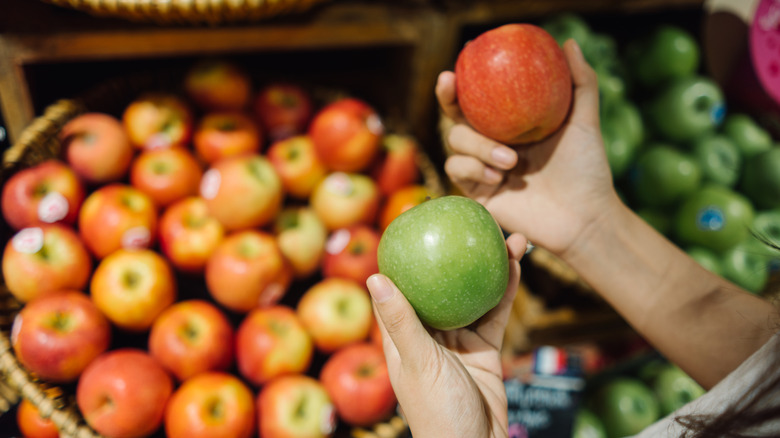
The best apples for baking a cake, whether it be French or American style, are Rome and Cortland apples because they have a dense quality that doesn't turn mealy when incorporated into cake batter. However, Granny Smiths are also a favorite due to their slight tang and firm structure; they both counterbalance the sweetness of the sugar in the recipe and prevent a soggy crumb. The texture of a French apple cake should ultimately be tender and light, with little morsels of apple running throughout.
Moreover, some basic recipes call for the sugar and butter to be creamed together, whereas others require whisking the eggs and sugar together first until they reach a voluminous ribbon stage before melted butter and flour is added to the mixture. The latter technique whisks more air into the batter and helps to leaven it, resulting in a cake with a lighter mouthfeel.
French apple cake is often dusted with confectioner's sugar prior to slicing and is served as is. However, you can pair it with a quenelle of tangy creme fraiche to counterbalance the sweetness of the sugary crust if you want to serve it at a dinner party. Other European sweet treats that should take pride of place at your get-togethers are galettes (a delicious French dessert that's a unique mashup of a pie and pastry) and a classic tarte Tatin (an upside down pie made with sliced caramelized apples).