

16 Popular Types Of Smoked And Cured Fish From Around The World You Should Know About

Humans have been curing food from the very beginning. Early in their evolution, our ancestors realized that drying meat slowed the spoiling process. Later, methods such as brining and smoking became popular preservation methods as well. Nowadays, with modern refrigeration and packaging, we don't need to ferment our beverages and smoke our meat in order to safely consume them, but beer and wine aren't going anywhere, and chorizo isn't losing its appeal.
Since they undergo centuries-old methods of preservation that require time rather than newfangled food technology, cured meat and fish are often relegated to the expensive artisanal goods category. However, many of these items have humble origins. Fish has been part of the human diet for approximately two million years, and most of that consumption wasn't happening in Michelin-starred restaurants.
Around the world, fishing has been such an integral part of many cultures that there are now countless ways of preserving and serving fish. From finnan haddies in Scotland to katsuobushi in Japan, here are 16 of the most popular and distinctive.
Kippers (Great Britain)
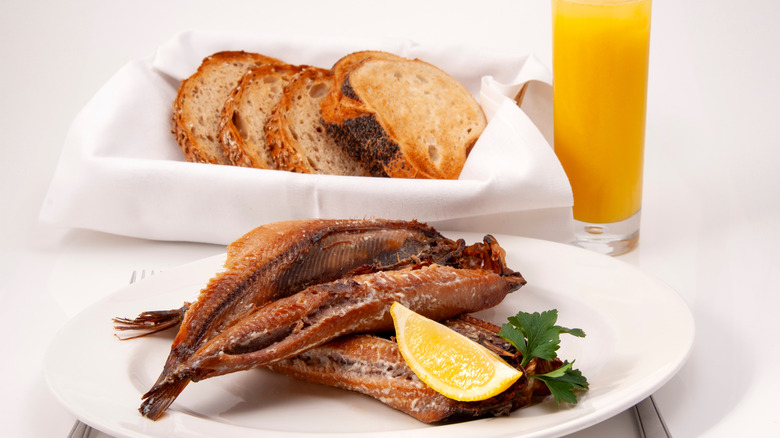
The British have been eating kippers since the early 19th century. Made by splitting herring lengthwise, soaking it in brine, and smoking it for about 18 hours, it is often eaten at breakfast and is known for its intense, fishy smell. For more than a century, kippers were an affordable source of protein for people of all income levels. Even Queen Elizabeth II is said to have been partial to them. They were so prized, in fact, that other countries in Europe imported them despite having plenty of their own varieties of smoked fish to choose from.
In the 1970s, however, overfishing had taken its toll, and the herring population was nearly wiped out. Fisheries collapsed and kippers disappeared from store shelves, turning them into relics of the past within a matter of years. It's only in recent decades that the population has surged, and the beloved product is readily available again. Not surprisingly, Brits have welcomed them back to their plates with open arms.
Nova salmon (U.S.)
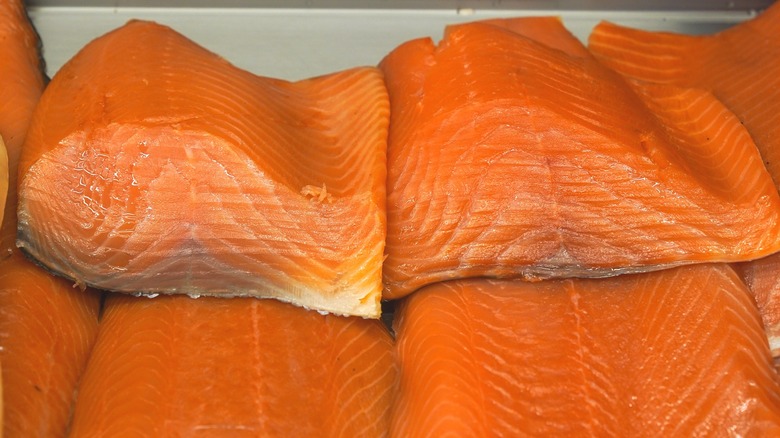
There is a lot of confusion over the differences between types of cured salmon. Contrary to popular belief, lox is not smoked (more on that later), but Nova salmon is. The name refers to Nova Scotia, the coastal province in Eastern Canada, but it indicates its preparation rather than its origin. It came about through necessity. Around the Second World War, king salmon, which was the variety used to make lox, was in short supply, so American smokers looked to Nova Scotia, where Atlantic salmon was abundant.
Nowadays, Nova salmon can come from any number of geographical locations and has nothing to do with the Canadian province; however, the process of making it is specific enough that it has earned its own name. The fish is cured in salt for 18 to 24 hours, then rinsed to remove excessive saltiness and dried in a smoker for seven to 14 hours. It is then smoked for up to eight hours.
Interestingly, Nova salmon is not popular in Canada. It was named by Americans based on the origin of the original fish they used, and it stuck. You'll find plenty of types of smoked salmon in Canada, but it probably won't be called Nova salmon.
Kippered salmon (U.S. and U.K.)
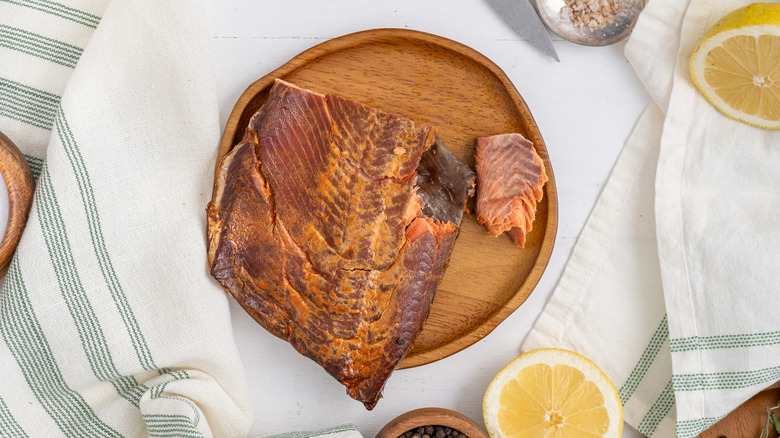
Another version of smoked salmon that you'll find is kippered salmon. Unlike lox and Nova salmon, you'll be able to differentiate this one from the others by sight. Rather than looking almost raw and being cut into thin slices, kippered salmon is sold in chunkier fillets and could pass as baked because it has been hot smoked at a high temperature (around 150 degrees Fahrenheit) after being cured in salt. Paradoxically, it also has a higher moisture content than Nova salmon because it isn't dried before smoking.
If you're eating a bagel with cream cheese, lox or Nova salmon would be the varieties to choose. If you're planning to tuck into a piece of smoked salmon with a knife and fork or flake it into salads, kippered salmon is what you're after. Aside from the smoky flavor, it can pass as baked salmon, albeit significantly more intense in flavor.
Tea smoked fish (China)
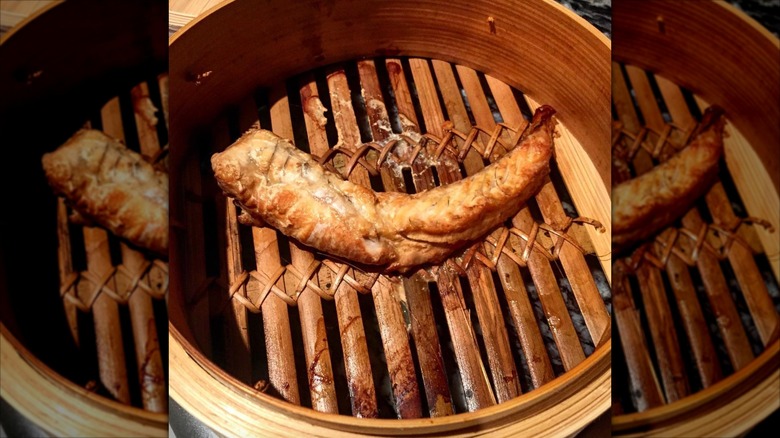
Tea smoking isn't limited to one type of fish, which is great news, because the results are delicious and you'll want to do it as often as possible. The Chinese technique involves using the smoke from toasting tea leaves and spices to cure meat. Unlike many of the other smoking and curing methods, this one is easy to do at home and doesn't take days or months to complete.
The traditional method requires a wok, loose-leaf tea, a little sugar, and some uncooked rice. The main thing to keep in mind is that you aren't trying to incinerate anything. The last thing you want is for the ingredients to burn and suffuse your fish with the bitter taste of charcoal. Depending on the thickness of the fish you're using, you may need to steam it lightly before smoking it to ensure it's cooked through, or put it in the oven afterward to finish the job. If you're in China, you may be lucky enough to try the restaurant version of this technique, but otherwise, you can do it yourself in less than an hour.
Arbroath smokies (Scotland)
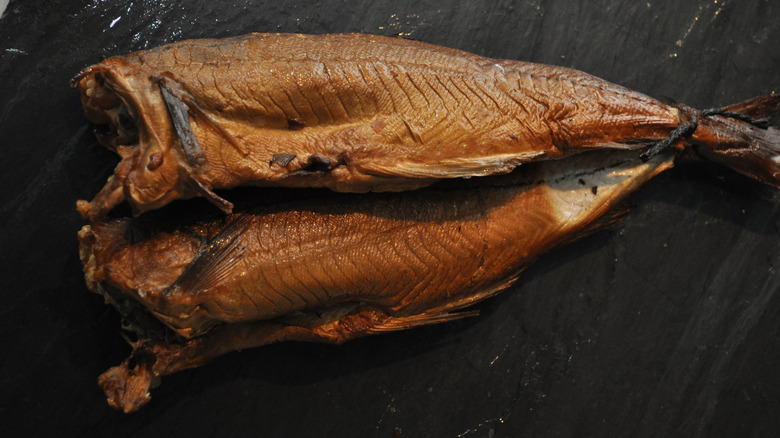
The U.K. has many different types of cured fish, which is hardly surprising considering that it's a relatively small island nation. Arbroath smokies are only made in a small geographical area, in and around the town of Arbroath on the East Coast of Scotland. The process is extremely specific and laid out in detail in a document from the Department for Environment, Food and Rural Affairs. It's made from haddock that is cured in salt to remove some of its moisture, tied in pairs with locally made jute string, and hung out to dry on rails. Last but not least, it is smoked over a pit of burning hardwood, providing it with a deep color on the outside without changing its pale interior.
Arbroath smokies have been around for centuries and are now a key tourist attraction for the area. Legend has it that they were invented by accident when a fire broke out in a house where fresh haddock was hanging, but it's difficult to substantiate. Whatever their precise origins, they are designated by the European Union as a product with protected geographical indication.
Finnan haddie (Scotland)
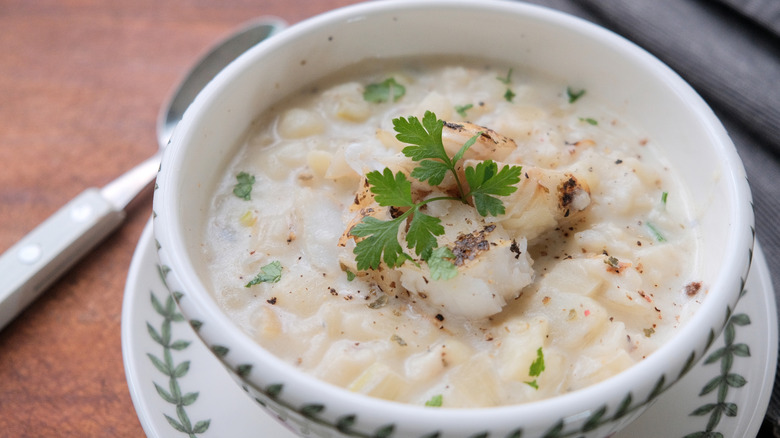
Like Nova salmon, finnan haddie has long outgrown its geographical specificity. Originally made in Findon, a Scottish town on the Northeast Coast, it is a type of smoked haddock that the Scots have been eating since the 1640s. Where Arbroath smokies are smoked over a hot, hardwood fire, finnan haddies are smoked more gently over a fire of peat and green wood, giving them that distinctive peaty flavor that you might know from certain types of Scotch. That said, the name is no longer tied to a specific curing process, meaning that some products labeled as finnan haddie will not have been smoked over peat. If you're on the lookout for the real deal, look for ones that are split down the middle and do not have dye in their ingredients list.
In Scotland, finnan haddie is popular as a breakfast food poached in milk and served with eggs. It is also used in the Scottish classic, cullen skink, a velvety soup made with cream and potatoes.
Katsuobushi (Japan)
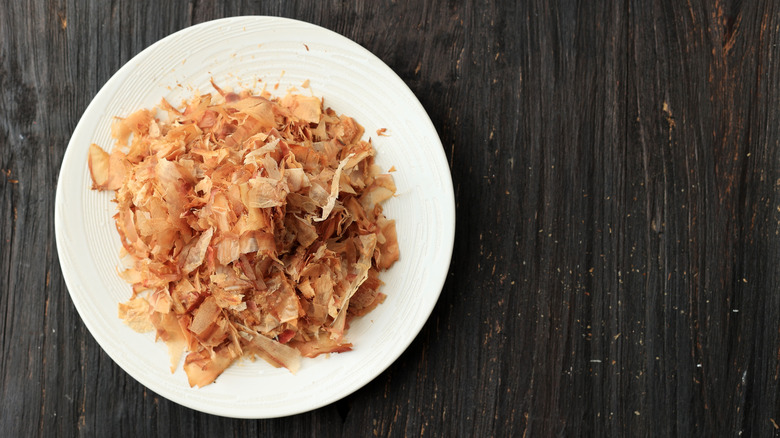
You might not know it, but if you're a fan of Japanese food, you've almost certainly eaten katsuobushi. Also called bonito flakes, katsuobushi is made of smoked and fermented tuna, and it's the hero ingredient behind the classic umami flavor of many Japanese dishes. Dashi, an everyday stock that features heavily in the country's cuisine, uses katsuobushi as a foundational ingredient. If you've eaten certain types of ramen, soba noodles, sauces, or soups at a Japanese restaurant, you have almost certainly enjoyed dashi, and by extension, katsuobushi. You'll also find it sprinkled on dishes as a flavorful garnish.
Making bonito flakes is a painstaking, months-long process. First, fresh skipjack tuna is steamed and deboned. Then, it is smoked, often for nearly a month, to dry it and provide flavor. Afterward, it undergoes a lengthy fermentation process with the help of a special type of mold. Some types of katsuobushi skip this step, but the traditional kind stretches the fermentation period across months and even years. After all that, the fish takes on the texture and appearance of wood, an unassuming flavor powerhouse that is a cornerstone of Japanese cuisine.
Ceviche (Peru)
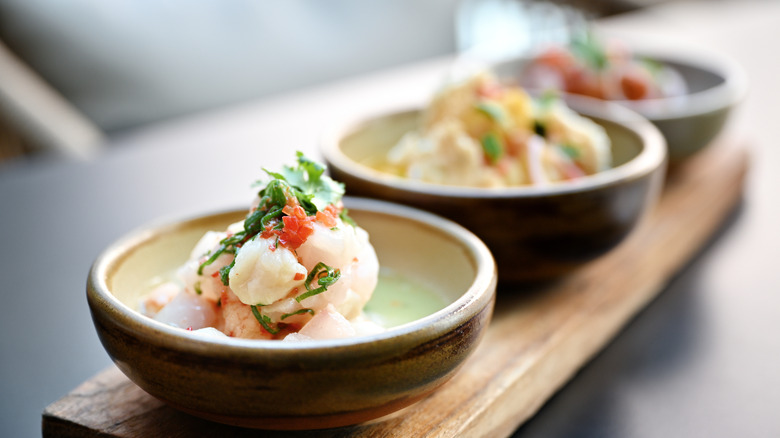
You might hear people referring to ceviche as raw fish, but that isn't entirely accurate. What differentiates these chunks of fish from raw dishes like sashimi is that they are covered in an acidic marinade (usually based around citrus juice) that denatures the proteins in the same way that cooking would. You are essentially cooking the fish with acid rather than temperature, leaving you with opaque chunks of meat. Peruvians have been eating this citrusy dish for about 2,000 years, though they probably used acidic chiles and a type of passionfruit called tumbo before the Spanish brought limes and bitter oranges in the 15th century.
As with cooking with heat, curing with acid requires careful timing. Let the fish marinate for a minute or less, and it will still be raw. Let it sit for upwards of an hour, and it will be dry and crumbly; 10 to 30 minutes is the sweet spot. Beyond that caveat, it's easy to make at home. The traditional version is made with sea bass and bitter orange or lime juice, but any sashimi-grade fish and citrus will do the trick.
Lutefisk (Scandinavia and U.S.)
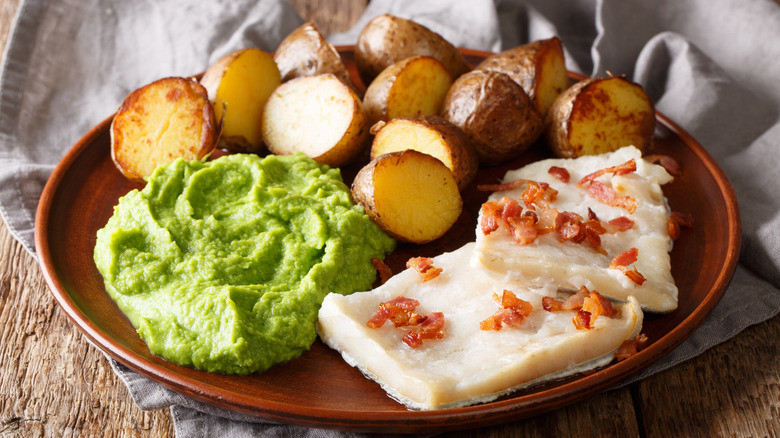
There are many ways to preserve meat. You can cure it with salt, ferment it, smoke it, and dry it. You can pickle it and denature it with citrus. Lutefisk opts for lye, that intensely alkaline solution that can be used variously to make soap and dissolve bodies. The poison is in the dose, of course, and when used in small quantities, it makes an excellent curing solution. Lutefisk translates to "lye fish" in Norwegian and is traditionally made from dried cod, though nowadays, ling and saithe are common options as well. Thanks to the hardworking lye, the fish develops a gelatinous appearance before it is poached, steamed, or baked to make it look a little more like a flaky fish again.
In Scandinavia, lutefisk has been a traditional food at Christmas for centuries. It has a powerful smell, a relatively mild flavor, and a divisive reputation. Some people can't have Christmas without it, others can't bring themselves to try it. Over time, lutefisk has become wildly popular in the U.S. as well, especially in the Midwest and Pacific Northwest.
Gwamegi (South Korea)
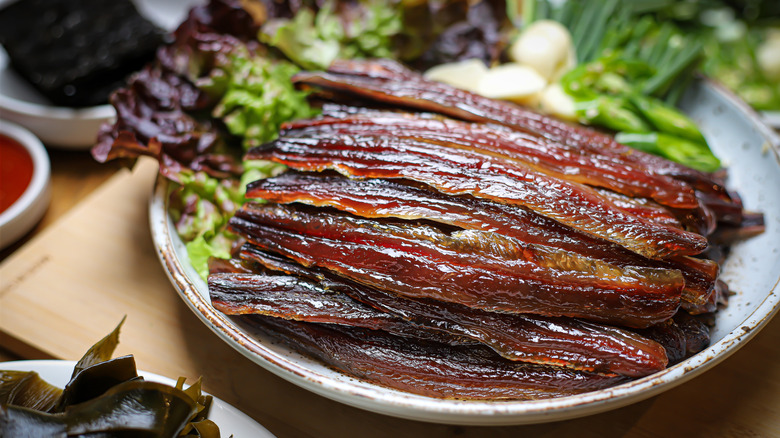
Smoking is a popular way to preserve fish, but in South Korea, cold temperatures are the key. Gwemegi is herring or saury that has been half-dried in the open air in the wintertime, undergoing a cycle of freezing overnight and thawing during the day. The process takes three to 10 days, depending on the moisture content of the fish, and produces a strong flavor and firm texture. Although the most popular type of gwamegi is gutted and headless when it is dried, there is another version which remains intact — guts and all — until the fish is finished drying, which gives it a more intense flavor.
Location is key in making gwamegi. Most of it is produced on the southeast coast of Korea because of the cold, dry northeasterly wind that sweeps through the area. Herring is oily, which means that it will spoil quickly unless it is rapidly dehydrated. The salty sea air may also help slow the decaying process. A final step in the preparation is to wash the fish in green tea to remove some of its fishy odor.
Hákarl (Iceland)
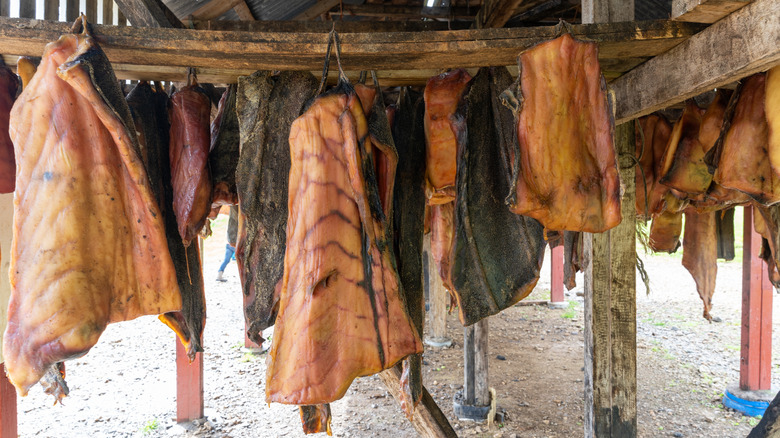
"The single worst thing I have ever put in my mouth." That's what Anthony Bourdain, fearless gourmand, said after taking his first bite of fermented Icelandic shark, otherwise known as hákarl. Coming from a man who ate maggots, soup made from bile, and a warthog's anus, that superlative should not be taken lightly. Thanks to its high-profile detractors (Gordon Ramsay apparently refused to swallow it), hákarl has become somewhat infamous, but it has been a staple food for centuries, all the way back to Norse settlers.
The reason the shark is fermented in the first place is because the fresh meat is toxic. Once gutted and deboned, it is left to ferment for a month or more. Traditionally, the meat was buried underground for this step, but these days, it's just put into a special room. Afterward, it is left to dry for several months. The resulting taste is often compared to strong cheese and ammonia, and some people note the distinct whiff of urine. Greenland sharks retain high levels of urea, which humans secrete through urine, leaving behind an all-too-familiar smell.
Bokkoms (South Africa)
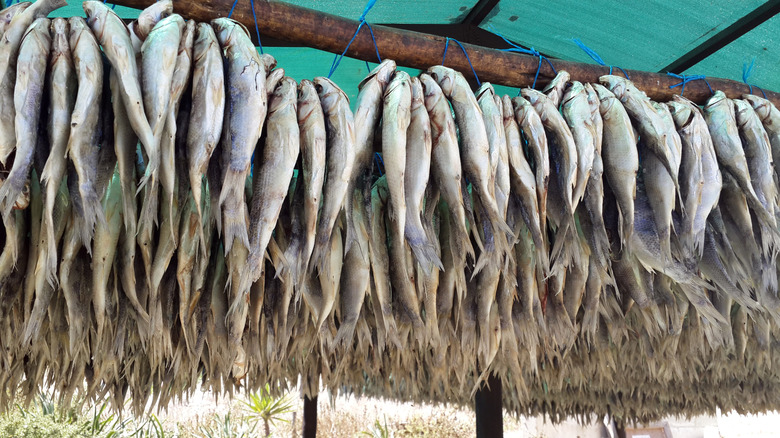
If you travel to the west coast of South Africa, you might encounter a form of fish jerky called bokkoms (or snoek biltong). The region is full of small fishing villages that now rely on tourism and salt production as well as fishing. Velddrif is the most famous of these towns when it comes to bokkoms. Located less than two hours north of Cape Town, it had a population of about 12,500 as of 2015 and has relied on fishing for centuries.
European settlers were granted the right to build communities and fish in the area by the Dutch in the 17th century as long as they provided the Dutch East India Company with some of their goods. Bokkoms are made by salting mullet and hanging them out to dry in the open air from the sun and wind, a process inspired by traditional Dutch methods. Salty and full of flavor, they are often used sparingly in salads like anchovies.
Lox (North America)
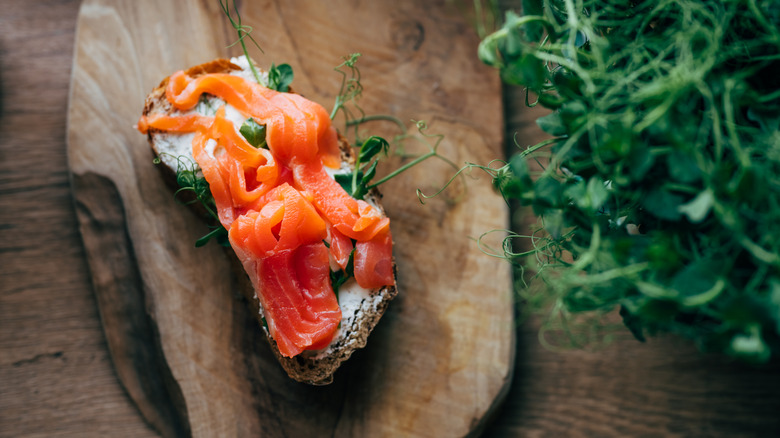
If you love bagels and lox, you may be surprised to learn that you probably haven't been eating lox this whole time. Lox is not smoked salmon but salmon cured with salt. In other words: If it's smoked, it ain't lox. If you're enjoying some smoky salmon on your bagel, it's probably cold-smoked salmon, which is otherwise known as Nova salmon. "Lox" has become a general word for smoked and cured salmon, but it's worth checking whether you're getting the traditional version or not. Lox is intensely salty — so salty that it might make your tongue burn if you eat it on its own.
As with most cured and smoked fish, lox came about due to necessity. Before refrigeration, it took too long to ship fresh salmon from the West Coast to the East Coast without spoiling, so transporters packed it in salt-filled barrels to make sure it was still edible by the time it reached its destination.
Bacalhau (Portugal)
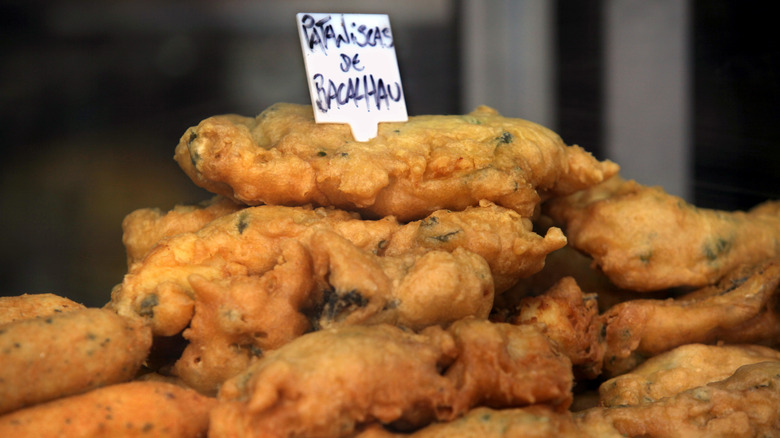
Many regional variations of cured fish are tied to local fishing history, but in the case of bacalhau, Portugal's beloved salt cod, it comes from an accidental discovery far, far away. In the 16th century, Portuguese explorers were looking for India but ended up in the North Atlantic around Canada and Greenland. While this must have been a blow to their confidence in navigating, it did yield a tantalizing discovery: an abundance of cod deep in the ocean. Ever since, cod has been a staple of Portuguese cuisine, especially the salt-cured variety.
If you travel to Portugal now, you'll find it prepared in all manner of ways, whether you're grabbing a quick bite at a casual lunch spot or splurging at a Michelin-starred restaurant. It's baked into casseroles, made into croquettes and fritters , deep-fried, or added to soup. You name the savory recipe and there's bound to be a bacalhau version of it.
Bottarga (Meditteranean)
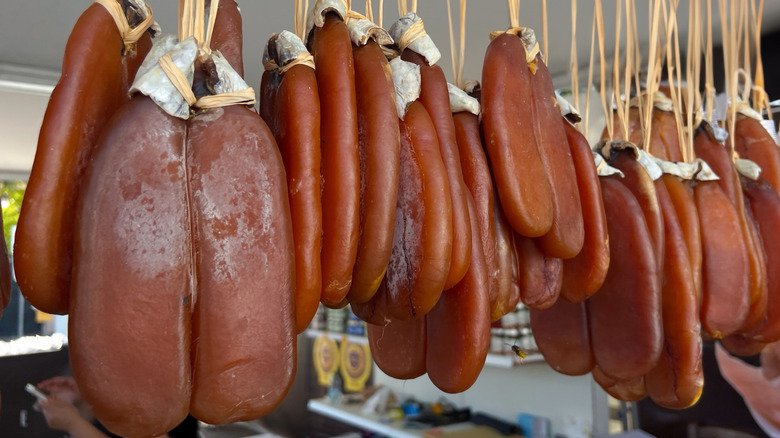
When you think of cured fish, you probably imagine whole or pieces of the actual fish, but bottarga undergoes a more involved transformation. Once called "poor man's caviar," it's made by salting tuna or mullet roe, pressing it, and drying it. In some places, it's coated with beeswax to prevent further drying. The result is a thick block, like cheese rind, which you can grate over dishes as an umami-rich garnish.
The history of bottarga is head-spinningly lengthy. It dates all the way back to Byzantium, which the Ancient Greeks colonised around the year 600 BCE. In other words, this delicious garnish has been around for a very long time. It was (and is) such a delicious way to preserve fish roe that it was adopted as far from its origin as East Asia. Nowadays, you can purchase it at great expense from specialty Italian food stores. Not surprisingly, it is no longer called "poor man's caviar."
Rakfisk (Norway)
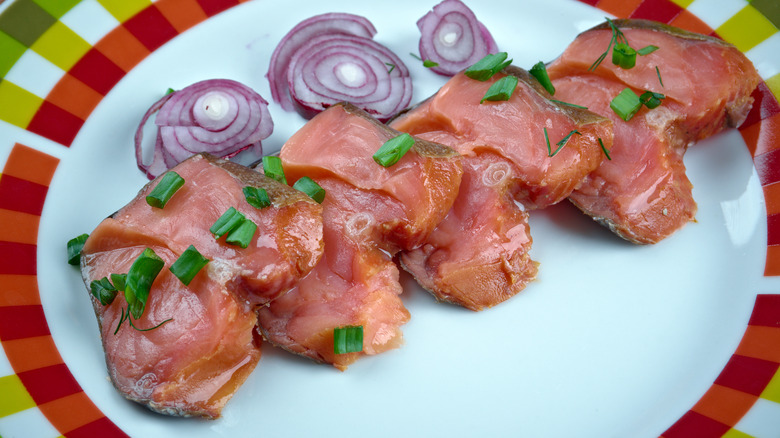
Rakfisk might look innocent enough with its dewy texture and deep orange hue. If you saw it in a picture, you might even mistake it for smoked salmon. Take one whiff of it, however, and you'll understand why this Norwegian delicacy is so polarizing. It is made by fermenting salted trout in water for up to a year, and let's just say that the resulting smell is about a hundred miles north of eye-wateringly pungent.
It wasn't dreamed up by an ambitious chef hoping to challenge the world of haute cuisine. It was created out of necessity before refrigeration could sustain fresh fish into the winter. It is now commonly accompanied by a shot (or two) of aquavit, Scandinavia's 80-proof spirit, which will wipe out even the most aggressive of odors from your palate with the efficiency of a harsh cleaning solution. While rakfisk is less widely available internationally than, say, smoked salmon, there is an entire festival dedicated to it in Norway that draws over 25,000 people every year.