

How To Turn Chive Blossoms Into A Stunning Homemade Vinegar

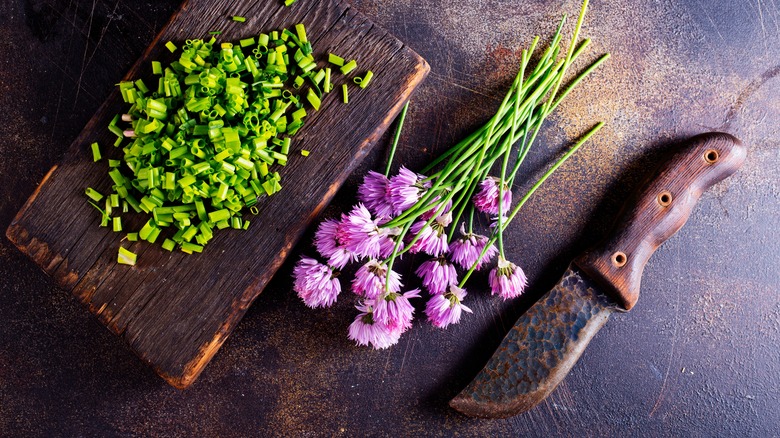
There's something magical about the moment when a simple jar of vinegar takes on a jewel-toned blush color and the delicate aroma of spring. Chive blossoms — those whimsical purple pom-poms that bloom briefly in late spring and early summer — are more than just garden eye candy. With a little patience, you can transform them into a tangy, floral vinegar that looks as good as it tastes.
The process is simple: Harvest a handful or one cup of fresh blossoms, give them a gentle rinse, and tuck them into a clean pint-sized glass jar. Cover the flowers completely with about one and a half cups of vinegar — white wine or champagne vinegar work beautifully, but feel free to use whatever culinary vinegar you have on hand. Just avoid vinegars that are harsh or flavored with additives. Then seal and let it infuse for 7 to 14 days in a cool place out of sunlight. Over time, the vinegar will take on a vivid hue and a mild oniony flavor with a hint of sweetness. Once it's ready, strain out the blossoms and bottle your creation.
Not only is chive blossom vinegar a feast for the senses, but it's also incredibly versatile. A splash can make flavors pop in the same way a squeeze of lemon does, brightening salads, veggies, and even seafood. It's a way to capture the fleeting beauty of chive season and enjoy it long after the blossoms are gone.
Why chive blossom vinegar is tradition in a jar
Across cultures, herb-infused vinegars have been valued not only for their taste but also their connection to well-being and their unique place in regional cooking. Chive blossom vinegar carries on this heritage, with a fresh twist that's uniquely yours. Try pouring it over a fresh tomato-and-mozzarella salad as a lively alternative to balsamic, or use it as a substitute for red wine vinegar in a farro grain bowl to switch things up.
More than just an ingredient, making chive blossom vinegar is a way to honor seasonality and sustainability. It invites you to slow down and appreciate the fleeting gifts your garden offers, transforming a brief harvest into something that lasts through the year. Using it connects you to traditions that value patience, resourcefulness, and flavor that evolves over time. To keep that flavor at its best, be sure to store your vinegar properly — keep it sealed tight in the fridge for up to six to eight months after opening or up to three months in a cool, dark spot. If you ever notice an off smell, cloudiness, or mold, it's safest to toss it without tasting.
And if you're looking for other ways to use chives — try folding the blossoms into softened butter for an herby spread, sprinkling chopped stems over soups and eggs, or even dipping whole blossoms in tempura batter for a crisp, edible treat. Whatever you do, you're celebrating a fleeting flavor that's well worth savoring.