

When Dining In Portugal, Avoid Asking For These Seasonings Or Else You May Be Seen As Rude

When exploring different cultures through their cuisine, it's always a good idea to be extra mindful. What may seem to be the norm in one culture might be viewed as disrespectful in another. For example, picture this: You're on a weeklong holiday in Portugal, after a eventful day of sightseeing, you enter a local restaurant and order yourself a portion of delicious arroz de pato (duck rice) or grilled sardines. Upon tasting it, you feel that it needs some salt or pepper. Restaurant tables in Portugal usually don't have any on the table, so you might ask your server for some. But if you do so, know that it will be considered rude.
It can be offensive to salt your food while dining in Portugal, because your request may be viewed as an insult to the chef's cooking skills — implying that the food wasn't adequately seasoned. In fact, this etiquette rule isn't just restricted to Portugal; asking for either salt or pepper is considered equally rude in countries such as Egypt for the same reason.
Additional tips to keep in mind when dining in Portugal
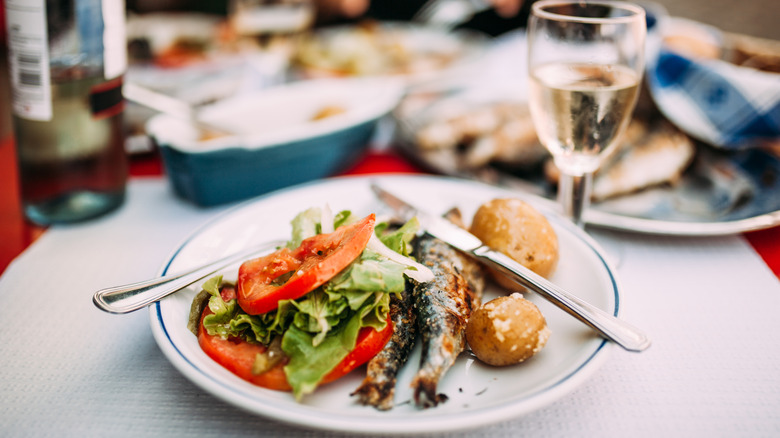
In Portugal, dining etiquette extends beyond salt and pepper. In fact, it starts right from the moment you enter the restaurant. Upon arrival, you must wait to be attended to by a host or server, following which you'll be seated based on the number of people you're with. It can also be a faux pas to ask for ingredient swaps and substitutions in your dish, so consider that when deciding on which one of the many foods you must try when visiting Portugal.
You may notice that, along with the missing salt and pepper shakers, there's another thing that's often absent on the table — water. Water, if needed, has to be requested, with a few options to choose from. There's natural and fresca, which means room temperature or cold, as well as com gas — sparkling water.
Another thing to know is that before the arrival of your delicious Portuguese egg tarts or spicy bifana (pork-filled sandwich), you may notice a few small plates arriving on your table that you don't remember ordering. These are known as couvert, or entradas, and mostly feature appetizers or small plates like olives, cheese, and breads. Considering they are usually put on your table without you asking for them, you might presume that couverts are complimentary. However, they aren't always free. If you're happy to pay for them, great. If not, you can politely signal to your server that you don't want them, and they'll whisk them away from your table.