

Julia Child's Storage Solution For Dried Kitchen Goods Makes Home Cooking So Much Simpler
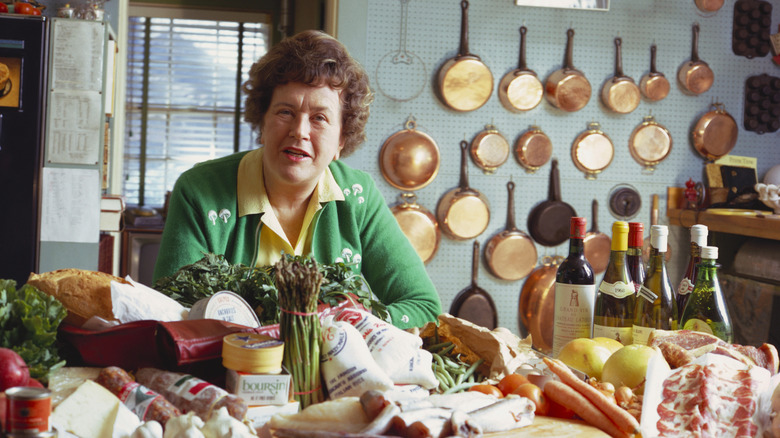
In the kitchen of Julia Child, practicality was everything. While the late, iconic chef was best known for her elaborate takes on French classics, essential cooking tips for home chefs, and ever-quotable humor, her no-frills approach to interior design emphasized functionality at every step of the way. For Child, everything should be easily accessible, with everyday essentials at arm's reach and pantry staples visible and at the ready. That philosophy was perhaps best applied to her storage of dried goods, where she kept everything — from baking supplies like flour and cornstarch to non-refrigerated produce like onions and garlic — in clear, pull-out bins.
With this method, there's no digging, no second-guessing, and no forgetting that half-empty box of baking powder in the back of the cupboard. If you're running low on anything, the bins' see-through material allows you to preemptively spot it visually before it's completely depleted, letting you plan a trip to the supermarket in advance.
And, for frequent home cooks, all of your quintessential ingredients will be located in the same place, so you won't need to rummage through a whole slew of cabinets to find where you left the cocoa powder. You can even keep things traditional, placing the bins in a dedicated pantry closet or cabinet for an out-of-sight, out-of-mind storage solution. Or, if you want to make things a little more modern, you can store the bins on a wire rack shelf for an at-home, open-concept kitchen design worthy of a celebrity chef.
Maximizing Julia Child's storage philosophy
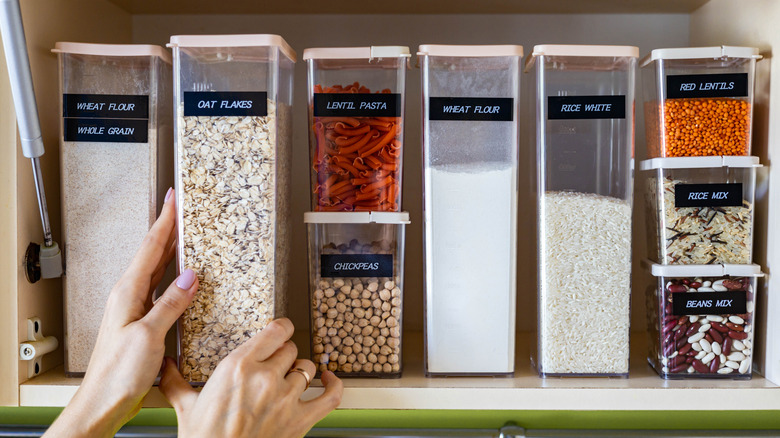
If you're looking to infuse a touch of Julia Child's endless wisdom into your kitchen, using clear pantry bins for your dry goods is an excellent place to get you going before you say "bon appétit!" At the same time, though, you can upgrade your storage game with a couple of easy additions. For starters, you can try labeling those dry goods bins to add an extra layer of visibility and organization. In fact, Child loved pantry labeling, and it was a signature of her kitchen design tips. Although a label maker can create aesthetically pleasing stickers, you don't actually need any high-tech gadgets to stay organized. Simply grab a permanent marker and write atop a piece of masking tape (this also makes it easier to tear off when you need a new label). Beyond that, when labeling your storage bins, it also helps to organize your ingredients into categories. Think sweeteners (granulated sugar, brown sugar, coconut sugar), mixes (cake mix, Jell-O powder), and so on. You can even go a step further, like Child did, and alphabetize them.
Adding to the idea of organization, you can also store loose dry goods in clear bins with sealed lids. This is perfect for dried lentils, rice, or chickpeas. That way, when the time comes to replenish your supply, you can easily take your containers to a zero-waste bulk market and shop there. Beyond helping you keep track of what you have, it's also a great start to building a low-waste pantry. Just make sure that your containers are airtight, as even a slight exposure to air could, at best, bring unwanted changes in texture and flavor — or, at worst, contaminate the ingredients with bugs or bacteria.