

Plant This Underrated Herb To Give Your Garden A Major Nutrient Boost
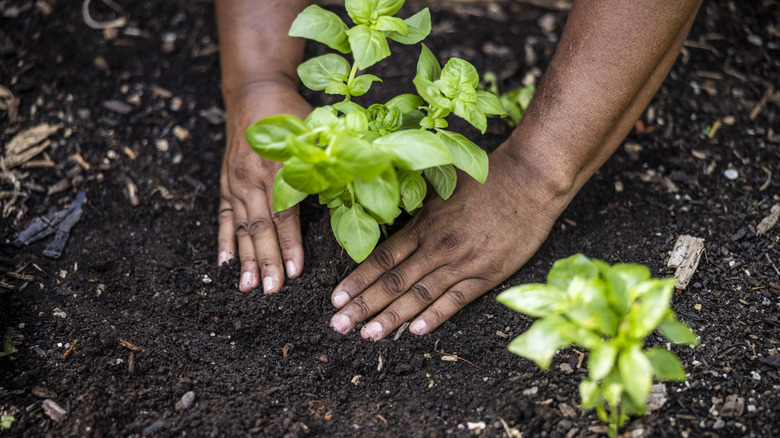
Wander down the aisles of your local grocery store and you'll find bunches of green herbs, like coriander, basil, mint, and chives. However, there's one underrated herb that you might only be able to find in specialty shops or farmers' markets: fenugreek. Earthy, aromatic, and pungent, this green herb has small oval-shaped leaves and a unique flavor. The good news is that you can grow your own fenugreek at home if you can't find it at the store. Better yet, planting it will give your garden a major nutrient boost due to its natural capabilities to improve the soil.
When fenugreek grows, it takes the nitrogen from the air and converts it into a form that can be taken up by other plants that are growing nearby. Appearing as pink nodules on the roots of the herb, this nitrogen ameliorates the quality of the soil, helping other plants to flourish in abundance. For this reason, fenugreek is described as a variety of green manure, an organic material used to improve the quality and structure of soil. This herb, which emits a maple-like scent, also covers the soil quickly, hampering weeds from developing and keeping pests at bay. To plant fenugreek, sow the seeds about 5 centimeters apart and 1 centimeter deep in a sunny spot and water regularly. You can snip off the leaves to use in recipes after 3-4 weeks and dig the remainder of the plant back into the soil if preferred to enrich it.
How to use fenugreek leaves and seeds
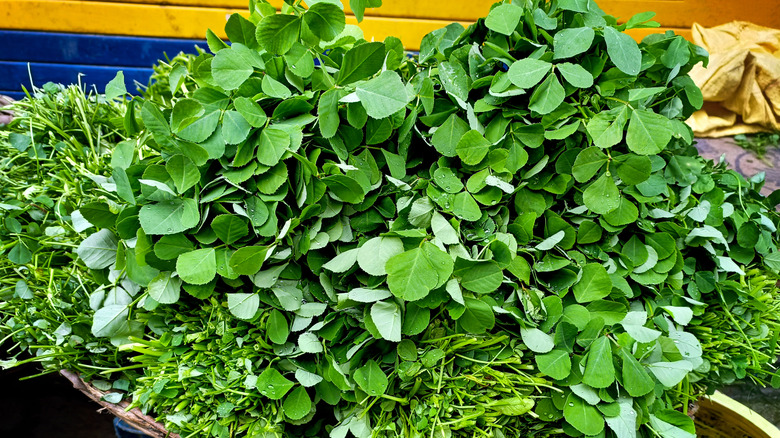
Wondering how to use fenugreek? Employ it in the same way as you'd use other herbs as a final flourish, or use it more heavily like greens. You can toss fenugreek into curries to lend them an aromatic savoriness, mix it into salads for an earthy bite, or incorporate it into doughs to make fragrant flatbreads. Many South Asian recipes call for dried fenugreek leaves, known as kasuri methi, because they have a longer shelf life than fresh leaves. This fragrant ingredient is actually easy to make at home — simply lay the clean, dried leaves out on a tray in a single layer and dry them under the sun, or pop them in a dehydrator to remove all their moisture. You can also microwave them until they turn crisp and brittle.
Fenugreek seeds have a chunkier texture than other whole spices, like cumin or mustard seeds, but they are used in a similar way. You can saute them in oil to release their aroma before adding in other ingredients, like cubed potatoes and garlic. Just be wary that they can have a naturally bitter edge when used in abundance. Steep a few fenugreek seeds in hot water, and you can make an aromatic drink that's believed to stimulate milk production in breastfeeding women. Some of the best substitutes for fenugreek seeds are carom and celery seeds.