

Richard Blais Gives Advice On Turning Bugs Into Gourmet Delights, From Mealworms To Whole Scorpions

We may receive a commission on purchases made from links.
Celebrity chef Richard Blais is no stranger to challenges. His storied career has been filled with them. From crafting a menu that effectively fuses food and traditions at one of his many restaurants to coaching contestants through a themed challenge that may involve cooking with equipment that would barely pass muster for a campground on his hit show "Next Level Chef," Blais isn't one to shy away from something daunting.
That said, his recent collaboration with Orkin Pest Control may be the most provocative yet, and it's not for the faint of heart. Blais is joining forces with the experts at Orkin to develop a series of digital shorts called "Bug Bites," featuring five new recipes using edible insects as the key ingredient. "Bug Bites" is slated to premiere the week of August 18 across Orkin's digital channels.
While "Orkin's the best in pests and [Blais is] the best in pesto," cooking with bugs pushed even him beyond the boundaries of what he thought was possible. Blais states, "I learned a lot. I was shocked ... I finished with a profound sense of education." We had a chance to ask him about everything he learned through the process and get his biggest takeaways and advice on turning bugs into gourmet delights, from mealworms to whole scorpions. Read on for the full scoop.
Why cook with bugs?

While entomophagy isn't novel — countries across the globe regularly consume insects as well as arachnids — Americans are less familiar with the practice. Richard Blais admits that while he has eaten bugs before on various television shows and on his many travels abroad, "I've never been tasked with cooking a menu that ramps up the volume of perhaps squeamishness or skittishness for sure ... this was all brand new for me, which is ... as someone who's been around the block a little bit, pretty exciting stuff."
As for the value of cooking with bugs? Blais says, "Listen, I think that we are all looking for new food sources, whether it's just helping the environment or economically ... So certainly, I can see insects being a food resource, so I think that's one that's just obvious." Blais' statement aligns with global trends. In fact, it is the primary reason you might soon begin finding more insects on menus across Europe and beyond.
Entomophagy has become a more accepted practice worldwide as climate change, a rapidly growing population, and sociopolitical disruptions threaten the supply chain of more traditional meat-based protein sources. Additionally, insects may be superior nutritionally. According to a research review published in Critical Reviews in Food Science Nutrition, insects can contain substantial quantities of vitamin B12, iron, zinc, fiber, essential amino acids, omega-3 and omega-6 fatty acids, and antioxidants, which may appeal to those searching for healthier protein sources.
What to know before cooking with bugs

Before gathering bugs from your garden haphazardly and whipping them into a soufflé, there are some important things to consider. Richard Blais notes, "All of the products we used [were] farm raised, culinary grade, et cetera. The tarantulas were dried from Thailand." Make sure the insects or arachnids you are preparing are sourced from reputable purveyors that are knowledgeable about which bugs are safe to consume and how they need to be prepared, such as ecoEat or Thailand Unique.
A good case in point is the Manchurian scorpion Blais used for his fried rice recipe: "So there were stingers on there. ... Once they have been prepared for cooking and ... dehydrated ... there's not anything to be concerned about with the stinger." That said, expert entomologist Ian Williams, who was on the set with Blais, cautions that this may not be the case with every scorpion. In some species, the venom doesn't become inert after cooking.
Also of note is that not all varieties of a particular bug are identical. "Different ants have different flavors; different sized ants eat differently. This isn't a surprise. I'm a chef, I should know these things," Blais says. While ants often have a citrusy flavor, he was surprised by the ones he used, which were from Maine. "These were ... like ... raisin licorice, sun-dried flavor ... They were interesting. This is weird to say, but they were almost electric. There was a pop in your mouth."
The best bugs to cook with for beginners
While there are a number of protein-rich bugs you can eat, some are a little more palatable than others for newbies. Crickets are often considered to be the "gateway bug" for eating insects, but Richard Blais recommends a different critter: the mealworm. As he notes, the term "worm" may conjure something that is "squiggly" or "gushy," and perhaps they might be when fresh. But the ones he used in his recipe were dehydrated, which likely contributed to their being a little less scary to ingest. In fact, this is the one insect Blais said he could actually see cooking with on a regular basis, perhaps on a taster menu. And, as previously mentioned, the ants were another unique experience for a first-timer, being "something that really woke up some flavor buds that hadn't encountered that before."
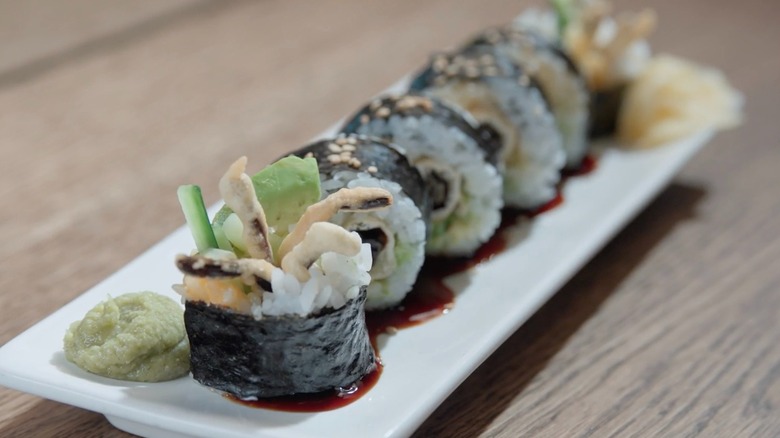
The creepy-crawly that you might want to build up to is the tarantula. Blais recalls, "That was the one, the whole process, even when this first came in front of me, I was like, 'Tarantula. Now this is a big personal challenge. This is a true game show here.' ... It wasn't my favorite texture. It was almost ... like a tempura paperback book." The tarantula's jet-black color was even more disconcerting. "When you made this sushi roll, it looked like truffles. There was a part of me that when I got done, I was like, 'I hope this didn't ruin truffles for me.'"
How to prepare bugs to make them more palatable
As for how to take the yuck factor out of eating bugs? It's all about the preparation: "The key for me as a chef was if there's enough yummy sauce surrounding any of it, that's going to overcome all of the thresholds ... flavor through deception ... is important." That said, Richard Blais also notes, "There is a part that's just like, 'Fry anything and just drape sauce over it and we'll be good,' but I feel like that was almost punting the ball a little bit, and I felt like it was important that the scorpions were whole scorpions."
In this case, the texture and appearance of the bugs became a hurdle, but creativity and some playfulness went a long way to combat this. Blais relied on his extensive culinary knowledge and experience to take tried-and-true, recognizable dishes and to figure out how to incorporate the bugs into these. Even then, the chef had moments where he thought, "I don't know if I can do this." Fortunately, the entire staff on the project was onboard, cheering him on and helping him by sampling the bugs for themselves. "Behind the scenes, people were like, 'Oh, the ants are good.' ... The crew was playing along as we went through it, and it was really, really fun to hear everyone else's reactions to this and do the polling data live."
Best recipes and flavors to use to prepare bugs

In conceiving the recipes for this collaboration, Richard Blais relied heavily on ingredients he was familiar with. As a fan of Latin and Asian flavors, he wanted to incorporate these to simplify the process for himself, adding a little sense of comfort to the unfamiliar ingredients and textures. For example, when preparing a whole dehydrated tarantula, he wasn't shy about adding a healthy amount of pickled ginger, wasabi, eel sauce, and sriracha to it, particularly since the tarantula itself wasn't especially bold in flavor.
Perhaps his most successful recipe was the mealworm pesto. According to Blais, when the mealworms are toasted up, they take on a nuttiness that is ideal for swapping out some or all of the pine nuts in a classic pesto recipe. This was a dish that made him think, "Yes, I would make this again."
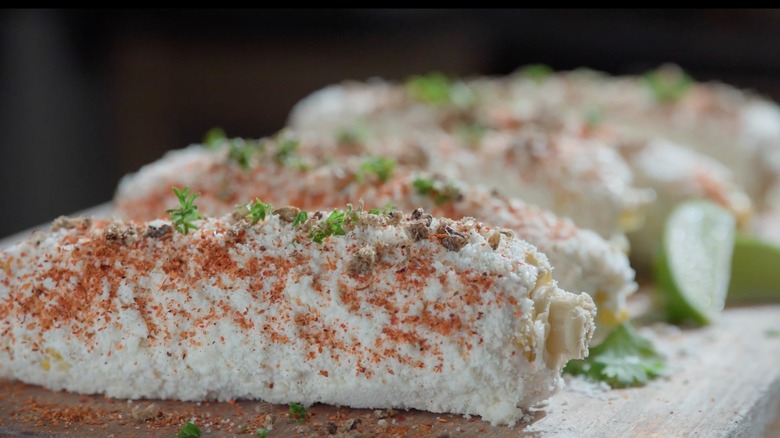
Other recipes included in his bug menu lineup were a soft-shell tarantula sushi roll, boiled corn elote with toasted crickets, vanilla ice cream with black ants and citrus zest, and the iconic Manchurian scorpion fried rice. Blais emphasizes, "It was an incredible experience and time ... I thought the content that we shot was great, but on the educational side, learning more about myself and maybe the apprehensions and being apprehensive about it, which I didn't need to be."
Tune in to "Bug Bites" beginning the week of August 18 on Orkin's digital channels.