

Make Your No-Bake, Edible Cookie Dough Safer With This Quick Step
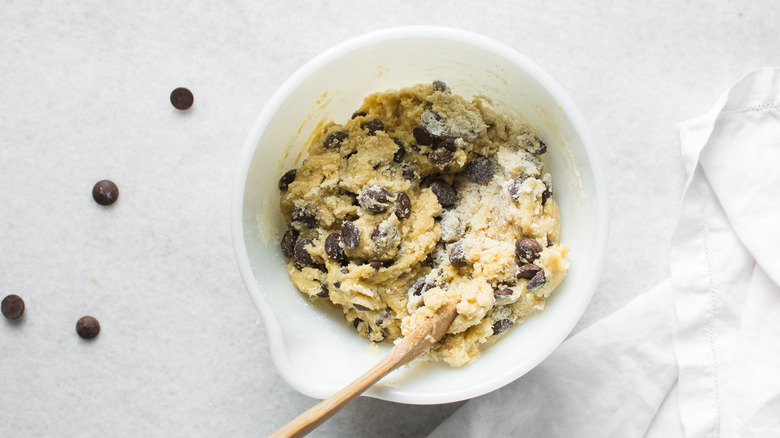
Cookie dough is the forbidden fruit of the baking world, beckoning all within reach with its sugary-sweet siren song. But for those who cave into their own temptations, there's a grave potential for a sickly aftermath, as the dough's raw eggs and flour could manifest themselves into some nasty food-borne illnesses, like salmonella. When making homemade cookie dough, heat-treating the flour to rid it of harmful bacteria may sound like a tedious task, but, by using your microwave, you will soon be on your way to doughy deliciousness. This methodical microwave method makes raw flour safe to eat — plus it only takes about five minutes.
To begin, fill a large, microwave-safe bowl or plate with enough flour to complete your preferred edible cookie dough recipe. Then, place the prepared bowl or plate of flour in the microwave and nuke it in short bursts, about 30 seconds at a time. Between each cooking interval, stir the flour thoroughly to ensure the heat is evenly distributed. Failing to do so may result in burnt flour, which could mean an off-putting taste in your recipe (and a smoky mess in your kitchen!). After a few zaps in the microwave, check the temperature using a thermometer. The flour should be at least 160 degrees Fahrenheit. As long as it's past that temperature threshold, you've sufficiently eradicated any bugs or bacteria. Allow the flour to come back to room temperature. From there, it's ready to be transformed into delightful edible cookie dough.
But what if you don't have a microwave?
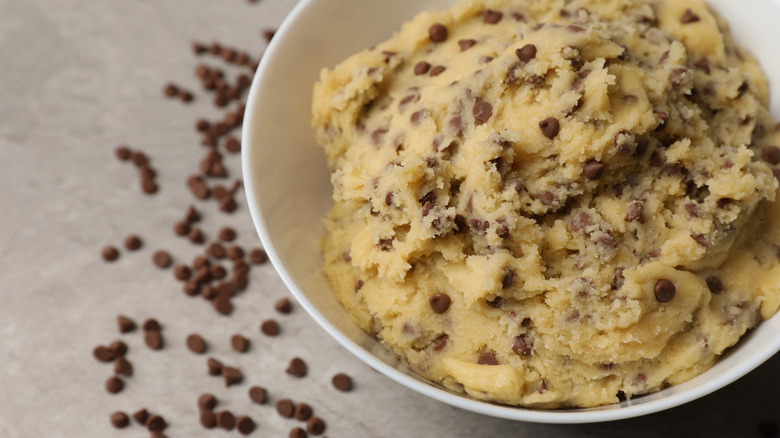
While the microwave is far and away the fastest method to make raw flour safe for consumption, there might be a time where you find yourself in a culinary environment that lacks this staple kitchen appliance. Perhaps you're out camping, your power is out, or, maybe, your microwave simply doesn't work. Thankfully, no matter what situation you may find yourself in, there's no shortage of methods to get you ready and on your way to preparing homemade edible cookie dough.
For instance, try spreading our your flour on a large cookie sheet lined with a silicone baking mat or parchment paper (ensure the cookie sheet is rimmed to reduce spilling). Place the prepared sheet into a 325-degree Fahrenheit oven, and bake in short intervals, a couple of minutes at a time. After each interval, check the temperature, and keep baking until the flour reached 160 degrees Fahrenheit. It should take around 10 minutes. For a surefire stovetop shortcut, place your flour into a large pan. Cook on a burner set to medium, stirring constantly. After a few minutes, the flour should reach that magical sweet spot of 160 degrees Fahrenheit. It's a little more labor intensive, but it's perfect for those times where you're cooking off the grid, whether that's just with an open flame or a portable induction burner. Just be careful to measure the temperature of the flour and not the pan itself.