

The History Of Jamaican Jerk Seasoning And How It Became One Of The Most Popular Caribbean Spices

For many people outside of Jamaica, jerk is a spicy, flavorful seasoning or marinade recipe that can add a lot of punch to chicken. If you like your food with a little zip, jerk is a delicious, bold twist on an old standby. But unlike most spice mixes that are just complementary flavors put together to elevate a dish, jerk seasoning carries generations of cultural significance. In Jamaican culture, this is more than just a spicy rub on chicken thighs. This is history, legacy, and the enduring spirit of people who were nearly wiped out in the name of colonialism.
The indigenous inhabitants of Jamaica were the Taíno people. When Spain set up a colony on the island, which they ran with slave labor, much of the local population was forced deeper into the treacherous mountains to survive. By the time war broke out between the British and the Spanish, many slaves had escaped to the mountains as well. They became known as Maroons, from the Spanish cimarrón, relating to something wild or untamed. It was here they encountered the Taíno.
Together, the Maroons and the Taíno formed alliances and struggled to survive. The Taínos taught the Maroons how to "jerk" meat, a process involving piercing it to allow the spices and smoke to penetrate. Cooking in this fashion tenderized tough cuts and imparted rich flavor. This was the food that sustained them in freedom; as such, its history cannot be separated from that idea of freedom.
How jerk evolved
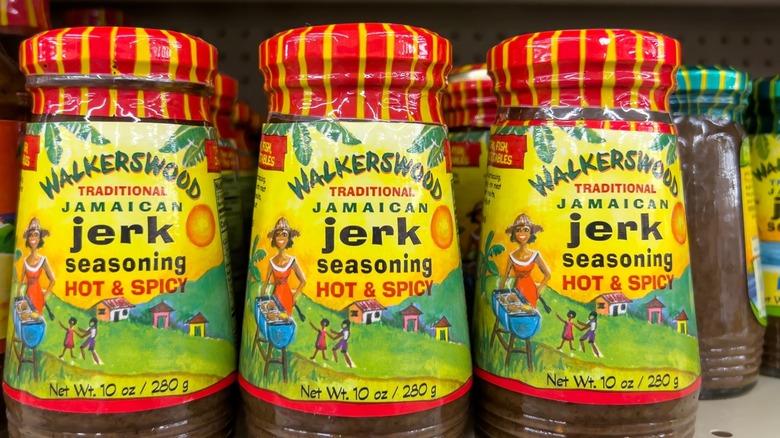
Jerk dishes were wrapped in pepper elder leaves, similar to banana leaves, and cooked underground on hot embers in smokeless pits. The Maroons lived in fear of being discovered and couldn't cook over open flames at the risk of the smoke being seen. Jerk provided a way to prepare, season, and preserve food on the go. It was therefore not just the seasoning mix — it was a method of cooking, similar to how barbecue is both a sauce and a method of preparing meat.
Modern jerk seasoning and marinade recipes usually get their heat from Scotch bonnet peppers, but you'll also find warm spices like cinnamon, allspice, and ginger. Traditional jerk was made with bird peppers, which are similar to cayenne, and pimento. Pimento, in this case, is the local name for allspice, not the little red peppers you find in olives. True jerk requires the seasoning as well as the cooking style. This is why McDonald's in the UK received a negative reaction when they tried to introduce a jerk chicken sandwich in 2020. It lacked the proper preparation and spice mix, so the chain was accused of cultural appropriation. For a more authentic experience, you can make Jamaican jerk chicken on your grill.
Jerk spread across Jamaica and to every part of the world where Jamaicans have settled. It is a mainstay of their culinary culture and represents a history of defiance, survival, and freedom. Few foods hold such deep cultural meaning. And while it's the best known, there are many other tasty Jamaican dishes you need to try.