

The Washing Mistake Martha Stewart Warns Will Ruin Delicate Dishes

We may receive a commission on purchases made from links.
Have you got a prized bone china tea set or a fancy crystal dish that you only pull out of storage for special occasions? While these expensive wares lend family parties a luxe and upmarket vibe, they can be a pain to wash at the end of the night because you have to treat them with special care to avoid breaking them. One mistake that Martha Stewart warns will ruin delicate dishes is using a hard sink to wash them in. Fail to place a plastic bin or bowl in your sink first, and you could end up with costly breakages and scratched surfaces. "The plastic is ... more forgiving than a hard sink should you drop a dish," her website reads.
Fine china and wine glasses with slender stems are super fragile and can smash into pieces with the smallest of slips. However, placing a plastic bin inside your choice of kitchen sink (whether it be ceramic, fiberglass, or porcelain) makes an awesome insurance policy for those moments when dish falls through your slippery, soapy hands. You can also lay larger dishes inside the plastic tub without worrying about cracking the base or creating scratches on a hard ceramic sink. The flexible character of a plastic washing-up bowl is a necessity if you've got a deep farmhouse, Belfast, or apron sink because it makes for a softer landing spot. Unlike sinks made of stainless steel, these large sinks have a hard surface that can crack on impact with a heavy object as well as develop stains.
Washing up basins are eco-friendly and protect your sink from damage
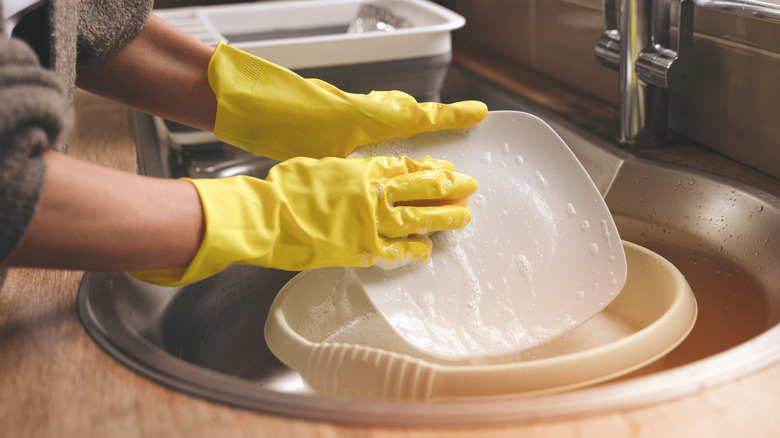
Washing-up bowls make great vessels for soaking dishes that are particularly dirty, and since they're smaller than your sink, you'll use less water filling them up. Using one basin with soapy water to wash your dishes is also more eco-friendly than using a running faucet. Moreover, some varieties of plastic washing up bowls, such as this collapsible dish basin on Amazon, have a drain in the bottom. Simply wash your delicate glassware and crockery inside before opening the drain and allowing the water to escape into your regular sink. Using a plastic basin is also the best way to wash your dishes when you don't have running water, such as on a camping trip or outdoor picnic or during a power outage.
Another way Martha Stewart advises you keep your vintage teacups in pristine condition if you haven't got a plastic bin is to lay some dishcloths in your sink instead. "When you're washing a lot of very fragile items by hand, such as crystal stemware, lining the sink with a terry towel ... does the trick," her website says. The textured surface of the fabric will soften the blow in case you drop a dish while washing it. Moreover, if your plate does crack or chip, you can simply lift the towel out in one move, preventing any bits of glass or china from blocking the drain.