

The 'Healthy' '90s Cookie That Said 'Go Ahead, Eat The Whole Box' — And We Did

Back in the '90s, fat was public enemy No. 1. Magazine covers and even the now-outdated food pyramid warned against it. That fear fueled a whole wave of low-fat packaged foods — including the now-infamous SnackWell's cookies. Nabisco launched the line in 1992 with their Devil's Food variety leading the charge: soft, cakey, chocolatey, and totally fat-free. The idea was that you could have your treat and eat it too, without guilt.
People bought in hard. These cookies shot to the top of supermarket sales, outpacing classics like Oreos. But there was a catch. SnackWell's may have cut the fat, but they packed in sugar and refined carbs. So while the label screamed "healthy," the cookies were barely satisfying. Most people didn't stop at one or two — and that was kind of the point. The boxes only had 12, subtly framed as single-serving. That bottomless feeling of never quite being full became known as the "SnackWell Effect." It summed up the problem with the low-fat craze: just because something lacks fat doesn't mean it's actually good for you, or that it won't make you overeat.
The downfall of SnackWell's
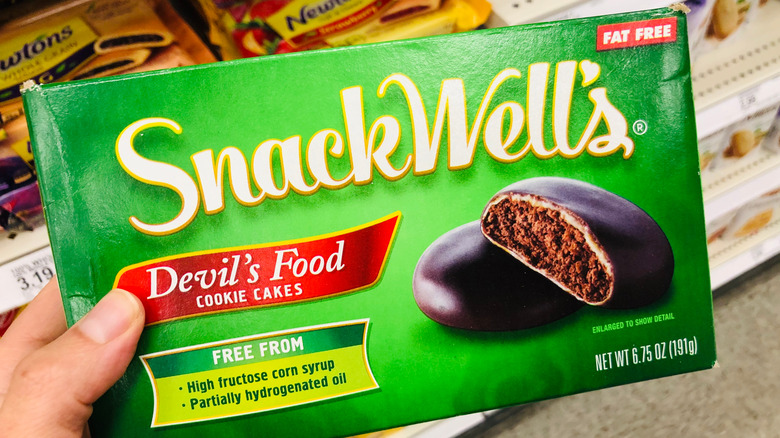
By the early 2000s, the mood had shifted. Low-fat mania gave way to new diet fads — think Atkins, keto, and anything that bashed carbs. Suddenly, people weren't just counting fat grams. They were watching sugar and processed starches, too. That didn't leave much room for SnackWell's, which by then had lost its health halo and much of its flavor appeal. Critics started calling them dry, unsatisfying, and plagued by a weird aftertaste. For many, the illusion had cracked. These weren't health foods. They were just cookies in a clever disguise.
In 2017, Nabisco sold SnackWell's to Back to Nature Foods. Two years later, the new owners quietly reformulated the Devil's Food cookies, adding fat back in to keep up with the times. It didn't help. By 2022, the line was discontinued for good, but its influence hasn't totally disappeared. SnackWell's helped define a generation of diet messaging — the kind that reduces health to a single nutrient while ignoring the bigger picture. Today, we still see echoes of that thinking in low-calorie snacks, zero-sugar sodas, and protein bars that promise more than they deliver. The era of fat-free may be over, but the legacy of diet gimmicks lives on.