

Is Store-Bought Lemon Water Just As Beneficial For You As Freshly Squeezed?

Hydration is key to a healthy lifestyle on so many levels, benefiting everything from organs to cells, joints, body temperature, quenching thirst, and more. But drinking plain water can be a chore for some folks, so here's an easy solution: turn that H2O into lemon water! It's easy, inexpensive, and readily available, plus it adds other benefits like nutrients and zesty flavor to daily hydration. It's really as simple as slicing up a lemon and squeezing it directly into a cup of cool, refreshing water. However, there's a bit of a caveat if you're purchasing bottled lemon water on-the-go: It's not the same thing, in many ways.
It's true that both fresh‑squeezed lemon water or bottled versions add flavor and liquid for your daily intake — but these versions vary considerably in nutrition value as well as flavor. On the nutrient front, fresh lemon water gives you natural vitamin C, antioxidants, enzymes, and that refreshing citrus aroma. By contrast, bottled lemon water, often made from juice concentrate, tends to deliver less nutrition and may contain preservatives and/or additives.
For example, a glass of fresh lemon water provides roughly 21% of the recommended daily amount of vitamin C. With bottled lemon juice, those natural nutrients can degrade during pasteurization and concentration of the juice. And that's just the beginning. What gets added can actually be harmful to your health, depending on the brand of lemon water and manufacturer standards.
What's in that bottled lemon water
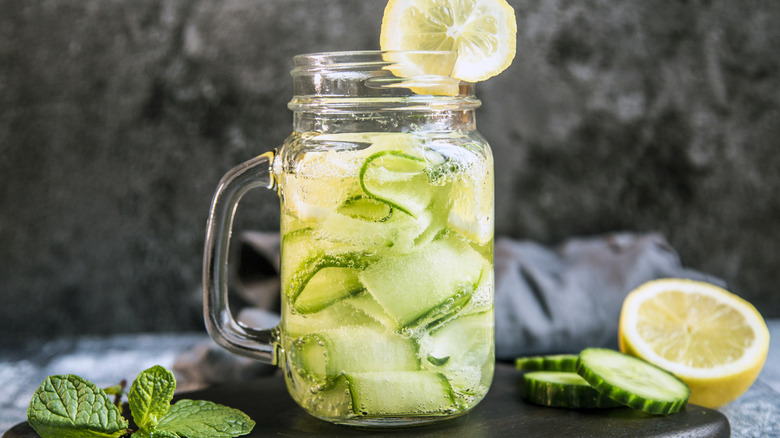
Stripped-away nutrients in bottled lemon water are reason enough to make your own fresh lemon water, but heat pasteurization can also annihilate flavor compounds, causing a bland or artificial-tasting drink. Extended storage times in the bottle, with potential exposure to light, heat, and oxygen, can speed up oxidation. It's true that bottled lemon water lasts much longer, up to an year in your pantry, but most of the nutrition and flavor likely is likely to degrade the longer it sits. Comparatively, freshly made lemon water will last up to two weeks in your fridge.
Then there's additives to consider, especially sulfites that sometimes lurk inside bottled lemon juice. Make sure you know they're in there, especially if you have certain allergies. They typically appear with names such as sulfur dioxide, sodium metabisulfite, or potassium metabisulfite, and the intent in lemon water is to preserve freshness and stabilize vitamin C. But additives like this require a warning label and can trigger allergic or asthma-like reactions, similar to sulfites in shrimp or wine.
Avoid making your own lemon water using bottled concentrated lemon juice, as those drops often do contain sulfites. Plus, the flavor will be very different than using just-squeezed lemons, which are natural, healthy, and cost pennies instead of dollars per serving, based on current costs as low as 64 cents per lemon at major grocers. Try out several types of lemons for refreshing twists on basic lemon water.