

How This Classic Southern Snack Inspired A Civil War Song

Wartime songs, or "ditties" (an old-fashioned term for poems with catchy tunes), create camaraderie among troops yearning for places, people, and things they've left behind. These tunes live long after battles are won or lost, even surviving through generations to come. Such is the case with a quirky Civil War song called "Goober Peas." Officially published in 1866, a year after the war ended, the ditty still holds sway in America's Deep South — a fact I can personally attest to as a child of the Mississippi Delta. These days, it's still very much alive, sung around campfires, in schoolyards, drinking holes, and on many a road trip.
Regardless of its place in Southern lore, the history of the song is rarely pondered or considered important. Goober peas is simply another term for peanuts, a deeply Southern crop since Colonial times and still today. Americans even sent a Southern peanut farmer to the White House in 1977 — President Jimmy Carter from Georgia, the state now producing the most peanuts in America. But the song (sometimes called "Eatin' Goober Peas") was a much funnier ditty when it arose, inhabiting the tidbits of time comprising a nation at war with itself.
The same goober peas we now take for granted helped nourish soldiers during the Civil War, in both body and spirit. They were highly nutritious and easy to transport and sustain in difficult conditions. The song was a favorite among Confederate soldiers as an easy-to-march-to, lighthearted bit of humor, but mostly because peanuts were tiny pieces of home.
What's in that iconic wartime song
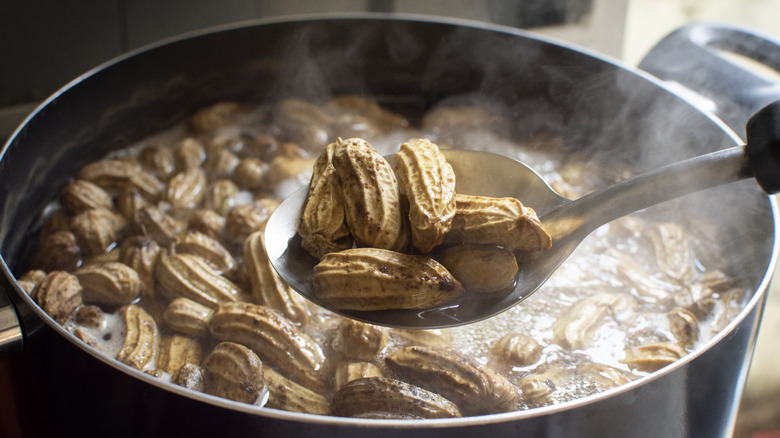
There are conflicting views of the peanut's place in society before the Civil War, with some accounts calling goober peas a poor man's food fed to enslaved peoples, livestock, and those from "low society." But the truth is more nuanced than that. In some states, particularly South Carolina, peanuts became a popular snack and were also incorporated into Southern staples like peanut soups, as well as other desserts and meat substitutes. This familiarity, including a boiled peanuts version, translated as a source of comfort during wartime. It then soared in popularity afterward, vastly increasing in production and spreading to 37 states by 1889.
So, what exactly was that wartime song about a humble legume (yes, peanuts are basically just beans) with the goofy nickname of goober peas? It has at least 14 known lines, and you can listen to a recording of the entire song through the American Battlefield Trust. When first published, it came with a tongue-in-cheek credit to a composer named P. Nutt, Esq. It has since been recorded by well-known musicians, including artists like Burl Ives and Johnny Cash.
For a glimpse of what to expect, here are the opening lines: "Sitting by the roadside on a summer's day, chatting with my messmates passing time away ... Lying in the shadow underneath the trees, goodness, how delicious, eating goober peas!" Having lived far beyond the Civil War, "Goober Peas" remains a staple of Southern culture and pure Americana.