

An Italian Might Laugh At The Name 'Shrimp Scampi.' Here's Why
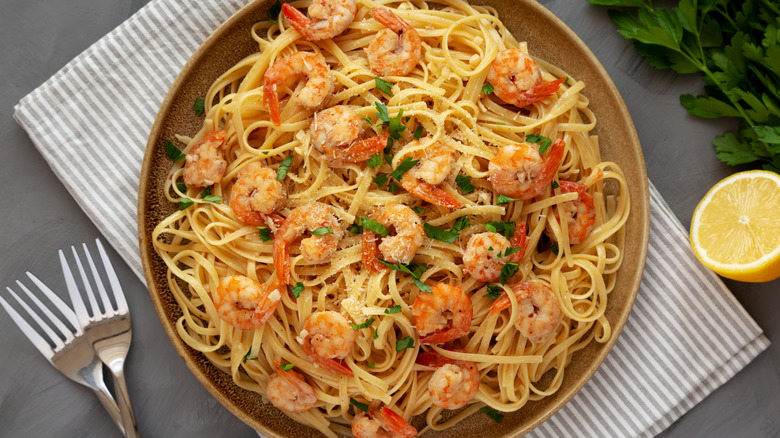
The English language has a funny habit of doubling down on foreign words — think "chai tea," literally meaning "tea tea," or "naan bread," meaning, you guessed it, "bread bread." While a bit humorous, these linguistic oddities can leave native speakers of those languages scratching their heads. One of the most delicious (yet equally confusing) examples of this phenomenon is "shrimp scampi," a phrase that might make an Italian chuckle. This iconic Italian-American dish is packed with aromatic goodness, drenched in a rich sauce made with butter, white wine, parsley, and lemon juice. However, for those in the know, not only is the English name of this dish redundant, but it's also technically incorrect.
You see, "scampi" in Italian refers to a specific type of crustacean that's similar (but biologically different) to shrimp. This crustacean, Nephrops norvegicus, goes by many names, including the langoustine, Norway lobster, and Dublin Bay prawn. Despite having a similar flavor and texture to shrimp, the langoustine is actually a type of lobster, making the name of the dish somewhat puzzling. Essentially, "shrimp scampi" translates to "shrimp langoustines," which would be like saying "chicken turkey" or "beef bison."
As with many culinary imports to the United States, shrimp scampi has evolved significantly from its original iteration. But this still begs the question: how did this redundant name come into existence? For that, we must look back to the Italian-American kitchens of yesteryear, where a little culinary resourcefulness transformed the meal into what we know today.
How did shrimp scampi get its name?
In many ways, swapping the scampi's protein for shrimp makes a lot of sense. Langoustines are routinely caught in the icy-cold North Atlantic waters of Europe, and fishermen can find the tasty little shellfish off the coasts of Norway, Iceland, and the Faroe Islands, to name a few. After hatching, they don't like to wander too far, thus resisting any major expansions from their North Atlantic domain.
As such, they aren't nearly as common (nor affordable) in the United States as other readily available crustaceans, like shrimp, crabs, or lobster. So, for chefs in Italy, langoustines could be easily bought, prepared, and served as part of their diet, all without breaking the bank. But, as Italian immigrants made their way to America, they were forced to adapt their culinary heritage and traditions to the local customs.
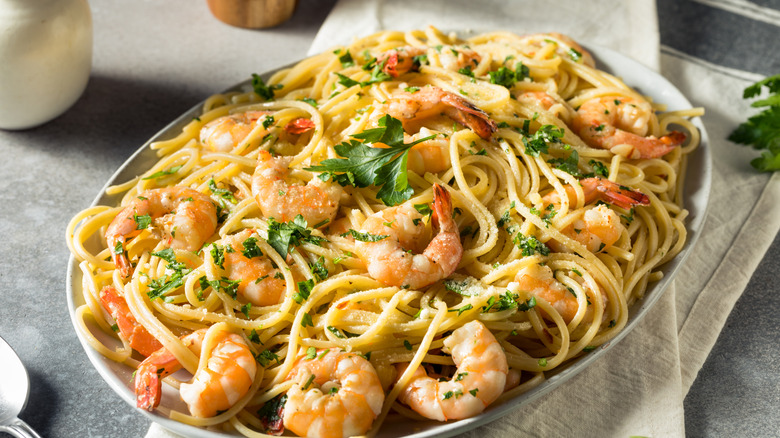
Believe it or not, while langoustines being swapped for shrimp might be technically incorrect to the original name, it isn't the only non-traditional component to the dish. Many shrimp scampi recipes don't call for pasta, as the modern definition of "scampi" can also refer to a cooking style, with shellfish prepared in the buttery white wine sauce, and doesn't include a carb. With that in mind, it's no less incorrect to serve shrimp scampi accompanied by a large slice of garlic bread.