

Crime, Bootleggers, And 'Mother's Ruin': Gin's Wild Early Days
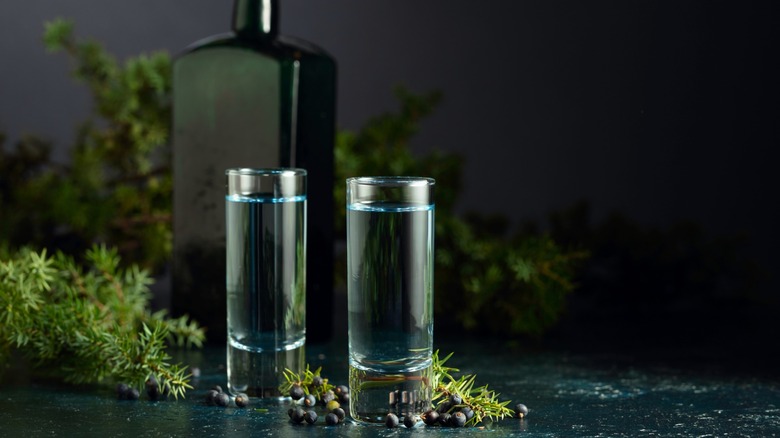
Gin wasn't always seen as one of the bar's most sophisticated options. Nowadays, it's the star of negronis, gimlets, and countless martinis, but in the beginning, gin was a matter of contention more than anything else. The juniper-forward liquor, known today for its pine-y taste and crisp finish, was the source of crime and corruption for decades, starting in 18th-century London. Known as "mother's ruin" for its depicted ability to turn a doting mother into a lush on the couch, therefore ruining the family, gin was causing more harm than good according to widely-circulated propaganda.
Gin's initial intent, back in the 16th century, was to heal common ailments such as gout, gallstones, and indigestion. Once Dutch soldiers of the Thirty Years' War discovered its mouth-numbing and belly-warming abilities, gin's medicinal days were numbered. They called it "Dutch courage" and introduced it to the English masses, leading up to the notorious "Gin Craze" of the late 1600s. The flavor may have been fiery and abrasive (nothing like the smooth spirit offered by the popular gin brands that we enjoy today), but it got the job done.
Import taxes between England and France were astronomical after William III ignited a trade war in 1689, and English citizens were deprived of wine, brandy, and Cognac. So, gin was the affordable drink of choice and quickly became part of London's landscape. It was on every corner, sold straight from wheelbarrows. William Hogarth's popular 1751 etching entitled "Gin Lane" really ingrained the perceived horrors of gin in the minds of the public. The finger was especially pointed at women, hence the targeted nickname "mother's ruin." Hogarth illustrated women pouring gin into the mouths of infants and even dropping them down the stairs. The general scene was one of pure mayhem.
Gin was to blame for London's debauchery, apparently
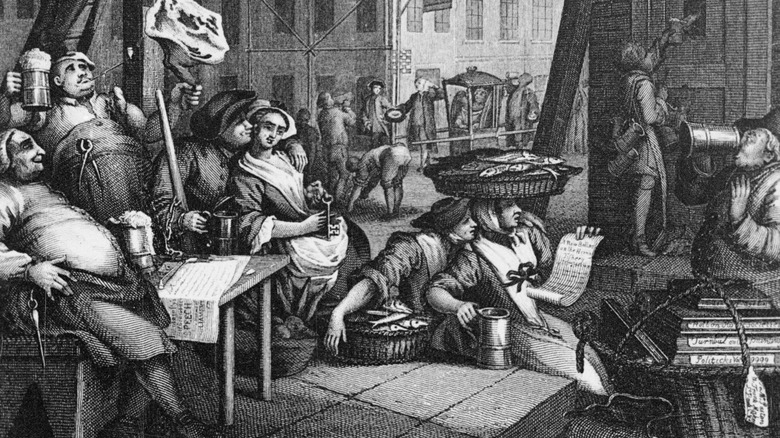
A glass of gin was seemingly in everyone's hand by 1742, with over seven million gallons produced and downed in England in that year alone. This made the spirit an easy scapegoat at a time of rampant corruption and heightened crime, especially given the slew of bootleggers slinging D-grade bottles of gin made with literal poison. Gin was often flavored with sulfuric acid and turpentine, which caused organ failure, blindness, and an array of deadly illnesses.
The rotten liquor was contaminating the entire town, pushing the death rate past the birth rate. Most children weren't making it past five years old due to complications from fetal alcohol syndrome. The very same year that Hogarth's artwork (pictured) rocked society, the Gin Act of 1751 was put into effect, which shut down a great deal of the city's gin shops and imposed new licensing requirements. Propaganda blamed gin for just about everything up until 1757, but this wasn't the last frenzy gin would be a part of.
The spirit's simple production made it the old standby for bootleggers during the American Prohibition over a century later. Unlike whiskey, gin requires no aging, so outlaws could sell it the moment it was bottled. Bathtub gin became a generic term, describing the watered-down industrial alcohol that crooks pawned off as fine gin. No matter how you spin it, historic gin was a far cry from the classy ingredient in the many gin cocktails that are popular today.