

Why Ice Water Is The Secret To The Crunchiest Salad You'll Ever Eat
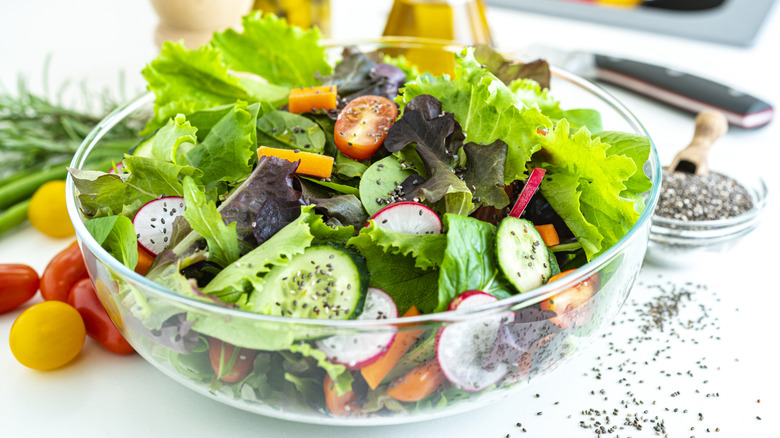
Have you ever wondered why restaurant salads often seem impossibly crisp and refreshing, while homemade versions often droop and hang limp? The secret lies in a version of a practice that was actually developed by humans in 3500 B.C., to help muscle recovery, and invigorate and revitalize the body. The ice bath — but for salads and veggies.
Ice water, simple and overlooked, is the key to transforming your salad from soggy to spectacular. In fact, submerging your chopped ingredients in a bowl of ice water isn't just a trick to keep them cool. It's a game-changing method rooted in plant science that revives and enhances texture. If you want ultra-crunchy carrots, perky lettuce leaves, and celery that snaps like twigs, you'll want to give your salads (even the bagged ones after taking steps to keep them fresh) a chilling bath. You can even add a little squeeze of lemon to the water transform any soggy leaves into crisp greens.
At the heart of your ingredients' crunch is a phenomenon known as turgor pressure — the internal water pressure inside plant cells. When your veggies are freshly harvested, their cells are plump and taut, like tiny water balloons. But once you slice, peel, or let them sit out, that moisture starts to escape and their turgidity takes a big dive. That's when your salad starts to go limp. By plunging cut salad ingredients — especially roots vegetables and tubers like radishes, carrots, and celery — into ice water, you help rehydrate those cells, restoring the natural pressure and firmness.
The building blocks of crunch

While turgor pressure is about water moving into cells, another player in the crispiness game is pectin — a natural fiber found in cell walls that helps bind cells together. In roots and tubers, pectin plays a structural role similar to mortar between bricks. When exposed to cold temperatures, pectin firms up, adding even more snap and structure to salads, and even veggies like beets, turnips, and potatoes.
The pectin's reaction to cold is part of why ice water does more than just "keep things fresh." It actively tightens the cellular matrix of the veggies, giving them that signature crisp texture. Combined with the effects of restored turgor, this is what turns an ordinary salad ingredient into a crunchy delight. It's a simple physical reaction, but the outcome feels almost magical. It's like giving tired produce a second life.
The icy temperature plays a vital role. Cold water slows enzymatic activity and prevents oxidation, which is the process that causes cut veggies to brown and soften. Instead of drying out on your cutting board or in the fridge, veggies soak up moisture while staying vibrant and firm. The chilling effect encourages water to move into the cells via osmosis, reviving wilting produce and making it snappier with every passing minute. Just 15 to 30 minutes in an ice water bath can dramatically transform the texture of your salad. For added convenience, cut your veggies ahead of time and let them chill right up until serving.