

How The Shape Of Drinking Glasses Actually Makes Drinks Taste Different
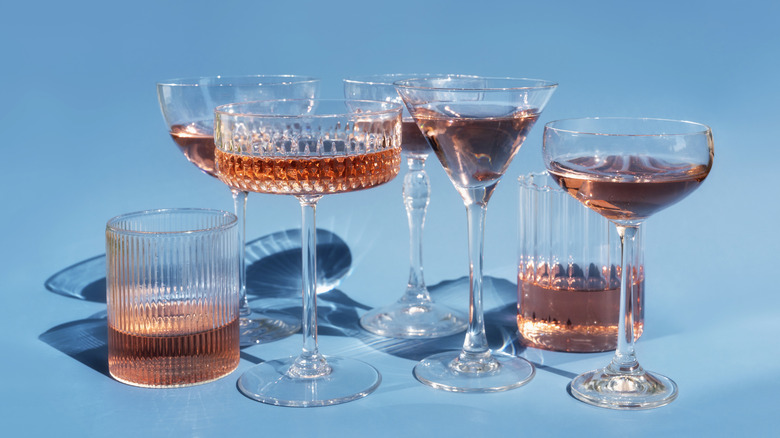
Any bar worth its salt will have a variety of polished and sparkling glassware available, and it's not just for the aesthetic. The shape of the glass that a spirit or cocktail is served in actually makes a huge difference in the flavor of that drink. The next time your friends try to call you pretentious for insisting your old-fashioned tastes better in a short, wide, and thick-bottomed glass, you can have the last laugh.
Chemical engineer and creator and owner of the blog NEAT (which is also on Instagram and YouTube), Robyn Smith, broke down the importance that a glass makes when serving or sipping alcohol. She explained, "Glass shape directly impacts how we experience spirits because it controls how volatile aroma compounds evaporate, accumulate, and reach your nose." Because of how connected our senses of smell and taste are to one another, the aroma vapors from liquor can impact how it tastes before even reaching our tongue. This especially applies to straight spirits like whiskey, where you're trying to pick up on subtle and unique tasting notes.
The shape of your glass is so important because it can direct the way the aroma reaches your nose. Smith elaborates, "The headspace — the area between the liquid and the rim — acts like a delivery system for aroma. ... A narrower rim helps trap and funnel aroma molecules, creating a more concentrated and layered olfactory experience. A wider opening allows volatiles, including ethanol, to dissipate quickly — which can soften harshness but also mute complexity." That's why, if you ever have the chance to visit a spirit distillery and do a tasting, the staff will likely serve your samples in what's called a Glencairn glass, which starts narrow at the base, widens around where the liquid rests, and narrows back up at the rim.
Which glasses are for which drinks?

Now that you have a basic understanding of how glasses can affect the flavor of drinks, you're ready to mix up some classic cocktails and serve them the proper way. When thinking about which type of cocktail glass to use, consider Smith's advice: Cocktails that are stronger and more spirit-based, like an old fashioned, for example, do best when served in a wide rocks glass or the fittingly named old fashioned glass. That wide rim allows the harsh alcohol vapors to escape while giving the aromatics of the bitters, citrus, and sugar room to expand and play on your palate.
Similar logic can be applied to a simple and delicious dirty martini. A martini should be served neat — meaning without ice — which is why the stem of a martini glass is such an integral part of the design. Smith explains how even the gentle warmth from your hands holding the glass can raise the temperature of the drink enough to affect the flavor. Serving your martini in a chilled glass and holding it by the stem makes a shocking difference in the drinking experience.
Another glassware mistake that could ruin your cocktail is failing to consider the volume of a glass. Old fashioneds are only supposed to be about two fluid ounces when all is said and done, so serving them in anything taller than a rocks glass would make the cocktail look a little measly. Even the success of something as simple as a gin and tonic depends on the volume of the glass it's served in. One and a half ounces is a standard liquor pour, so the amount of tonic it gets topped with may be way too much or too little depending on the size of the glass.