

14 Mistakes Everyone Makes When Eating At A Thai Restaurant

While I'd always been a fan of Thai food, it wasn't until my first visit to the stunning Southeast Asian nation that I was able to truly explore everything the cuisine had to offer. Those familiar with Thai food will already know just how tasty and varied it can be, with a focus on extremely flavorful ingredients and convenience. In the 11 years since that first trip — almost five of which I've spent living in Thailand — I've been fortunate enough to try an incredible array of dishes. I've eaten at all manner of fine dining venues, holes-in-the-wall, and everything in between.
While eating in a Thai restaurant isn't particularly taxing, there are still plenty of cultural quirks that are worth being aware of. Having the know-how will result in a much smoother and more enjoyable dining experience, so today I'm going to break down some of the most common mistakes I see people make when eating at a Thai restaurant. It's also worth mentioning that there are differences between Thai restaurants in the West and those in-country, as the former are typically going to be tailored towards the Western dining experience. Where necessary, I've pointed out these variations. So, let's take a closer look at the errors diners make at Thai restaurants, and how to avoid them to make the most of your meal.
Ordering a single entree
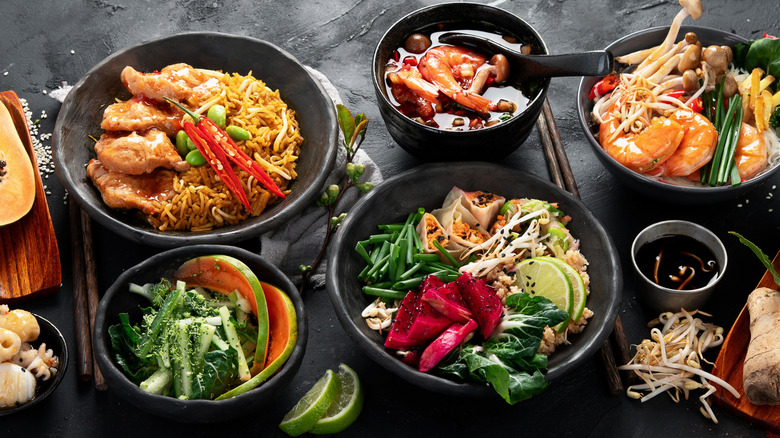
If you walk into an authentic Thai restaurant and take a look at the locals, you'll probably notice their table is covered in a huge assortment of dishes. This is because, for the most part, Thai dining is a group effort. Although Thais will sometimes order a single meal for themselves, it's far more common for the party to order a selection of items to share.
While it might not be an option if you're dining solo, I highly recommend taking the shared approach if you're with a group. First, it means you get to try a larger selection of dishes, which is always a win in my book. Second, it also lets you be a little more adventurous and try new dishes that you might not have been prepared to gamble on if you could only choose one. The main thing to be aware of is that at some restaurants, particularly those in Thailand that aren't tailored to tourists, some items listed in the menu may be larger than you expect. I've made the mistake before of ordering coconut-based tom kha soup and thinking it was on the expensive side, only to be brought out a bowl large enough to feed a family. The staff won't always give you a heads-up, particularly if they don't speak English well, so be sure to double-check before you order.
Waiting for others before starting your meal
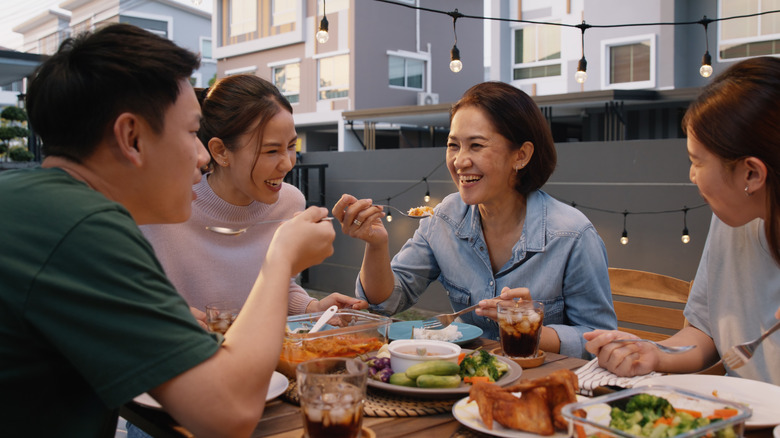
In Western dining, it's generally considered rude to start tucking into your meal before everyone at the table has been served. However, if you follow the same social convention in a Thai restaurant, there's a pretty good chance your food will be cold by the time the rest of the group gets theirs.
In most Thai restaurants, the dishes are brought to the table as soon as they're ready, unlike in the West, where they aim to serve everybody at once. A lot of this comes down to the group dining convention I mentioned above — if everybody's sharing the food, it doesn't really matter when each dish comes out. Plus, in smaller restaurants, there's often only one or two cooks preparing food for the whole restaurant. The good news is that most Thai dishes don't take too long to prepare, so you shouldn't have to wait too long for everyone to receive their order. Also, this isn't as much of an issue outside of Thailand because restaurants are more likely to adjust their service style for non-Thai customers.
Sticking to the classic options
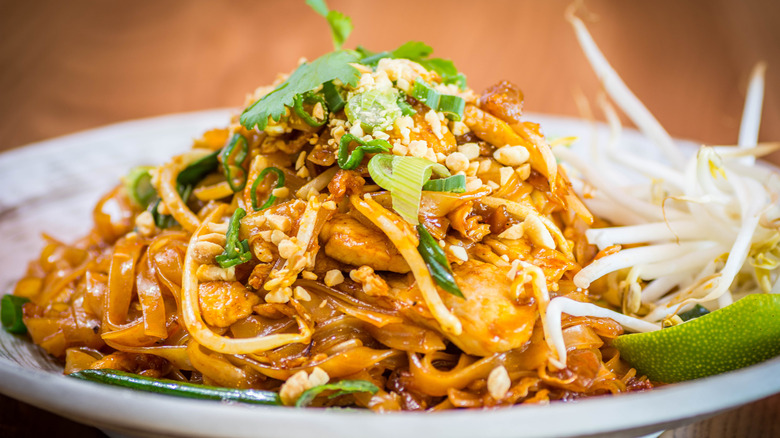
If you've had Thai food before, you're probably familiar with the classics, like pad Thai, pad krapow, green curry, and fried rice. These delicious traditional Thai dishes are famous for a reason, but they barely scratch the surface of what Thai cuisine has to offer.
For starters, there's a ton of regional variation when it comes to Thai food. Some dishes are eaten up and down the country, while others you'll typically only find in certain areas. For example, in the north of the country, you'll discover Burma-inspired dishes like the kaeng pa jungle curry. There's also my personal favorite, khao soi, a curried egg noodle soup. Head down south, and you'll encounter dishes like khua kling gai – a dry chicken curry known for its supercharged spice factor. In Thailand, you'll find many restaurants that cater to tourists by serving well-known dishes, but that's not always the case with the more authentic spots. Lots of places only serve a certain type of dish, like noodle soups, or have a regional focus that might not include familiar items. I suggest seeing it as an opportunity to try something new and expand your tastes, as you might just discover your new favorite Thai dish.
Thinking non-Thai dishes will meet your expectations

It's not uncommon for Thai restaurants to offer Western dishes on their menu, especially outside of Thailand or at tourist hotspots. However, don't be surprised if these items fall short of expectations. This isn't to say that Thais can't do Western food well, as there are plenty of incredible Thai-run Western restaurants in Thailand, especially in larger towns and cities. The issues tend to arise when the venue specializes in Thai food, and the other dishes are an afterthought.
Fortunately, if you're at a restaurant with a group and Thai food just isn't your thing, there should still be options that will suit your tastes. You'll often find familiar dishes that Thais love too, like grilled chicken or barbecued pork and rice. Just be sure to ask about the seasonings and sauces, as they may be hotter than you're used to. Deep-fried dishes are also commonplace, whether it's fried chicken, breaded shrimp, or spring rolls.
Not making the most of Thai condiments
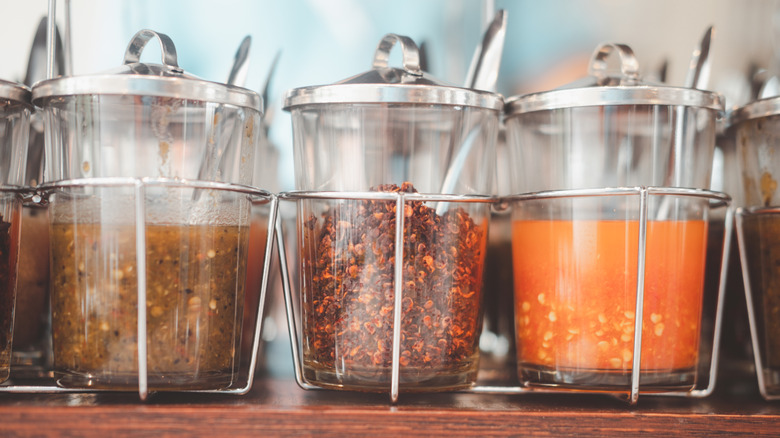
If there's one thing Thai cuisine wouldn't be complete without, it's the wide array of complex, spicy, and flavorsome condiments. Many people associate Thai food with sweet chili sauce, but in authentic Thai restaurants, it's typically reserved for deep-fried foods like chicken or shrimp. Thai condiments can be a little daunting at first, especially as it can be tricky to identify which are particularly hot or pungent.
Many Thai restaurants will have a little basket on the table that contains four condiments. They usually represent four main flavors, making it a bit easier to remember what each one is. There's typically sugar for sweetness, chili flakes or paste for spice, chili- and garlic-infused vinegar for sour, and a variant of fish sauce for saltiness. You can then use each of these to balance the flavors of your dish to your liking. Besides these four, you'll also encounter a range of different homemade chili sauces, known as nam prik. These can all vary in terms of ingredients, including regional varieties, and recipes that are tailored to specific dishes, like fish or barbecued meats. It's always worth testing out new condiments; however, it's best to try a small amount first to make sure you like the flavor and can handle the heat.
Worrying about the availability of vegetarian options
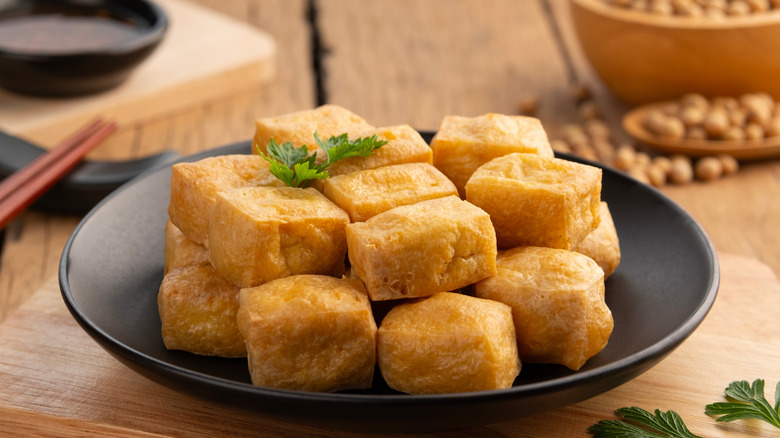
As most vegetarians will be aware, there's no guarantee that a cuisine offers a reasonable range of meat-free options. Fortunately, Thai food includes plenty of suitable dishes that are delicious in their own right and more than just an afterthought.
First, tofu is extremely common in Thai cuisine — some dishes combine it with meat while others make tofu the star of the show. Second, many dishes allow you to pick your protein, so you can always ask for the tofu and veggie version. There are some exceptions, but meat is rarely what makes Thai food so flavorsome, so you're not missing out by picking the vegetarian option. There are many Thai salads as well; however, many of these are meat-based, so be sure to double-check what you're ordering. The phrase "mang sa wirat" means "no meat" in Thai, so feel free to drop that in to be on the safe side. Unfortunately, vegans may have a bit of a trickier time with Thai cuisine because many dishes contain the likes of fish sauce, oyster sauce, or shrimp paste. It's more common to find vegan Thai restaurants these days, but they're rare outside of larger towns and cities.
Making assumptions about spice levels
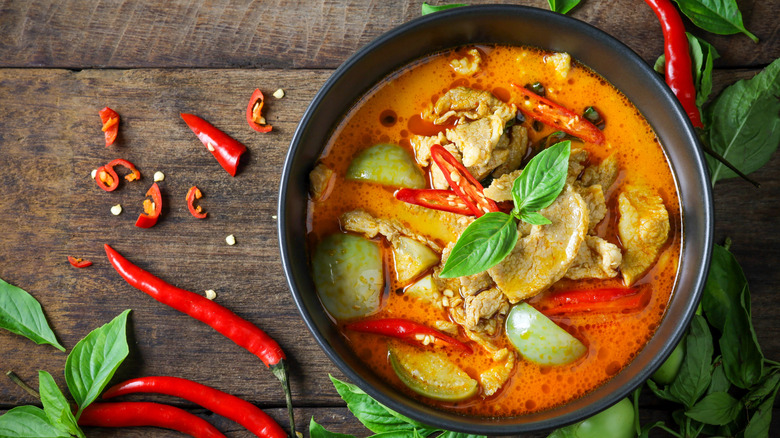
Thai food can be some of the spiciest on the planet, but it can be a little tricky to know just how hot a dish will be. There's not a huge amount of consistency when it comes to how much chili is in a dish, so a green curry at one restaurant may be mild, while the same dish at another will have you sweating buckets and reaching for the ice water.
For the most part, Thai restaurants know to temper the heat for non-Thais. Many will even ask how spicy you'd like your food. The Thai word for spicy is "phet." You can say "mai phet" for no spice, "phet nit noi" for a little heat, and "phet mak mak" or "Thai spicy" for extra hot. Funnily enough, even if you ask for "Thai spicy," many restaurants still won't make their dishes as hot as they would for locals. It's common for "farangs" — the Thai slang for foreigners — to underestimate just how spicy Thais like their food.
Loading your plate up with food
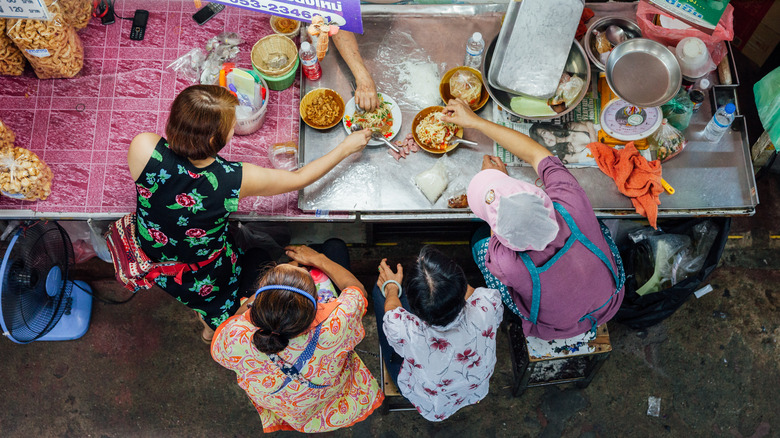
If you're dining Thai-style at a restaurant and sharing food, it's important to be aware that the social rules differ from what you're used to. You shouldn't treat the meal like an all-you-can-eat buffet and immediately pile your plate up with a bit of every dish, as Thais generally consider this rude behavior. It's very unlikely that you'll be called out on it, but you should still try to avoid causing any offense.
The best approach is to take a portion of rice, then a little of one or two dishes. When you've cleared what's on your plate, you can always go back for more. Plus, if you're eager to try a bit of everything, you're unlikely to miss out. When a dish is finished, you can always order extra at any point during the meal. Additionally, try not to mix different dishes together. For example, if you're eating green curry and rice, take a small spoonful of the rice, dip it in the curry, then take your bite. You should never dump your whole rice bowl into the curry just for convenience's sake.
Getting frustrated with a lack of consistency
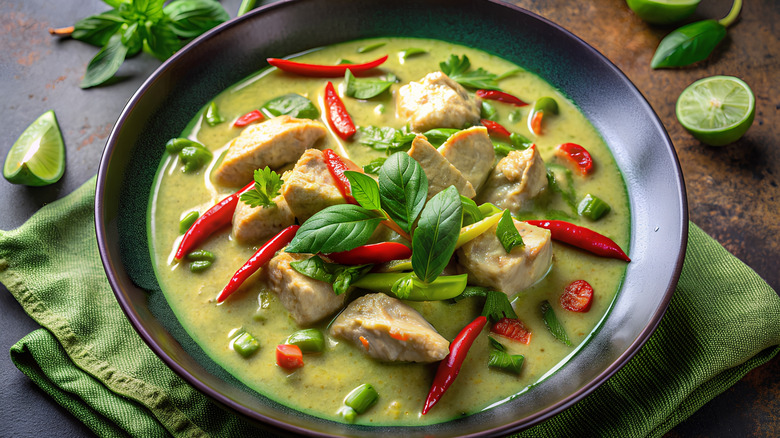
While we don't really expect food from different places to taste exactly the same, the consistency of Thai dishes can vary more than you might expect. Some Thai regions have their own way of preparing a certain dish, but it can also just be down to how a particular chef makes their food.
Green or red curries are prime examples. Some can be thin and soup-like, while others have a much thicker sauce. In more authentic Thai restaurants, you might even find the chef has left less-edible flavoring ingredients in the curry — like slices of fragrant lemongrass or large chunks of ginger — that you have to eat around. Even the vegetables used can vary from spot to spot. All this is to say that while it can be disappointing to order your favorite dish and receive something different from what you expected, it comes with the territory of Thai dining. You'll typically find greater consistency at restaurants outside of Thailand that cater to Westerners, but in-country, it's a bit more of a gamble.
Being too laid back about allergen requirements
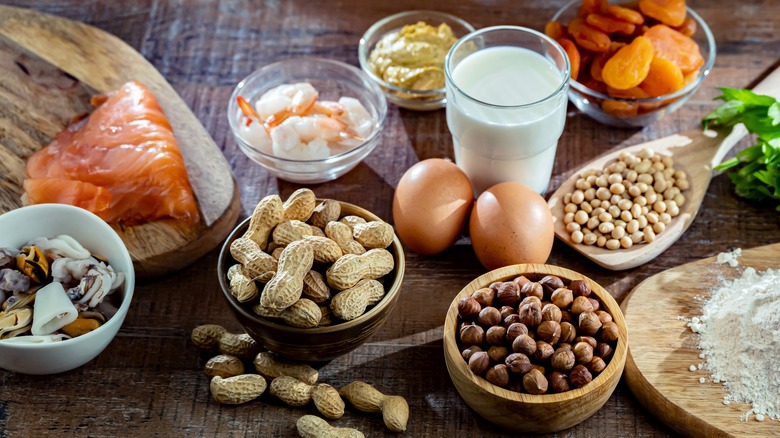
If you're someone who can have an allergic reaction to certain food ingredients, it's always worth treading carefully at Thai restaurants. Peanuts are a fairly common ingredient, but they're not necessarily the biggest risk. It's those with seafood and soy allergies who need to be extra wary, as so many dishes include ingredients like soy, fish, or oyster sauce.
Outside of Thailand, the risk tends to be lower because many countries have health codes that require restaurants to follow robust allergen procedures. In Thailand, however, it's a different story. If the staff don't speak English very well, it can be hard to communicate your dietary needs, and tricky to trust that your instructions have been followed. My best advice is to research dishes in advance to learn about the ingredients they typically contain, and note down any important allergen-related phrases in case of a language barrier. If you're not 100% satisfied that the staff understands your needs, it's always better to walk away than to risk your safety.
Worrying about your chopstick skills
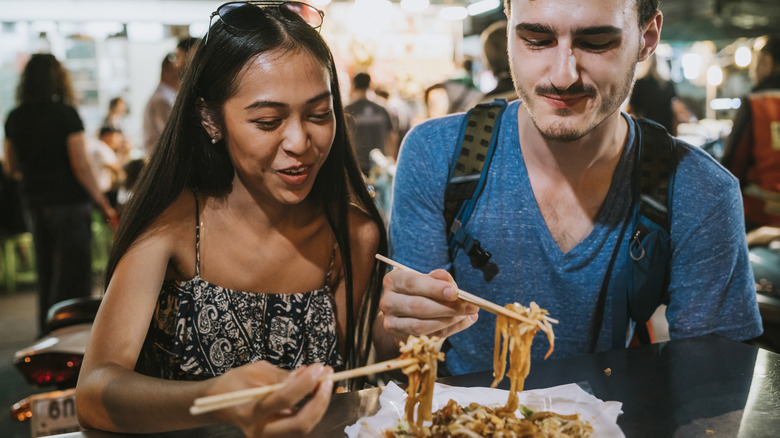
If it's your first time visiting a Thai restaurant and you're concerned that your chopstick game isn't on point, I have some good news for you. Chopsticks aren't actually that common in Thailand outside of certain Chinese-inspired dishes, like noodle soups.
Thai food is typically eaten with a fork and spoon. You're supposed to use the fork to push the food onto your spoon — usually rice and whatever the other dish is — and then take your mouthful from the spoon. It's also uncommon to be offered a dinner knife in a Thai restaurant, as historically, there was a fear that they could be used as weapons. So, if you need to break something into pieces, you may need to hold it down with your fork and use the edge of your spoon to cut it up. Fortunately, Thai restaurants will provide you with the most appropriate utensils for whatever it is that you've ordered, so you should always have the best tools for the job.
Assuming high prices guarantee superior quality
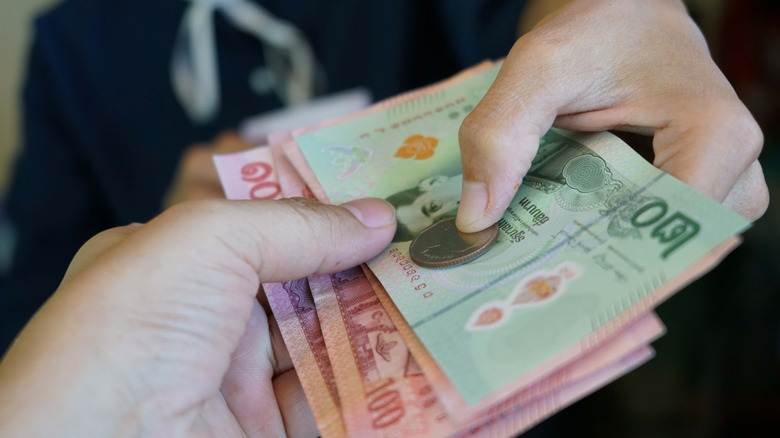
One of the best things about Thai food is that it's unbelievably cheap — some of the best meals I've ever had cost about a dollar. Of course, this only really applies in Thailand. In Western countries, Thai food is more expensive, but the operating costs of a restaurant are higher, and it can be harder to source authentic Thai ingredients.
However, generally speaking, there still isn't a particularly strong link between the price and quality of Thai food. When you pay more, the difference is usually in the dining experience itself. The restaurant's decor will often be nicer, the staff trained closer to Western standards, and the presentation of dishes tends to have more of a fine dining vibe. Location is another factor, as you can expect to pay nearly triple the price for a dish at a tourist hotspot as you would at a restaurant that caters to locals. I've also found that these tourist traps are rarely as good as the super authentic joints. It's always better to get off the beaten track a bit and check out places that have a lot of Thai customers if you want the best food and prices.
Expecting Western-style service

I've already mentioned how food isn't usually brought out all at once in Thai restaurants, but that's just the tip of the iceberg in terms of how different the service can be. This is by no means a criticism, as Thai hospitality is some of the best I've experienced, but you should be prepared to adjust your expectations.
For starters, don't be surprised if there's a significant language barrier with the staff. Some restaurants get around this by giving you a piece of paper and a pencil to note down your order to avoid miscommunication. You'll also find restaurants that have drinks and snacks set out on the table for you to help yourself and pay for at the end. It's also common to have a water and ice station available, where customers are expected to get up and serve themselves. When it comes to paying for your meal, you may have to specifically request your check — say "check bin krap" if you're male, and "check bin ka" if you're female. You might need to go up to pay at the counter. Also, don't assume you'll be able to pay with a bank card — Thai electronic payment systems are becoming more prevalent, but most only work with Thai bank accounts.
Failing to make use of basic Thai phrases
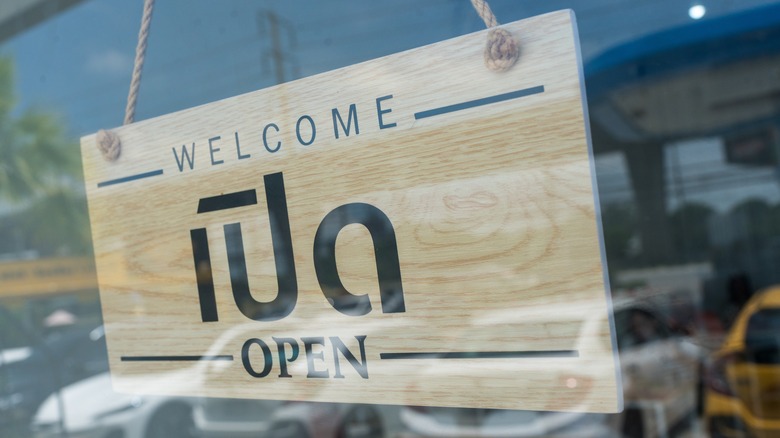
If there's one thing that will make your Thai dining experience go smoother, it's being able to speak a few Thai phrases. I'll be honest, Thai is a very difficult language to learn. I wouldn't even consider myself conversational despite the amount of time I've spent in the country, and the phrases I do know typically relate to food. Not only is Thai tonal, meaning the same word can have different meanings depending on your inflection, but the script is also tough to decipher.
Fortunately, it's not hard to research and remember a few key Thai phrases to use in restaurants, and you'll typically be understood even if you mess up the tonal aspect. "Sawadee krap/ka" means hello, and "kup khun krap/ka" means thank you, and both phrases will get you pretty far. It's also handy to know "aroy" for delicious. You can use "aroy mak" for an extra tasty meal, and "aroy mak mak" when you want to be even more gracious. While you probably won't need these terms for Thai restaurants outside Thailand, I still recommend you try them out. I know it can feel a bit cringeworthy, but I've never been met with anything other than joyful surprise at my mangled attempts to speak the language.