

10 Popular Scottish Dishes You Need To Try At Least Once
In the 1990s, in the Scottish town of Stonehaven, a restaurant called Carron Fish Bar invented what would become a world-famous and iconic Scottish treat: the deep-fried Mars bar. Today, you can still find the delicacy in fish and chip shops across Edinburgh, Glasgow, Aberdeen, and beyond. The deep-fried Mars bar is arguably one of the most unusual and divisive foods that Scotland has given the world. But not all of the country's cuisine is quite as controversial (unless it's haggis, but more on that later).
Actually, over the centuries, the Scottish people have created some tasty, hearty dishes, including warming soups, indulgent desserts, buttery potato scones, and elaborate fried breakfasts. Many have stood the test of time and are still enjoyed widely today, in Scotland and beyond. Below, we've compiled some of the Scottish dishes you need to try at some point in your life. At least once, anyway.
Haggis
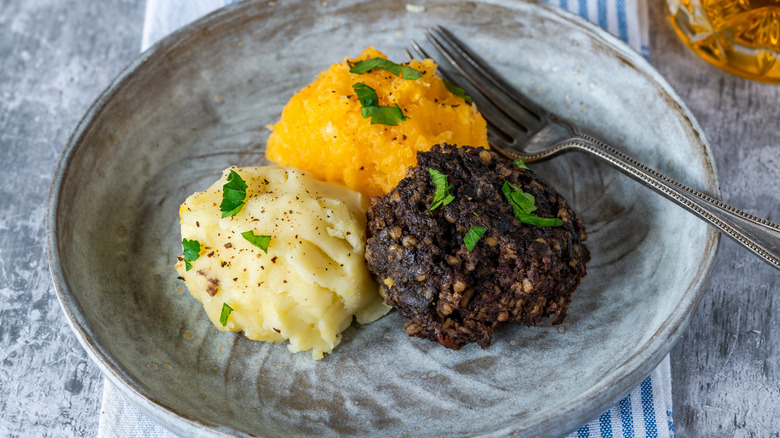
Haggis is, without a doubt, one of Scotland's most iconic foods. It is the country's national dish, often enjoyed on Burns Night. The countrywide celebration is held every year in honor of the Scottish poet, Robert Burns, who wrote the poem "Address to a Haggis" in 1786. It's not known exactly when Scottish people started eating haggis, but the dish likely evolved over time from Viking recipes.
While it is still beloved across Scotland, haggis is more than a little controversial elsewhere. It has been banned in the U.S. for more than 50 years, due to the lungs in the recipe. Yep, haggis is made with lungs. Sheep's lungs, to be specific, as well as liver and heart, which is mixed with beef suet, oatmeal, spices, and onions. All of this is then packed and boiled in another organ: sheep stomach.
It doesn't sound appetizing on paper, but many who have tried it say it is a pleasant mix of meaty, crumbly, savory, and spicy. If you're in Scotland, haggis is a must-try. But no need to worry if you're not all that into organs. Nowadays, it's also possible to find plant-based versions of the Scottish classic, stuffed with portobello mushrooms or vegetables instead.
Cullen skink
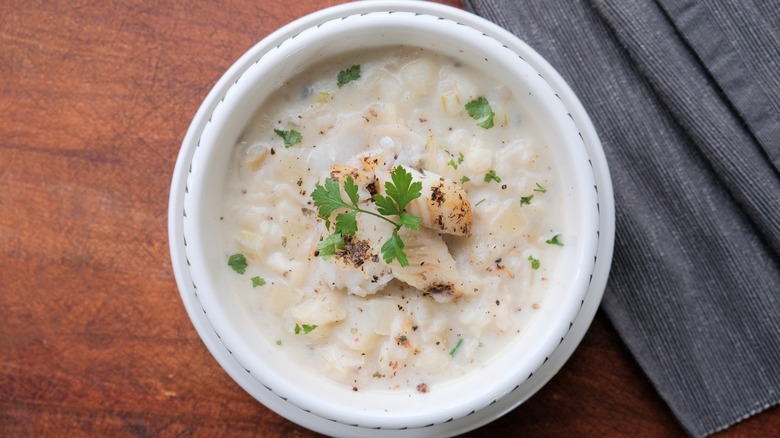
It might sound a little like it hides in the depths of Scotland's lochs alongside the Loch Ness Monster, but cullen skink is not a mythical creature. It's soup, made with smoked haddock, onions, milk, parsley, and butter.
The dish has a long history. It used to be made with beef, but in the late 1890s, villagers in northern Scotland were unable to access or afford the meat, so they started making it with fish sourced from Cullen Harbour instead. That version of the soup has stood the test of time, and cullen skink with fish is still eaten across Scotland today.
Similar to an American chowder, it's not hard to see why cullen skink is popular across damp and rainy Scotland. It's creamy, comforting, and perfect for enjoying on a chilly day. In fact, the Scots love this soup dish so much, the country even hosts the annual Cullen Skink World Championships. During the event, people from all over the world flock to the town of Cullen to show off their signature takes on the popular hearty soup.
Cock-a-leekie
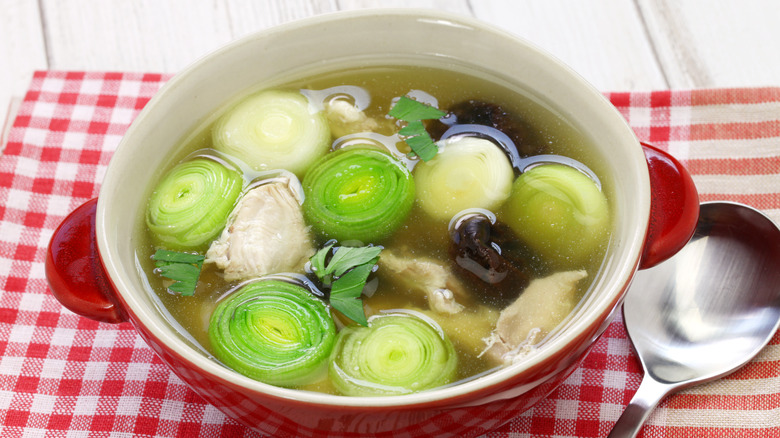
Next, we have another of Scotland's most famous soups, Cock-a-leekie. This dish isn't made with fish like cullen skink, but it is just as creamy and comforting, thanks to its two key ingredients, leeks and chicken broth. Cock-a-leekie, which is also made with prunes, can also be made entirely plant-based, with potatoes instead of the chicken.
Alongside haggis, cock-a-leekie is often eaten during Burns Night celebrations, but it's also a warming winter favorite, too. It's been that way for centuries. In fact, cock-a-leekie can be traced all the way back to the 1500s, at least. Back then, it was made with prunes and pullet (a chicken aged less than a year), but not leeks. In fact, the first mention of leeks didn't come until the 1700s. That's probably because the dish was likely initially influenced by very similar French recipes, which were made with onions.
Recipes have evolved even more over the years. Some choose to add barley, for example, or add bacon, while omitting the prunes. However you choose to make cock-a-leekie, the fact remains that this soup is hearty, satisfying, and a great way to stay cozy during the chilly winter and fall months.
Cranachan
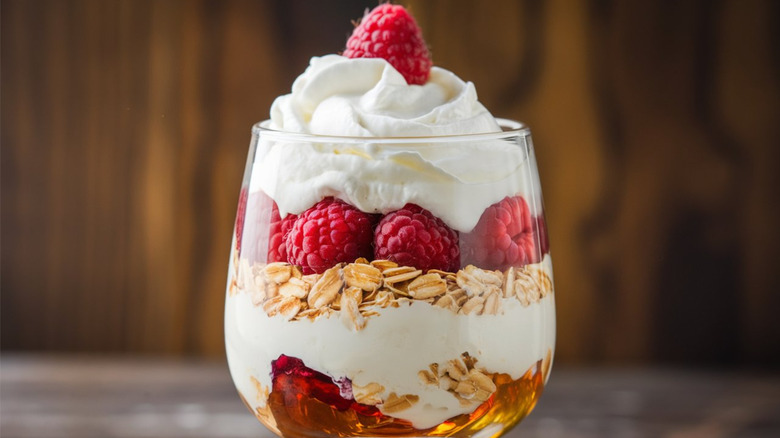
Cranachan is one of Scotland's most popular desserts. Similar to the English dessert Eton mess, traditionally, it's made with a mix of cream, raspberries, oatmeal, honey, and a dash of whisky, but many different variations exist. In 2023, Nadiya Hussain spoke to Tasting Table about her unconventional use of cornflakes and mango in the dessert, for example. Others choose to make vegan cranachan with coconut milk and maple syrup. Regardless of ingredients, a cranachan should always be creamy, rich, indulgent, and sweet.
Cranachan originated from another Scottish classic, which is a dish called cream crowdie. Usually eaten for breakfast, cream crowdie used to be made with soft raw milk-based cheese (crowdie), heather honey, and oats. But over the years, Scottish people experimented with the recipe, making it sweeter by adding raspberries, and boozier by adding whisky. Eventually, it turned into a dessert dish, rather than a breakfast. It's often served after haggis, as the last course during Burns Night feasts.
Shortbread
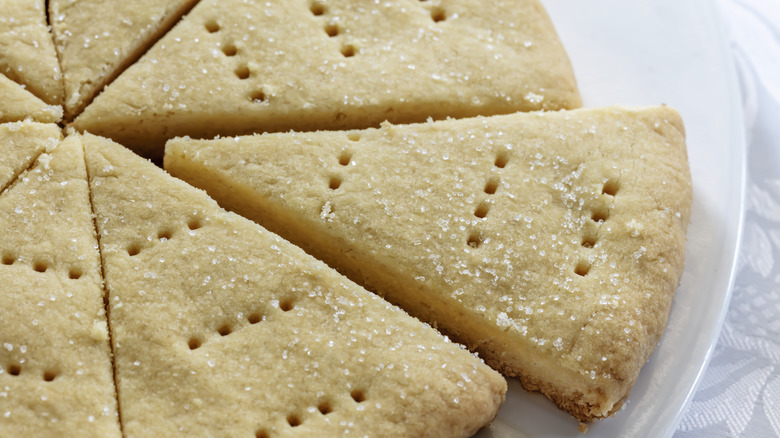
Shortbread loved the world over. It's buttery, it's rich, it's crumbly; it's arguably the perfect cookie. But while it's often eaten during the holidays in the U.S., this sweet treat didn't start its life in North America. As you have probably gathered already, it was invented in Scotland.
Shortbread has a long history. It likely evolved from biscuit bread, which was eaten across the U.K. in the 12th century. Biscuit bread was exactly what it sounds like, biscuits, or cookies, as they're known in the U.S., made with leftover bread dough. The Scots decided to add more butter to the recipe, and shortbread as we know it today was born. But they weren't alone. Other cultures have made similar cookies; Egyptian ghorayeba, for example, is known as the shortbread of the Middle East.
Mary, Queen of Scots, was famously a fan of Scottish shortbread. Her favorite type was petticoat tails, which are usually flavored with caraway. Petticoat tails are still eaten today, alongside circular-shaped shortbread rounds and rectangular-shaped shortbread fingers.
Clootie dumpling
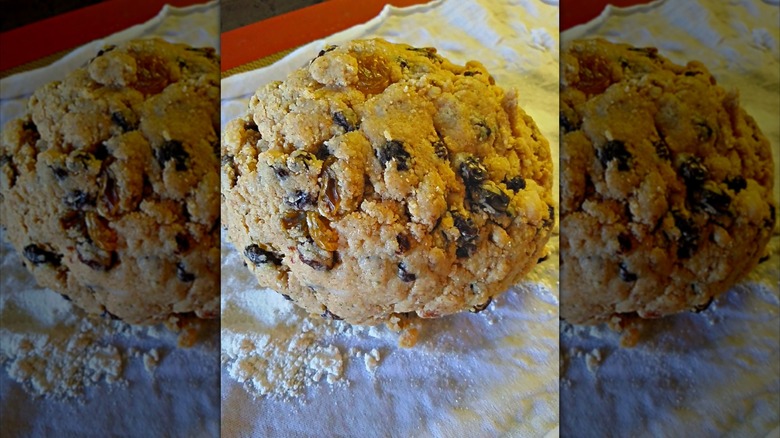
A Scottish clootie dumpling is kind of like an English Christmas pudding. Usually enjoyed during winter holidays and celebrations, it's made with dried fruits, spices like cinnamon and ginger, treacle, and suet, before being steamed in a cloth and served with clotted cream. The cloth part is where it gets its name, as clootie is Scots for cloth. In the 17th century, people started hiding coins or charms inside the dumplings for good luck. Again, this is similar to the English tradition of hiding dried peas, and later sixpence pieces, inside a Christmas pudding.
No one knows for sure when Scottish people started eating clootie dumplings, but it's likely the dessert stems back as far as the medieval period. This tracks, as cooking in cloth is a medieval technique. In fact, it stems all the way back to when people across Europe used cauldrons to prepare food. Quite simply, the cloth would help to separate the pudding from any other food that was being cooked inside the cauldron.
Clootie dumplings have, of course, evolved over the years. For starters, nobody uses cauldrons to cook food anymore. But clootie dumplings can be made with many different ingredients, too. Again, they can easily be made vegan with ingredients like flaxseed and plant-based suet.
Lorne sausage
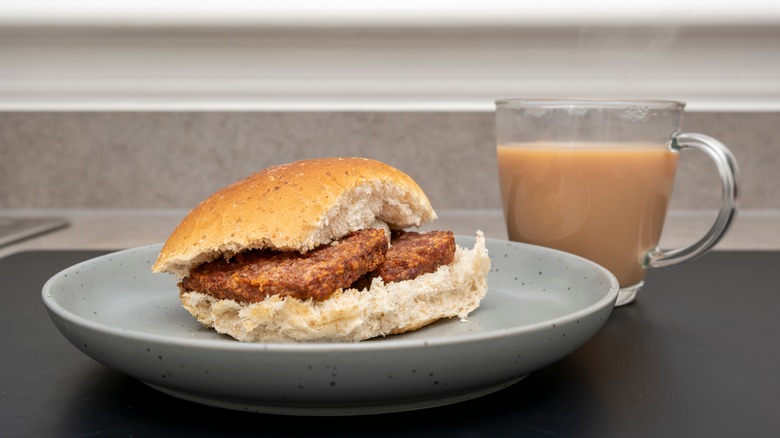
Around the world, sausages come in many different flavors and sizes, but usually, they're a similar, cylindrical tube shape. That is unless it's a breakfast sausage, which is often more of a burger-like patty shape. But square sausages? That's something most of us don't come across very often. In Scotland, however, square sausages are normal.
Known as Lorne sausages, these square sausages are usually made from a mix of beef, pork, suet, breadcrumbs, spices, and seasoning, which gives them their distinct flavor and texture. They get their square shape from the tin they're packaged in, and they're usually sliced from a block before they're fried and served. Lorne sausages aren't as old as many of the foods on this list. In fact, it is believed to have originated in Glasgow's Lorne Hotel in the early 20th century.
Today, Lorne sausages — which fun fact, are also sold in vegetarian, pork-free varieties — are eaten across Scotland in many different recipes. One way to enjoy a Lorne sausage is in a roll with tomato sauce and caramelized onions, for example. But arguably, the most popular way to eat Lorne sausage is in a full Scottish breakfast.
Full Scottish breakfast
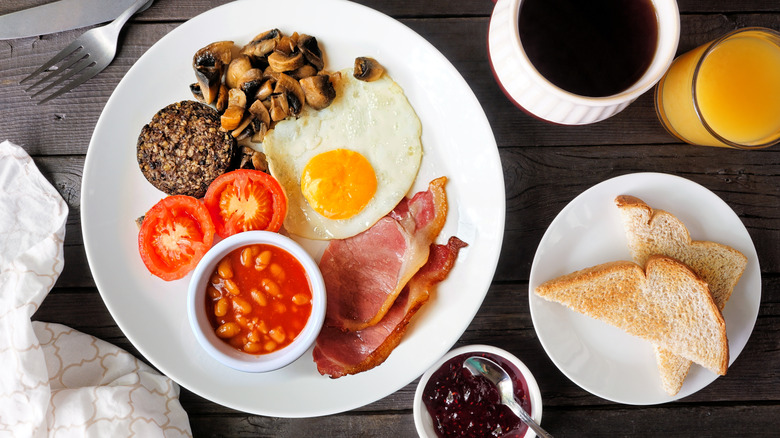
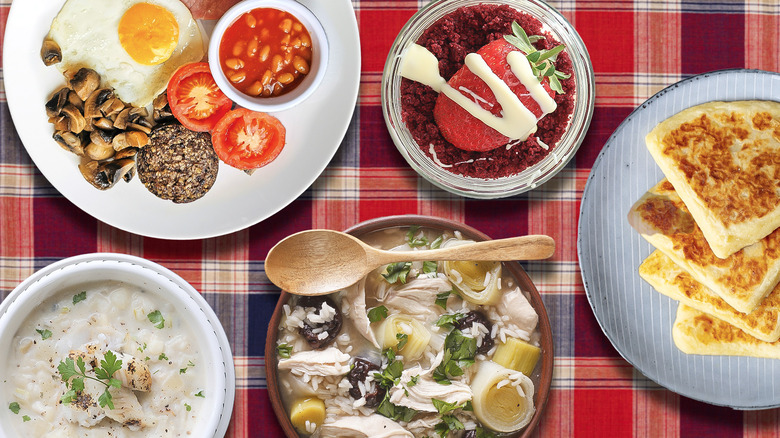
A full English breakfast might be one of the most famous dishes to come out of the U.K., but Scotland's version of a fry-up is well worth a try, too. Similar to the English version, a full Scottish breakfast consists of bacon, link sausages, fried eggs, mushrooms, and fried tomatoes, but it also has its own distinct ingredients. As well as the link sausage, the dish also features the square-shaped Lorne sausage, as well as haggis, black pudding (which is made with blood), and potato scones. Sometimes, like the English, Scots choose to add a serving of baked beans to the dish, too.
This hearty, meaty breakfast dish became popular during the Victorian era. This is the case for the full English, too, and is largely because during this period, breakfast was a chance for the wealthiest in society to show off to their peers by offering them a banquet of different foods. Before the full Scottish breakfast, for many Scots, the first meal of the day usually consisted of thick porridge made with oats, water, and salt.
Full Scottish breakfasts are easy to whip up from home, and they can also be found in many hotels and cafes across Scotland. If you don't eat meat, some eateries offer vegetarian and vegan versions of the classic dish, too.
Potato scones
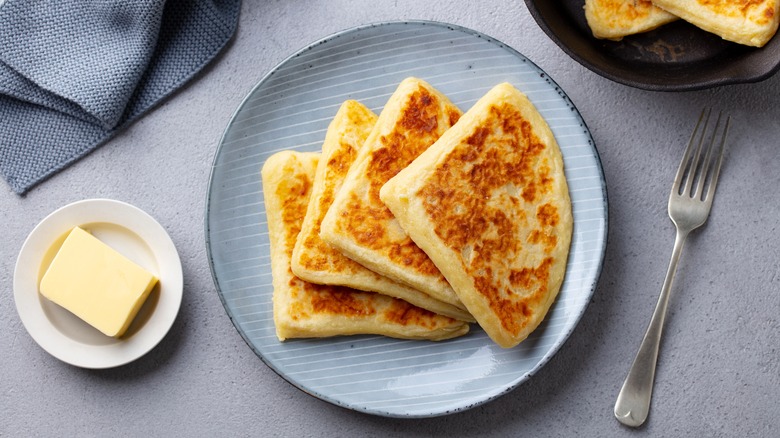
Potato scones, affectionately known as tattie scones in some regions, are a key part of the full Scottish breakfast. However, they're also often enjoyed in baps, rolls, or just on their own with plenty of butter. They're a simple yet satisfying treat, with a texture that's similar to flatbread. Potato scones are usually made with just mashed potatoes, flour, and butter, before they're fried in a pan or griddled.
Like England's bubble and squeak, potato scones evolved as a way to use up leftovers. They're usually made immediately after the potatoes have been cooked, in order to get their signature rich, buttery, soft texture. That's not essential, though, and some choose to make them with leftover mashed potato from the previous day. Just note that the texture may be slightly different.
It's not known exactly when the potato scone originated, but we do know that they were eaten in the 1880s, as they are mentioned in written recipes and memoirs from the era. They're almost identical to potato farls, which are common in Northern Ireland and, again, usually eaten with breakfast.
Scotch pie
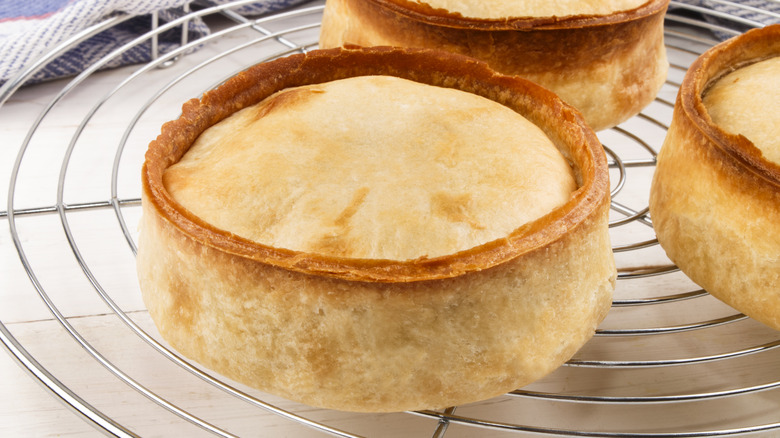
A Scotch pie is also known as a football pie, for one obvious reason; it's usually sold at football stadiums, or soccer stadiums, in the U.S. The flaky, crispy, buttery pie is filled with hearty ingredients, like mutton or lamb, beef, spices, breadcrumbs or cereal filler, and salt, making it ideal for keeping you warm while standing outside in the cold watching a football match.
Scotch pies aren't always eaten at football matches, of course. They're also often enjoyed at home around the table, or as a simple midday snack. They've been around for centuries, and likely evolved from penny mutton pies, which were small, cheap pies filled with mutton, sold by butchers in the 18th and 19th centuries.
Today, you can find Scotch pies sold across Scotland, where they're simply known as pies, for obvious reasons. For those who don't eat meat, it's also possible to find vegan versions of the traditional pie in grocery stores and cafes across the country.