

What To Consider Before Lining Your Air Fryer Basket
We may receive a commission on purchases made from links.
Air fryers are all the rage these days. Offering the convenience to crisp raw chicken wings and the capacity to bake lasagna, these appliances have become a kitchen staple. In fact, according to Circana, about 66% of U.S. households have one. For added ease, many have turned to air fryer liners as an extra non-stick convenience for easier clean-up. The main things to consider when going this route are cost, cooking times, and risks. But safety is the foremost consideration when opting for cooking with liners, your air fryer's optional but complementary companion.
Grease build up is something to take into account before lining your air fryer basket. Bacon, and other fat rich meats, release liquid which can build up on liners. If not properly handled, natural leakage may spark kitchen fires. Cleaning your coils and basket and promptly disposing of one-time-use liners can help eliminate the risk of catastrophe. Always check your air fryer's manual and your liner's instructions for safety protocols and use them only as directed.
The technical term for air fryer magic is RUSH, or Radiant and UpStream Heating, although, depending on your model, it may also be referred to as Rapid Air Technology. A heating element toward the top of the gadget emits heat downward, where fans circulate air around the food. This mix of radiation and convection allows for food to cook and crisp quickly in the encased vessel. When air fryer liners sit atop the lower level fans, cooking time may be increased – this presents the quandary of what liner will best suit your hard earned air fryer feast.
Silicone versus parchment air fryer liners
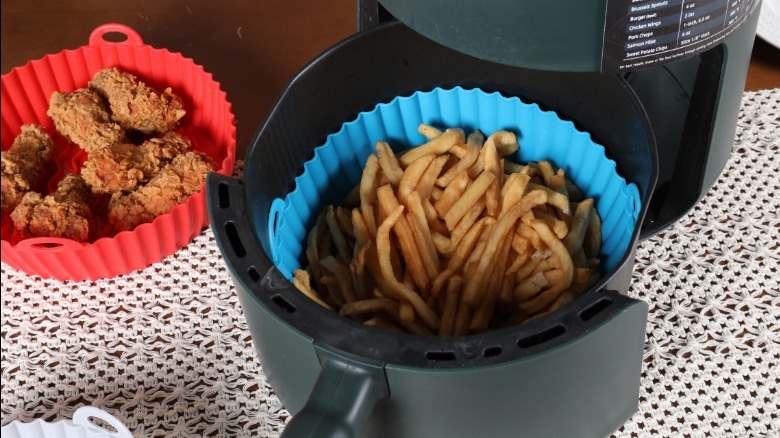
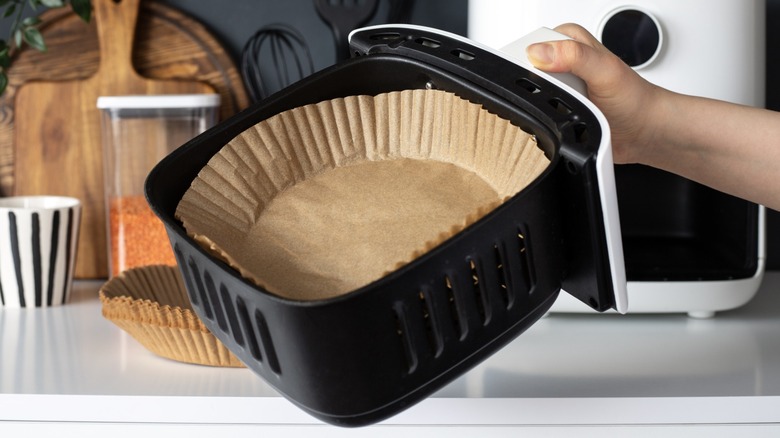
What kind of liner would be most beneficial to your cooking habits and the mechanism itself? Most commonly, liners come in the form of single-use parchment paper or reusable silicone. While paper air fryer liners require less effort in the cleaning department, since they can be tossed in the waste can immediately after use, they are not as environmentally friendly as the silicone alternative. If speed and ease take precedence in your kitchen, try the parchment liners. You might be asking is it safe to put parchment paper in an air fryer? The answer is yes, so long as you make sure to properly weigh them down and keep the heat under 428 degrees Fahrenheit.
This is great for items that stick such as chicken wings. If liners are not secured in place, they may travel upward resulting in a fire hazard. One other important note is that while parchment and wax paper look the same, only parchment is air fryer-approved . Also, consider why you should own silicone liners for your air fryer, and if sustainability is your goal, opt for this reusable material instead. The U.S. Food & Drug Administration (FDA) has approved food grade silicone as safe for food contact and dishwashers. They can also withstand temperatures up to 428 degrees Fahrenheit.
Silicone air fryer liners weigh more than their paper counterparts and have a greater risk of blocking the fan's air flow, resulting in a longer cooking time. They are well-suited for making heavier lasagna and pasta bakes. With a little due diligence and careful consideration, you will be able to choose one that best fits your household needs and will allow you to experience the wonder of this new technology. Explore our 14 easy air fryer recipes you're sure to love and max out your machine's benefits.