

The Ancient Origins Of Rock Candy
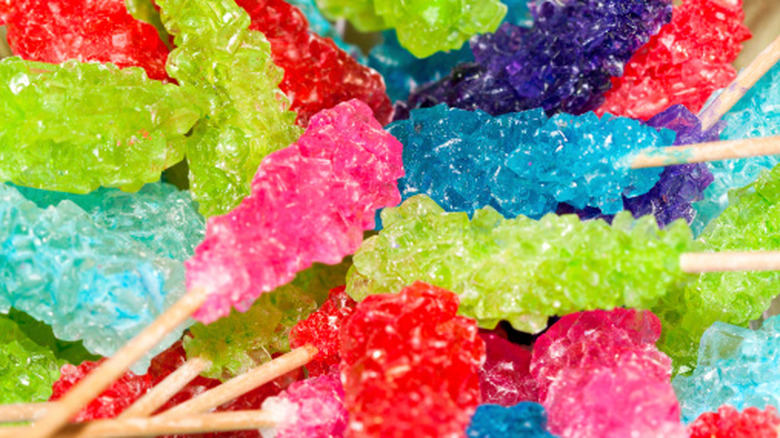
Before sweetness became ordinary, it was a rare and mysterious pleasure, and rock candy's glittering crystals still carry the memory of long-ago ingenuity and of how sugar first traveled through human history. In ancient India, where sugar cane was first cultivated, people learned to coax geometric shards from boiled cane juice. Known as khanda, the root word for candy, this method of processing sugar happened over 2,000 years ago, predating the invention of granulated sugar by centuries. It marks one of the first ways people found to refine, store, and share concentrated cane juice. In Indian temples, rock candy became an integral part of ritual offerings and ceremonies, distributed as prasad to devotees, and used to mark special occasions. Rock sugar was also valued as medicine, dissolved in water to treat exhaustion and digestive troubles, and used to revive the sick.
Crystallizing sugar was a form of early kitchen alchemy, later called chemistry. This visible transformation required skill and patience, turning sugar into an emblem of status, sophistication, and curiosity. Long before cane sugar could be mass-produced or shipped as powder, rock candy probably offered a practical solution: It was compact, portable, and resistant to spoilage. These crystals survived long journeys, resisted moisture and spillage, and retained their sparkle, making them ideal for trade routes stretching from the subcontinent to Persia and China. Sugar caravans crossed deserts, sometimes by way of buddhist monks, carrying rock candy alongside spices and precious goods, helping shape the social and political landscape of entire regions.
The story of rock candy runs parallel to the larger history of sugar, cultural evolution, and global economic exchange. It shows how crystallizing the natural juices of a sweet grass became intertwined with negotiation of power embedded in ritual and economy.
From Persia to the parlor
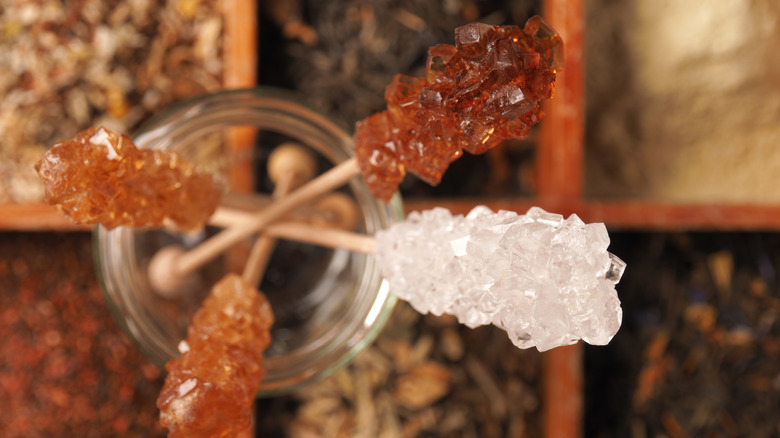
As sugar traveled in rock candy form across Central Asia, so did the techniques, meanings and roles that it held. In Persia, it became nabat, a golden proto-rock candy served with tea, tucked into wedding ceremonies, or pressed into the hands of the sick. Here, rock candy's medicinal associations deepened; nabat was a folk medicine prescribed to calm nerves, ease digestion, and even lift the mood. Nabat's delicacy signaled hospitality and the wish for happiness in marriage, anchoring sweetness as both a blessing and a display of refinement.
In China, cities like Guangzhou developed thriving traditions around sugar crystallization, with artisans perfecting the technique and rock candy becoming a fixture in kitchens, markets, and on celebratory tables. Here, rock candy found a place in both everyday recipes and festival gifts, especially during the Lunar New Year where it symbolizes good luck and prosperity. These cultural layers reflect how a single ingredient can acquire a multitude of uses and meanings as it moves through new hands and contexts.
Europe encountered rock candy during the Middle Ages, when sugar was still rare and costly. Much as they had used honey, medieval healers and apothecaries used it to deliver medicine or prescribed it for coughs and throat ailments. But by the 17th and 18th centuries, as sugar flooded European markets, fueled by the brutal transatlantic slave trade that transformed sugar production in the Caribbean and powered the industrial revolution, rock candy shifted from a medicinal remedy to an everyday sweet. Now it could be enjoyed in tea, lemonade recipes, and candies. In America, it gradually became a fixture at fairs and in homemade sweets, further cementing its place as a confection.
From ceremony to science
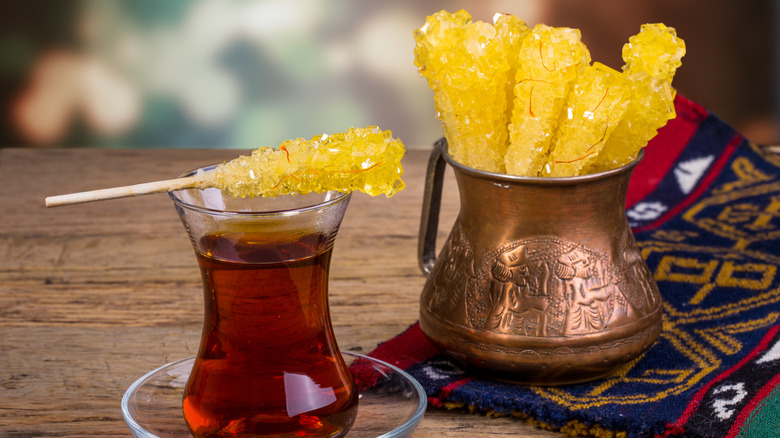
Although in today's food world, sugar is so cheap and ubiquitous that we're mostly inured to its sweetness, rock candy itself continues to move between ritual, memory, and reinvention. In India, it remains part of temple offerings and wedding traditions, where it's shared as a symbol of blessing and communal joy. In Iran and China, families still serve rock candy at holidays and gatherings, maintaining and honoring its associations with hospitality, health, and fortune.
But rock candy has also found new life. Its dramatic crystals appear in science classrooms , with children suspending strings in syrup to watch the formation of crystals to help learn about molecular structure, solutions, and the slow transformation of matter from liquid to solid. It's also sold as a nostalgic treat at fairs and candy shops, and used as a decorative flourish in cakes, cocktails, and wedding displays.
Sugar changed the course of human history, shaping economies, societies, and daily habits around the world. Rock candy is a direct trace of that story. Its presence in rituals, trade, and celebrations marks the ways sweetness defined ceremony and value. Even now, when sugar is a low value, ordinary product, rock candy carries echoes of those earlier roles.