

When Selecting Store-Bought Fish For Sushi, You Absolutely Must Look For These Labels
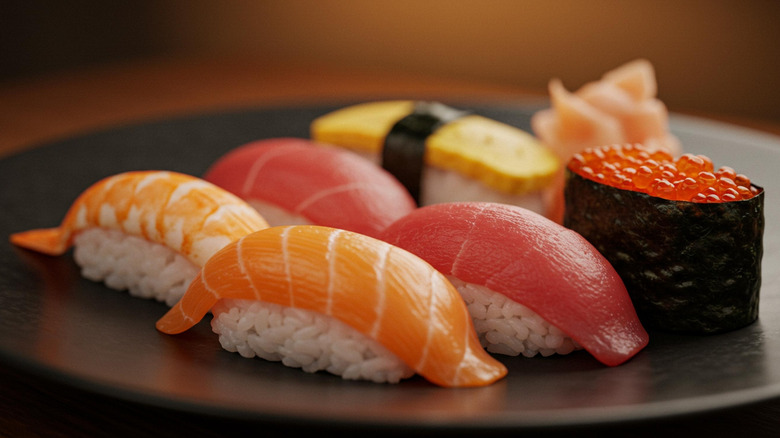
When done right, preparing a homemade roll of sushi can feel like a satisfying, almost therapeutic ritual. With meticulous cuts demanding delicate precision, sushi brings a satisfying touch of indulgence to any at-home dinner party. Before rolling out bamboo mats or picking up knives, there's an imperative step that must be taken first, and that's choosing the right fish. Since raw fish is not commonplace in the Western diet, the process can be a daunting undertaking, especially concerning foodborne illnesses or parasites from consumption. That being said, with the proper knowledge and a keen eye, anyone can become an intrepid sushi chef. home. To help break down how to purchase high-quality raw fish, we spoke to Nana Darkwah, the executive chef at Ocean Hai at Wyndham Grand Clearwater Beach.
"Always make sure the labeling says is safe to eat raw or sushi-grade," Darkwah says. "If you're not sure, do not consume it raw." Though it may sound dramatic, there's no room for guesswork when it comes to raw fish. Unlike beef, which is categorized into a standard set of cut grades measuring taste and texture by the U.S. Food and Drug Administration, raw fish quality is only enforced in terms of its safety to eat raw. As Darkwah explains, "It has been frozen usually at -4°F for at least 7 days, or flash-frozen at -31°F. It is handled in a very sanitary and temperature-controlled way from boat to store/restaurant." This dramatic drop in temperature kills any harmful parasites or pathogens.
What else to look for, and where to buy the highest quality fish
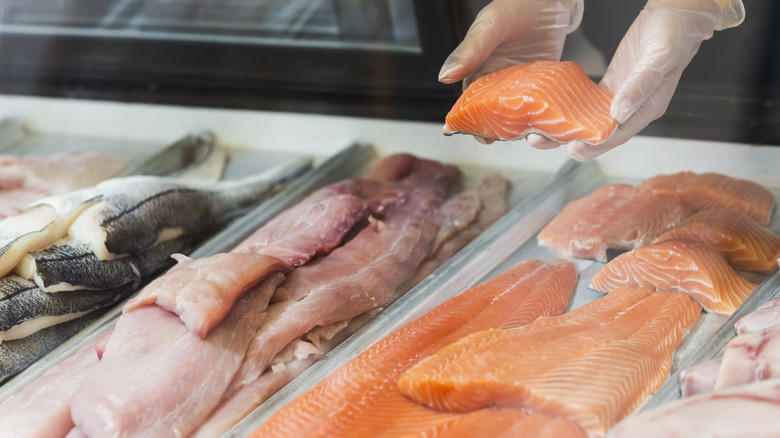
As previously established, raw fish labeled as "sushi-grade" has been safely handled and prepared consumption. You may also see fish marked as "sashimi-grade," a marketing term often used interchangeably with "sushi-grade." The terms both ensure safety for raw consumption, though the former may suggest a premium taste and texture. That being said, the higher-quality is not guaranteed, as the labeling is not regulated by the FDA. Instead, it is entirely at the discretion of the vendor as a method to drive up sales.
As for where to purchase raw fish, grocery stores, Asian markets, and dedicated seafood shops typically boast a selection of raw fish, but not all sashimi is created equal. "My preference is to get it from fish markets," Darkwah says. To ensure the utmost quality, you should always check online reviews, ensuring the fish market has a solid reputation. Look for proper storage and handling of raw fish, such as freezers and large beds of ice. If the market emits a strong fishy smell, stay clear. Fresh, raw fish should never smell strong or unpleasant. Also, check the colors and textures of the meat. Vibrant colors are best, like deep reds and bright pinks. As fish sit out, they lose their saturation, so you should never purchase a graying cut of tuna or salmon. In terms of texture, good quality fish should always be firm to the touch, as mushiness indicates it is past its prime.