

Why You Should Never Cook One Of The Most Affordable Cuts Of Steak Past Medium
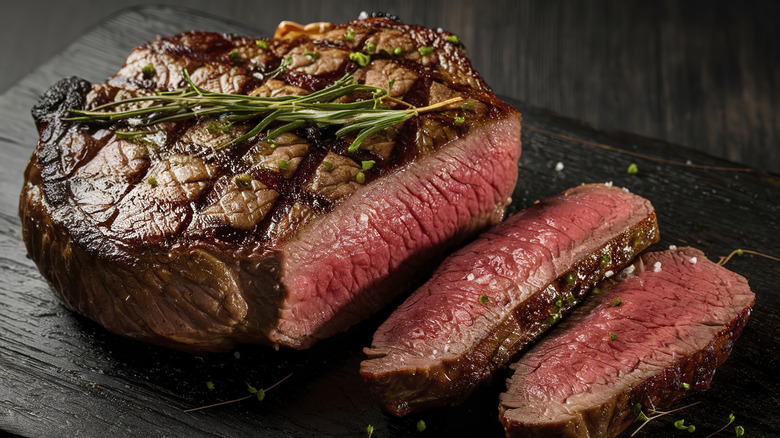
Steak is a versatile dish that can be cooked many ways. While the level of doneness is generally up to you and your personal preferences, certain cuts do work better cooked at certain temperatures. To learn the best way to cook a sirloin, Tasting Table spoke to Chef Billy Parisi, a classically trained culinary school graduate and food blogger. Sirloin steaks are taken from a cow's rear back, and compared to other cuts like ribeye, they tend to be leaner and therefore a bit tougher when cooked. This is why Parisi only cooks the steak to medium. "This is a little subjective," the chef admits, "but to me, the best temperature for a sirloin steak falls within the medium-rare to medium range. The meat remains very tender and juicy at these points."
Parisi continues, "Medium-rare is defined as 125 degrees Fahrenheit to 130 degrees Fahrenheit and medium is 130 degrees Fahrenheit to 135 degrees Fahrenheit." Medium-rare is a popular way for steak to be cooked, taking top place in Tasting Table's survey of how people prefer their steak. The best way to ensure you've cooked your meat to the proper temperature is to use a meat thermometer; if you try to guess based on the exterior appearance, it's easy to over- or undercook certain parts of the steak.
What happens if you overcook sirloin?
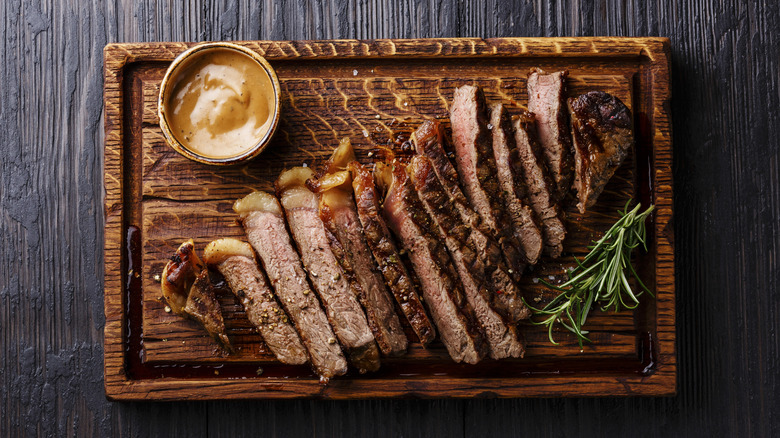
As mentioned, sirloin contains less fat than other varieties of steak. This means that the meat struggles to keep its tender mouthfeel when cooked at higher temperatures compared to other cuts, which is why many more affordable cuts of steak are sirloin varieties. As Parisi says, "When steak is cooked to well-done, all the muscle fibers completely break down due to extreme loss of moisture. It will be chewy and not particularly tender." On the other hand, overcooking a ribeye (or another fattier cut) will rarely produce as catastrophic results. If you prefer your steak well-done for taste or safety reasons, consider getting a more expensive cut when splurging on a steak.
Thankfully, there are ways to fix or repurpose overcooked steak. Chef Parisi adds, "If [overcooking] happens by accident, I save it for stew or slow braises, where it is cooked for hours on end until it completely shreds apart." Slow cooking can shred even the toughest of meat to a tender texture, which is why the best cuts of meat for stew are ones that can hold up to longer cooking times, including sirloin. However, if you're simply grilling up the meat for a nice steak dinner, a well-done sirloin will not be your best option. Instead, follow Parisi's advice and cook it medium.