

What No One Tells You About Cooking Garlic Properly
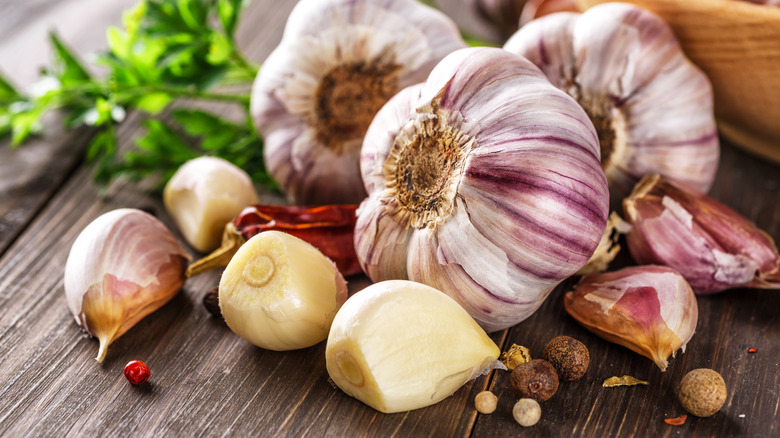
Garlic is perhaps the most widely used aromatic in the kitchen, but it's one that is also surprisingly easy to mess up. There aren't many better smells that will waft through your kitchen than some fresh garlic sizzling in oil, and there aren't many bigger disappointments than the acrid taste of burning it. You may have learned tips for cooking garlic, like smashing the cloves or getting more flavor out of it by crushing it, but once it's in the pan, the advice stops. Garlic is a very delicate ingredient, and it needs to be added at just the right time in your recipe and cooked for a very precise amount of time. So no matter what you do to prepare it, once you're cooking garlic, you shouldn't step away from the pan until you're ready to add more ingredients.
Garlic goes from raw to cooked to burnt in a matter of seconds, so you really need to keep an eye on the time, smell, and color. If you are sautéing minced garlic on medium or even medium-low heat, it will be done in 15 to 30 seconds. Once you start to smell the aroma of garlic in the air, or the second you start to see the edges turning a light golden brown, it's ready to go. Once it turns dark brown, the garlic is already burnt and will impart bitter flavors to your dish — so don't ever leave it unattended.
More tips for cooking garlic
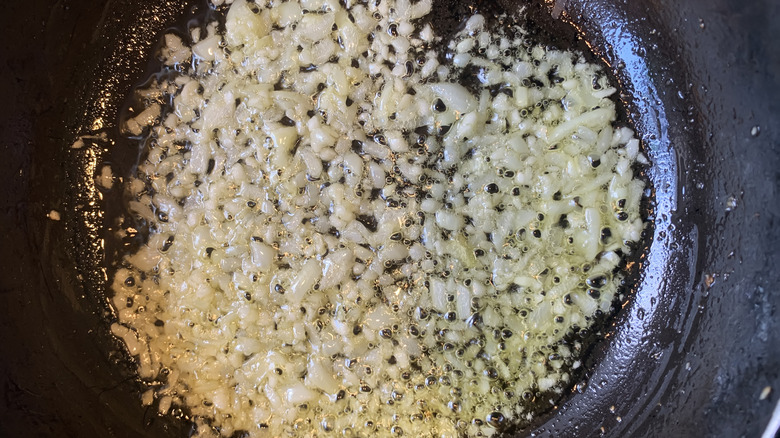
There are other precautions you can take to make sure you don't burn your garlic. The short period of time it needs to cook means that when you are doing high-heat jobs like pan-frying and sautéing, you should only add garlic right at the end. If you are going to make a sauce, soup, or any dish where adding liquid will stop the browning process, add the garlic about 30 seconds before adding the liquid. Garlic will also brown faster if left untouched, so stirring it around in the pan continuously while it cooks can help give you a little more time before it starts to burn. If you are adding garlic to a pan that already has a bed of other aromatics like onion or a mirepoix, this will also slow the cooking, but you should still keep an eye on it.
Of course, the lower the heat, the better the chance of avoiding burnt garlic, but that aspect is usually at the mercy of your recipe. However, if you are starting a recipe by cooking the garlic, the best thing to do is actually start it in a cold pan. If you add garlic to cold oil or butter before turning on the heat, the slow build of the temperature will give you more leeway to cook the garlic more precisely, getting just the light golden garlic you want.