

The First Erewhon Grocery Store Wasn't In LA But This US City
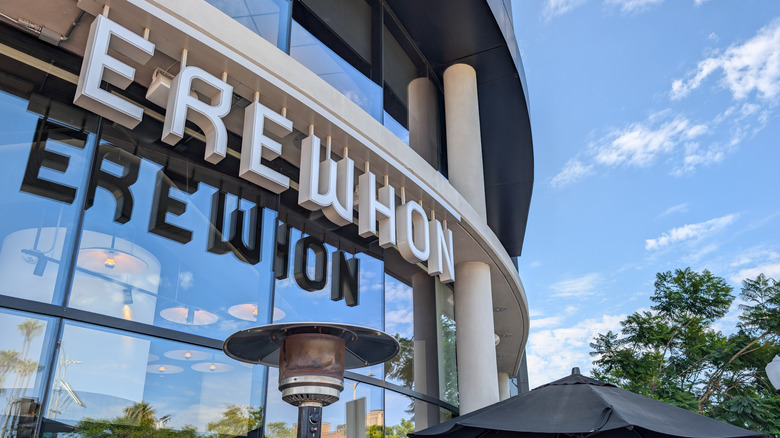
Even if you don't live in Los Angeles, a grocery store called Erewhon may have graced your social media feeds. Read the name backwards if you don't quite understand it. This anagram for "nowhere" was first coined for a satirical health book published in 1872 and has become a meme of its own.
Erewhon has comfortably gained a reputation as a haven for natural and organic foods, beautiful customers, celebrity collaborations, and substantial prices. While these factors make sense in the City of Angels, the trendy grocery wasn't always located in California. Erewhon's roots can be traced to Boston, where Michio and Aveline Kushi sold nutrient-packed items in a small stall in the basement of a market. This quaint operation was one of the first natural foods stores to exist in America. The macrobiotic advocates pedaled Japanese products like tofu and miso and sold granola and all types of popular grains in bulk before expanding business to act as the middlemen between organic farmers and a devout set of 200-some-odd customers.
Finding a target audience in California

That first stall in Massachusetts didn't last, but Erewhon eventually found footing in California where it has now bloomed into a collection of stores located throughout the state. When the first Erewhon was set up on Beverly Boulevard, the Kushi's had already established a community of followers looking to eat well and live a healthy life. In the '70s, Erewhon was serving not only thousands of customers, but the store had also established a substantial wholesale branch.
When Tony and Josephine Antoci purchased the business in 2011, Erewhon's brand pillars of luxury and wellness captivated its target audience. The Antocis acquisition of the store was somewhat of a mistake, however, as Erewhon had filed for bankruptcy in the 1980s and was bought out by a wholesaler. The couple only decided to purchase the business after original plans to open a Dean & Deluca fell through.
Since then, Erewhon has become something of a status symbol for those who can afford $20 smoothies and $26 bottles of water. Today, the pretty store aisles are home to A-listers, foodies, and curious influencers who browse displays of unique produce, sea moss gel, sprouted buckwheat boules, kale chips, and mushroom chocolates.