

The Actual Difference Between Green And Yellow Peas
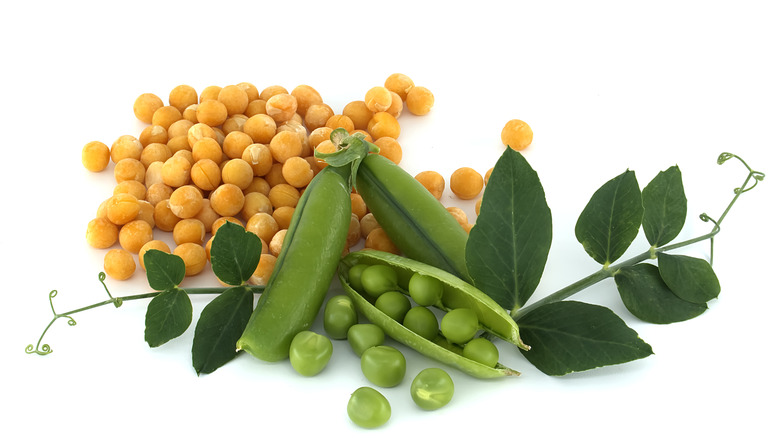
Green peas and yellow peas may look like close cousins — and botanically, they are — but they have some key differences that affect everything from flavor to how they perform in recipes. Both come from the same species (Pisum sativum), but they're different varieties that are harvested and processed in slightly different ways.
Green peas, like the ones you'll find in the freezer aisle, are picked when they're young and tender. They have a sweeter, more vegetal flavor, and their soft texture makes them ideal for dishes where you want a bit of freshness and texture. You can find them fresh, canned, or frozen, and they cook quickly with just a little heat.
Yellow peas, sometimes called golden peas, are typically harvested later, giving them a sturdier texture and milder, more earthy flavor. They're most often sold dried, similar to lentils or chickpeas. They hold their structure well when cooked and are commonly found in split pea soup. Nutritionally, both peas are packed with plant-based protein and fiber, though yellow peas are slightly higher in starch.
How to cook each type of pea
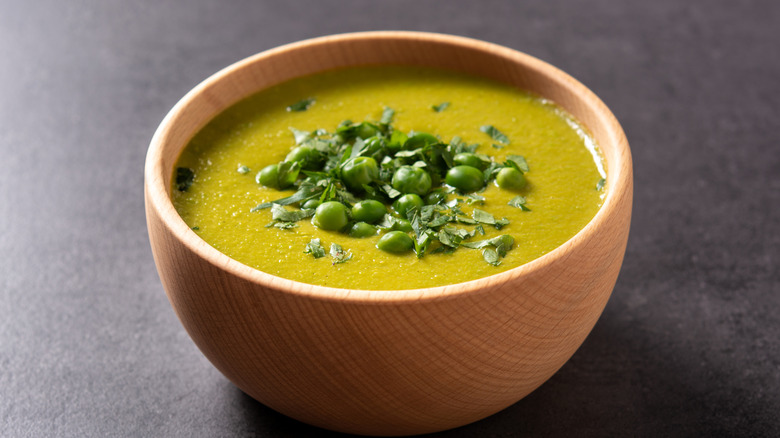
How you use (and cook) green or yellow peas depends on the role they're playing in your dish. For quick-cooking meals or fresh sides, green peas are a go-to. Their natural sweetness works well with herbs like mint or tarragon, and they pair easily with dairy, citrus, or cured meats like pancetta. Use them in classic buttered peas or any number of risotto recipes you'll want to eat on repeat. You can quickly sauté or blanch them for a bright finish in grain bowls, salads, or pasta. Because of their water content, they break down if overcooked (one of the biggest mistakes when preparing green peas), so keep them al dente for the best results.
Yellow peas, especially when dried and split, require a bit more prep. Soaking them overnight isn't always necessary, but it can reduce cooking time and improve texture. Simmer them low and slow to coax out their naturally nutty flavor. Yellow peas are a staple in stews and hearty purees, but are also perfect for blending into creamy soups, cooking into curries, or adding into our Ethiopian-inspired berbere split pea recipe. In fact, their starchiness also makes them an excellent binding agent in plant-based dishes. They're also increasingly popular in protein powders and flours thanks to their high protein content and mild taste.
Whether you're going for a fresh and vibrant dish or something cozy and filling, knowing which pea to reach for will help you get the flavor and texture you're after.