

Are Cotton Candy Grapes Processed?
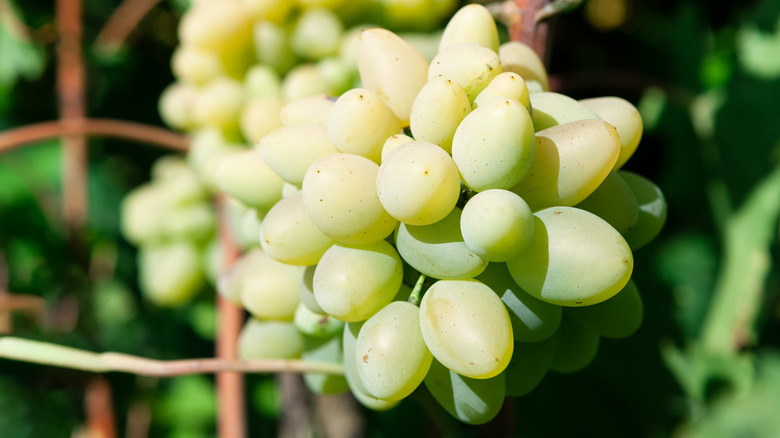
If you've ever bitten into a grape and shockingly discovered it tastes just like cotton candy, you're not imagining things. There really is an appropriately-named cotton candy grape. It's a real fruit that genuinely carries an inherent flavor mimicking that beloved childhood carnival or fairground treat. Before assuming these grapes come from Frankenstein-style manipulation, there's something you should know: They're not a processed product at all, nor are they genetically modified (GMO). These curious green grapes instead come from traditional cross-breeding rather than lab-based gene editing.
They're the spunky-yet-genius creation of a group of scientists at International Fruit Genetics (IFG) in California. This crew spent a lot of time — at least 10 years — cross-pollinating different grape varieties until they got that elusive, signature flavor of sugar-spun cotton candy. No foreign DNA entered the equation. Cotton candy grapes, after being developed, undergo no processing with artificial flavors, coatings, or added sugars. Believe it or not, they're completely natural, authentic grapes.
They don't look or smell like cotton candy, so it's a complete surprise when biting into these grapes for the first time. Some people find it disturbing, too sweet, or unnatural tasting, but you should definitely experience this fruit anomaly. Many folks eagerly await their release every summer, especially young snackers, which makes them a good alternative to candy and sweets — including the namesake fluffy pink stuff. This sweetness comes from enhanced natural compounds rather than processed sugar. For a deeper dive, check out the science of how cotton candy grapes get their sweet flavor.
What about nutrition in cotton candy grapes?

Though they taste like candy, cotton candy grapes deliver similar nutritional benefits as other grape varieties. That includes health-enhancing vitamins B, K, and C and antioxidants, which collectively can help with issues such as heart disease, brain and nervous system health, blood clotting, and more. By some accounts, they do carry slightly more natural sugar than other table grapes — about 18 grams of sugar per 100 grams of grapes — which equates to around 12% more.
The San Antonio Independent School District even lists cotton candy grapes as a healthy snack in its Fresh Fruit & Vegetable Program, substantiating the kid-friendly nature of these quirky little sweeties. Schools' summer break is peak time for cotton candy grapes, but you'll need to act fast. Snagging these grapes is tricky due to short growing seasons and limited licensed growers, mostly situated in California, where they harvest them from late summer through early autumn.
However, some regions outside the U.S., including Peru and Mexico, are beginning to grow and deliver them as early as April through June. You'll potentially find them in national grocery chains such as Trader Joe's, Whole Foods, Costco, Meijer, WinCo, and more, depending on availability. Popping them in your mouth raw is the most common way to eat cotton candy grapes, but why not spread the magic? Toss them in fruit salads, serve them on cheese boards, or freeze them for chilly, fun flavor bites.