

How Buying The Same Brand Of All-Purpose Flour Every Time Makes You A Better Baker
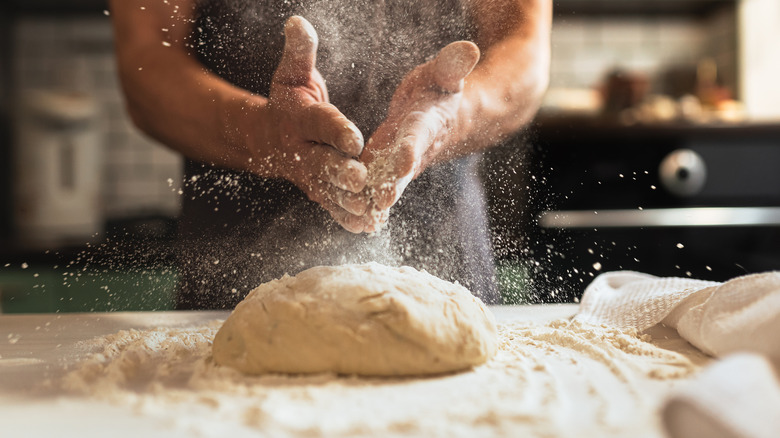
Even for the most experienced cooks, baking can be frustrating. You may have heard the phrase "cooking is an art, baking is a science," yet that makes things sound more simple than they are. The reality is that baking requires all the precision of a science while also demanding much of the intuition and creativity that cooking normally does. You can follow a recipe to a tee, but all that accuracy won't mean much if you don't have a feel for how different ingredients are reacting with each other and how removing one or adding another will change things. That's why when you are learning to bake or trying to get better, it helps to keep things as simple as possible. One big way to do that is by sticking with the same brand of flour.
While you might understand the key contrasts between different types of flour, like white and whole wheat, there are other more intricate shifts that occur in the same type from brand to brand. White won't suddenly taste like wheat, but there are things, like the protein level of different flour brands, that have no consistent labeling across the board. Thus, one brand's "high-protein" bread flour may actually have the same amount as another brand's "normal" all-purpose flour. And because of that, two different brands of all-purpose flour may create very different outcomes in the same recipe.
Using one brand of flour will make your baking results more consistent
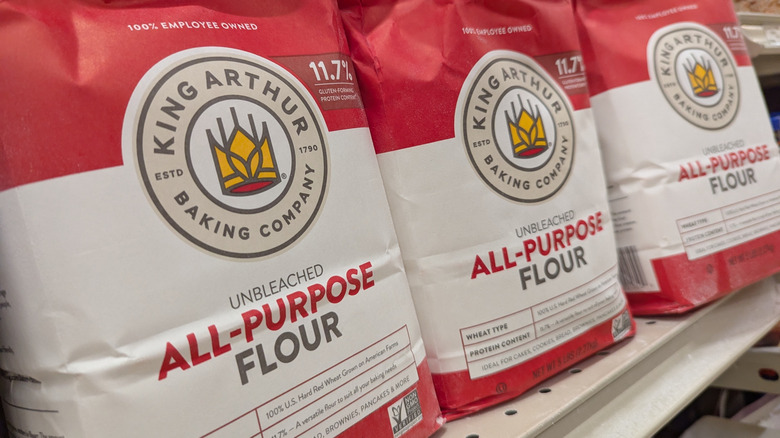
Part of learning anything, including baking, is learning from your mistakes. The truth is, if you aren't sticking to the same brand of flour, it can be harder to tell the specific mistakes you're making. Protein is the key to developing gluten; even a small variation of percentage points in protein content can make a big difference in the texture of your recipe. You may try to make an airy, crusty white bread with one flour that turns out great, only to use another brand with less protein that turns out more dense and flat. Without a control flour, you won't know for sure whether you messed something up in kneading or rising or if it was just the brand.
Keeping the variable of your flour consistent across attempts will allow you to hone in on other aspects of your recipes each time, whether it was other ingredient ratios or your mixing techniques. There are other smaller differences between flour brands too, including small changes in flavor as companies use different types of wheat. However, protein is the most important variable when trying to improve your baking. Ideally, you should be working with a middle-of-the-road all-purpose flour, as it will deliver the most average results that you can then compare to higher or lower protein flour options. Common names like Gold Medal or Pillsbury are good places to start. But whichever brand you pick, stick with it.