

Beef Tenderloin Vs Filet Mignon: What's The Difference?
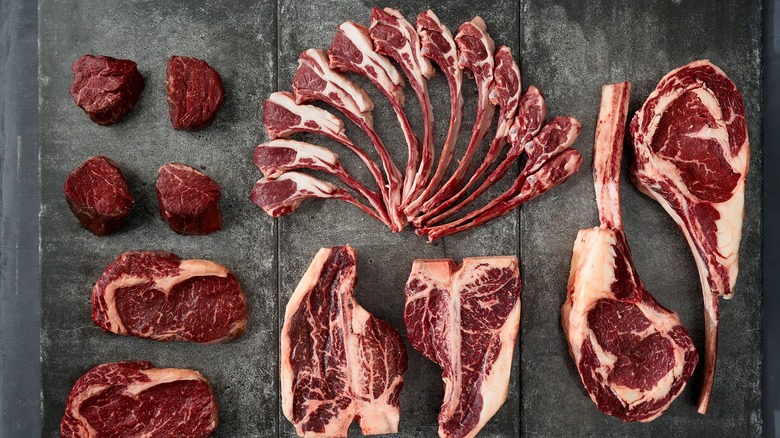
According to Penn State University, there are about eight primal and sub-primal mouthwatering cuts of beef: chuck, round, loin, rib, plate, flank, brisket, and shank. Tenderloin and filet mignon are known for their simplicity and prestige compared to other steak cuts, as both cuts are not densely marbled and typically contain less "beef" flavor, yet remain very supple and melt in your mouth. Although they are relatively cut from the same part of the animal, they are not the same thing. Let's crack the misconception of two of everyone's favorite beef cuts.
Tenderloin, also known as whole beef tenderloin, is as tender as its name suggests. Cut from the back half of the animal between the short loin and the sirloins, it's a long, large, tender piece of meat. If you're feeding a crowd, tenderloin is an exceptional cut for a special gathering, as it can be cut into steaks on the grill, made into the perfect holiday roast, or used for an easy Beef Wellington.
Filet mignon, however, is actually cut from the short loin end of the tenderloin. If you can believe it, it's even more delicate than the whole beef tenderloin. While both tenderloin and filet mignon may not fit the everyday budget, both cuts of meat are great choices, depending on the preparation method and occasion.
What is more expensive, tenderloin or filet mignon?
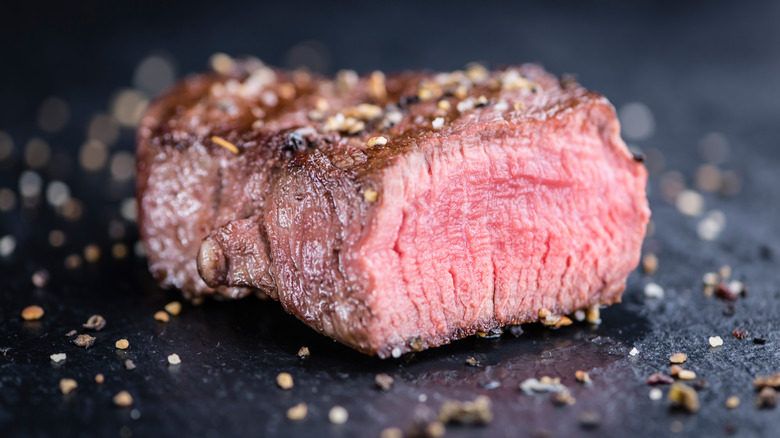
Filet mignon steaks are cut from the actual tenderloin, but beef tenderloin is not considered filet mignon. That said, you'll only get a few cuts of filet mignon per piece of tenderloin. Pro Tip: Buy a whole tenderloin and ask your butcher to break it down into the filet mignon and the beef tenderloin. Filet mignon is also one of the rarest cuts of beef, often making it much more expensive than the whole beef tenderloin.
Depending on the location, the cost of filet mignon can start around $20 per pound (via My Chicago Steak). Although more expensive, if you're looking to splurge, be sure to look for the USDA Prime stamp for the highest quality. The USDA grades beef with three distinctions — Select, Choice, and Prime — which are based on juiciness, tenderness, beefy flavor, yield of usable lean meat, and overall marbling. Because of its delicate and mild flavor, filet mignon benefits from the simplest preparations: a hard sear in a ripping hot cast iron pan and then topped with butter.