

The 10-5-10 Method For Boiled Eggs That Peel Perfectly Every Time
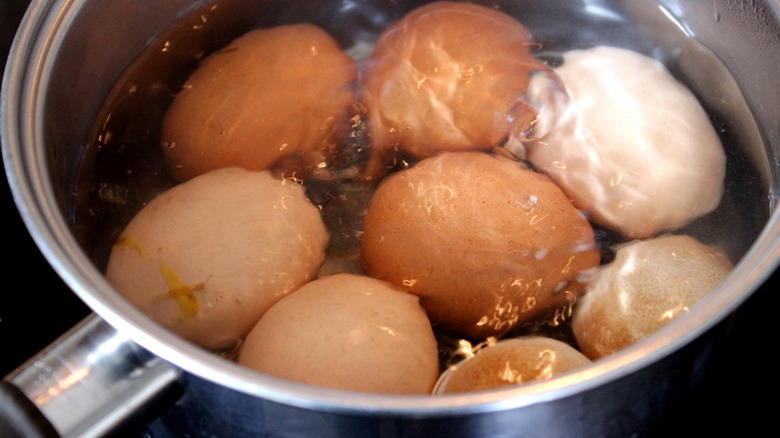
No one said making hard boiled eggs was complicated, but if you've been tasked with making two dozen deviled eggs for a dinner party, peeling them perfectly can be a different story. Sure, sometimes the shell practically falls off, but other times it takes a sizable chunk of egg white with it, leaving you with a ragged mess. The 10-5-10 method is a tried-and-true technique that makes the process a lot more predictable. It calls for a 10-minute boil, a 5-minute rest, and a 10-minute ice bath to produce eggs that are fully cooked and easy to peel.
Start by placing your eggs in a single layer in a saucepan already filled with boiling water. Keep the water at a rolling boil, then start the timer for 10 minutes. Be careful not to over-vigorously boil, as that can make the eggs knock against one another and crack. After those 10 minutes, turn off the heat and let the eggs rest for five minutes. The resting period allows any residual heat to finish cooking the eggs gently.
Your last step is to transfer the eggs to a bowl of ice water for 10 minutes, making sure they're completely submerged. The cold bath shuts down any more cooking, so the yolk won't develop that unappetizing gray-green ring around its edges. It also performs the neat trick of helping the egg contract inside the shell, creating a little separation from the egg white and the membrane lining the shell.
Older, room-temperature eggs peel more easily
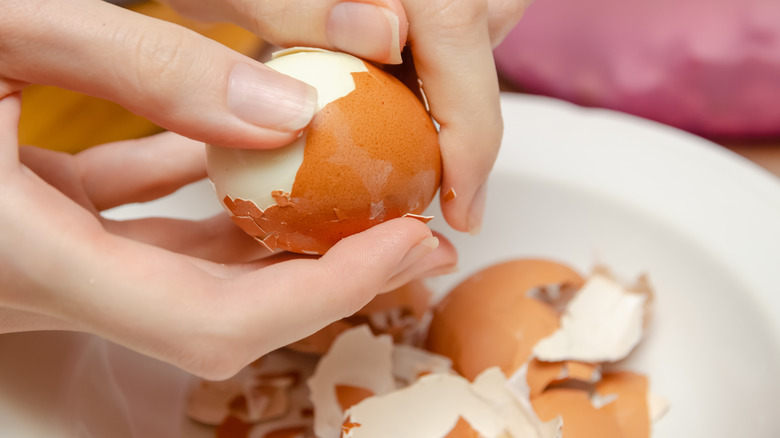
The inner shell membrane is what makes peeling so difficult. The egg white can cling quite stubbornly to it, which makes it hard to remove the shell without taking pieces of the egg with it. An ice bath helps firm up the egg white, making it less likely to tear. You can also try Gordon Ramsay's method of peeling eggs, which is to peel them under cold running water, as the water slips between the shell and the membrane, loosening stubborn pieces.
For the best results, use eggs that aren't extremely fresh, which is one of our best tips for peeling hard-boiled eggs. As eggs age, their internal chemistry changes, making them generally easier to peel. Older eggs should be your go-to if you're planning on making deviled eggs, a Niçoise salad, or other dishes where you want your eggs to look their very best. You'll also want to start with room-temperature eggs to reduce the temperature shock when they're placed in hot water. This can help the egg whites cook more evenly and reduce the chance of cracking.
Now, the 10-5-10 method isn't a guarantee that every egg will peel beautifully. Egg size, freshness, altitude, and the strength of your boil can all affect the outcome. But, it's a useful, easy-to-remember method when you've got dozens of eggs and a whole lot of peeling ahead of you.