

The Telltale Sign That Chicken You're Buying Will Shrink When Cooked
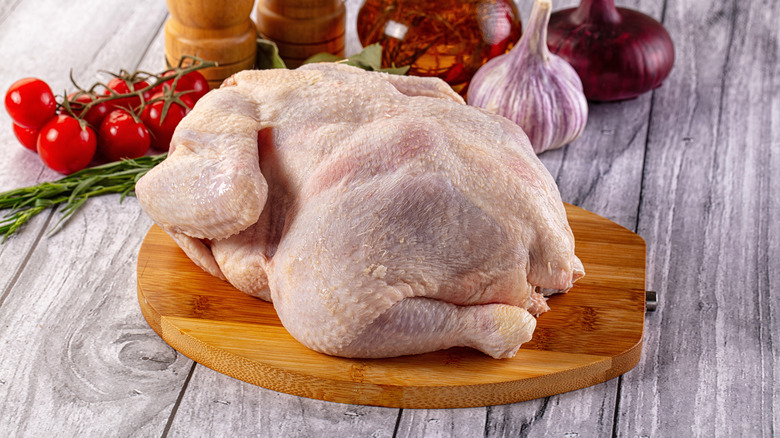
There are few things more disappointing than when a meal doesn't pan out as you hoped and few things more frustrating than not knowing what went wrong. If you've ever removed a meticulously prepared chicken from the oven only to discover that it has shrunk alarmingly, you may have wondered if you were somehow responsible for its diminishment. In truth, the chicken itself may be to blame. To avoid this unhappy outcome, pay heed to a telltale sign that the chicken you're buying will shrink when cooked — namely, that it has been artificially "plumped" with water or a saline solution.
We should first clarify that chicken will inevitably undergo some shrinkage while cooking — in fact, fish, meat, and poultry will typically reduce by roughly 25% when cooked, though the exact amount depends on the temperature they are cooked at and for how long. This is because chicken (and any other animal protein) releases liquid as it is subjected to heat. There's nothing necessarily wrong with that — you couldn't make these amplified croutons without roast chicken pan drippings — but if you find your chicken shrinking excessively, one possible explanation is that it was injected with extra water.
Poultry producers often do this to inflate the weight of the bird and make it appear juicier, allowing them to sell it for a higher price. To avoid paying for a chicken with too much added liquid, check the label before buying to see how much added or retained water it contains. Terms like "broth," "seasoning," or "enhancing solution" often indicate that you're dealing with a water-injected chicken. An unusual amount of liquid visible in the packaging is another warning sign.
There are plenty of good reasons to avoid chicken that has been injected with water
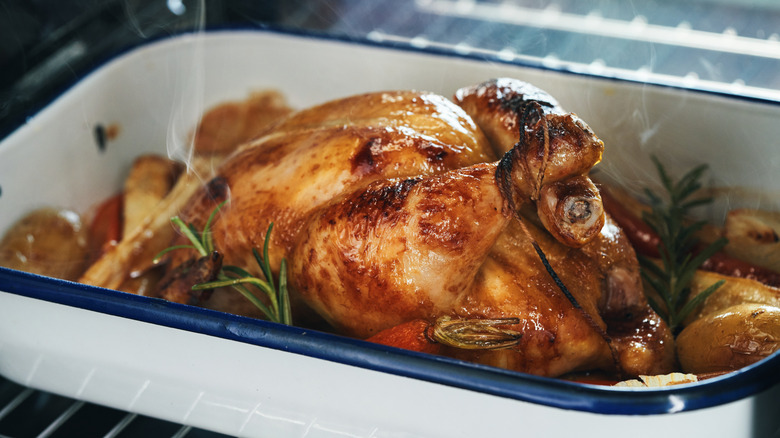
There are multiple reasons to be wary of artificially plumped chicken beyond its eventual, disappointing size. There's the matter of getting value for money — you may, in practice, be paying for extra water rather than meat. If this water actually did render your chicken more satisfyingly juicy, you might think it was worth it, but artificial plumping can often result in the meat losing its desirable, natural taste and texture. Instead, you may be left with a blandly-flavored bird with an unappetizing rubberiness, sitting in a pool of the liquid it has released that has now gathered into the bottom of the roasting pan.
Sometimes, solutions are added to meat for increased flavor, seasoning, and tenderization (though we at Tasting Table believe you shouldn't buy brine-injected chicken at the grocery store). Nonetheless, the USDA states that regulations require these solutions "be identified as part of the product name, and whether the solution is still incorporated into the product or is free-flowing within the package, it is considered part of the product and, as such, is included in the net weight declared on the label." If a chicken has not had water added to it, it may feature a "no-retained-water" statement on its label. Now that you know what to look out for, you can prepare your next chicken dinner with peace of mind — the perfect excuse to brush up on our simple roast chicken recipe.